Provenance
Atelier Edgar Degas (Lugt 657, verso, center, in red ink); [his sale, Paris, Galerie G. Petit, 2-4 July, 1919, p. 160, lot 189 (photocopy of cat. in department file). [Kennedy & Co.] (according to departmental card)
Accession Number
1924.329
Medium
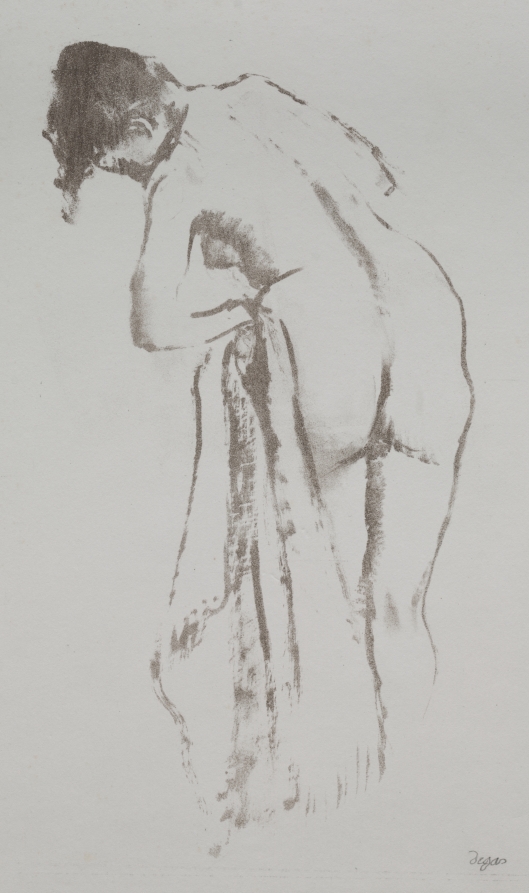
charcoal
Dimensions
Sheet: 42.5 x 32.9 cm (16 3/4 x 12 15/16 in.)
Classification
Drawing
Credit Line
Gift of Ralph King
Tags
Color: White
Background & Context
Background Story
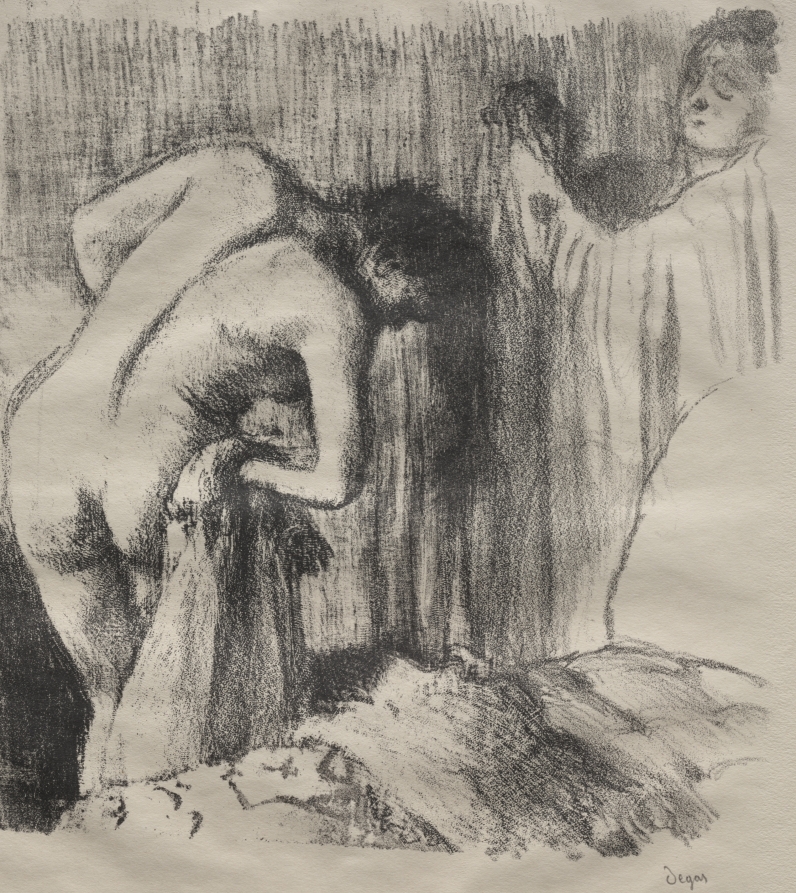
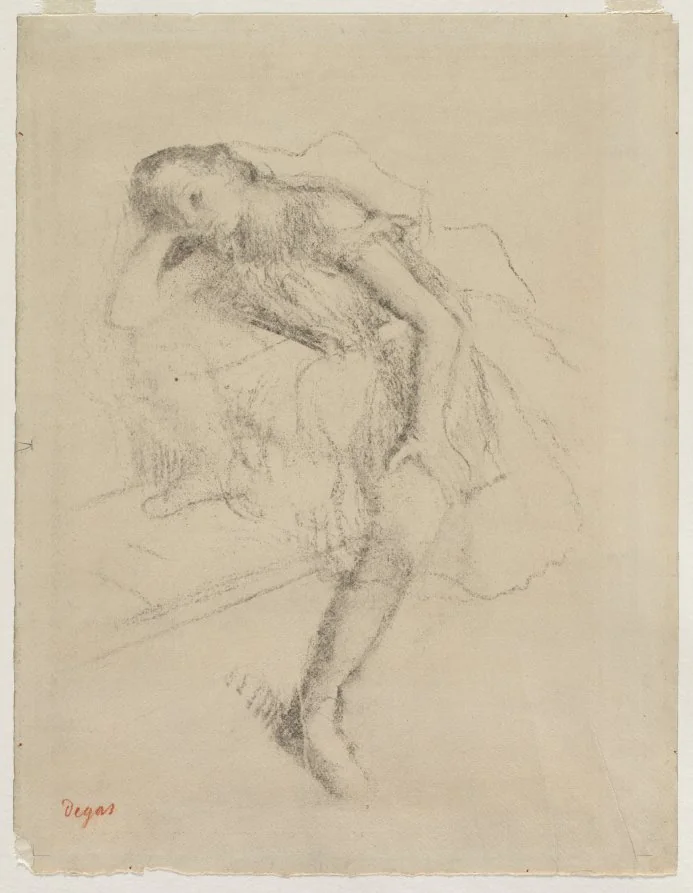
Edgar Degas's "Dancer at Rest" captures one of the artist's most enduring subjects: the ballet dancer in a private, unguarded moment. Rendered in charcoal around 1895, this drawing shows a ballerina pausing during rehearsal, her body relaxed after the exertion of dance. Degas (1834–1917) was fascinated by the human figure in motion and at rest, and he returned to the subject of dancers throughout his career, producing over 1,500 paintings, pastels, drawings, and sculptures on the theme. His approach to the dancer was not romanticized—he observed them with the detached eye of a naturalist, capturing the awkward stretches, the weary slumps, and the moments of quiet concentration between performances. Charcoal was a favored medium for Degas's studies because it allowed him to work quickly, building form through layers of tone and line. The hatching in this drawing shows his characteristic draftsmanship, influenced by Ingres's linear precision but transformed by Degas's own restless experimentation. This work comes from the period when Degas's eyesight was failing, and his drawings became increasingly bold and expressive as a result.
Cultural Impact
Degas's dancer studies revolutionized the artistic representation of ballet by focusing on the physical reality of the dancer's labor rather than the illusion of effortless grace on stage, offering an unsentimental view of the art form's demands.
Why It Matters
This charcoal drawing exemplifies Degas's commitment to capturing authentic human gesture, transforming an intimate backstage moment into a profound study of form, fatigue, and the beauty of unselfconscious bodily expression.