Accession Number
1925.1003
Medium
black crayon, gouache, and watercolor
Dimensions
Sheet: 37.3 x 52.9 cm (14 11/16 x 20 13/16 in.)
Classification
Drawing
Credit Line
Gift of Ralph King
Tags
Drawing Impressionist & Modern (1851–1900) Watercolor Gouache French Color: White
Background & Context
Background Story
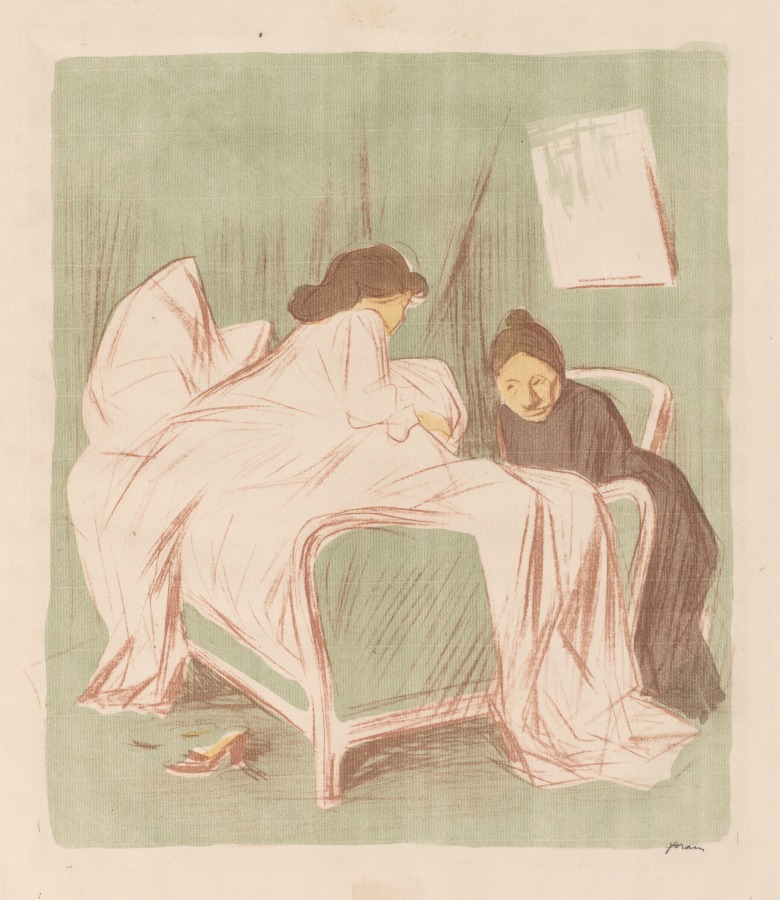
The Slavery in the North (c. 1880-1900) is a striking title from Forain, referring to the industrial working conditions in Northern France—the factory system that Forain's satirical work implicitly compared to the slavery that had been abolished decades earlier. The North of France, with its textile mills and coal mines, was the country's industrial heartland, and the working conditions in its factories and mines were a frequent subject of social commentary during the Third Republic. Forain's title equates these conditions with slavery—a provocative comparison that challenged the bourgeois republic's self-image as a society founded on liberty, equality, and fraternity. The 1880-1900 date places this during the period when industrial labor conditions were a major political issue in France—the rise of socialism, the organization of labor unions, and the factory legislation that the Third Republic was beginning to enact. Forain's treatment of the subject likely emphasizes the gap between the Republic's egalitarian rhetoric and the industrial reality that Northern workers experienced. The painting thus connects Forain's usual satirical target—bourgeois hypocrisy—to the larger economic structures that produced the inequality he documented. The slavery metaphor, provocative in a nation that prided itself on abolishing slavery in its colonies, forces the viewer to confront the conditions that 'liberty' allowed to persist.
Cultural Impact
Forain's industrial subject paintings influenced how working conditions were represented in French art, connecting the Third Republic's egalitarian rhetoric to the industrial reality that contradicted it. The paintings influenced later social realist artists who similarly found subjects in the gap between political ideals and economic reality. The Slavery in the North influenced how the relationship between political liberty and economic exploitation was represented in French visual culture.
Why It Matters
This painting matters because it forces the confrontation between the Third Republic's egalitarian rhetoric and the industrial reality that Northern workers experienced—equating factory conditions with slavery in a nation that prided itself on having abolished slavery. Forain's provocative metaphor challenges the bourgeois republic's self-image and demands that art address the economic structures that liberty allows to persist.