Description
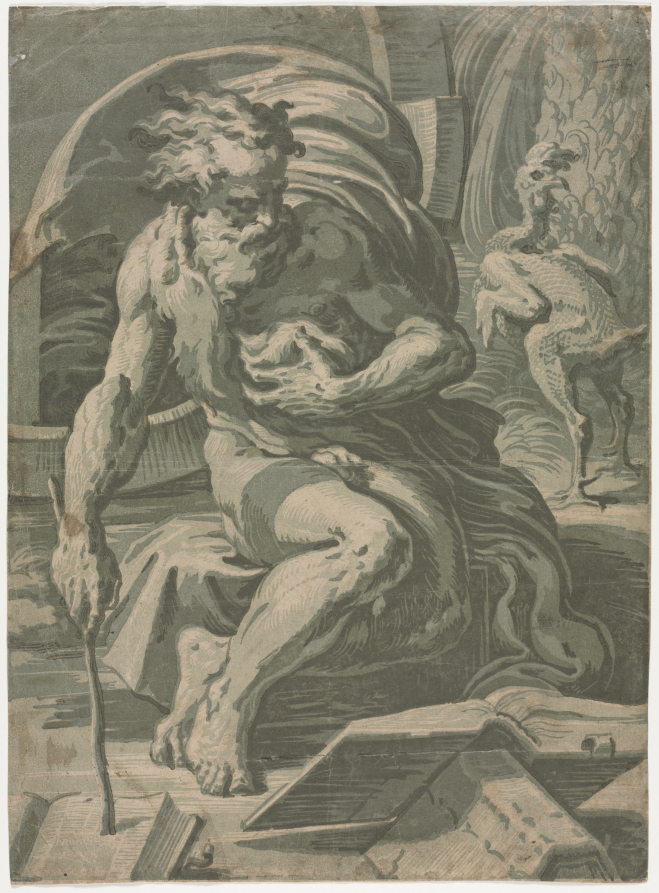
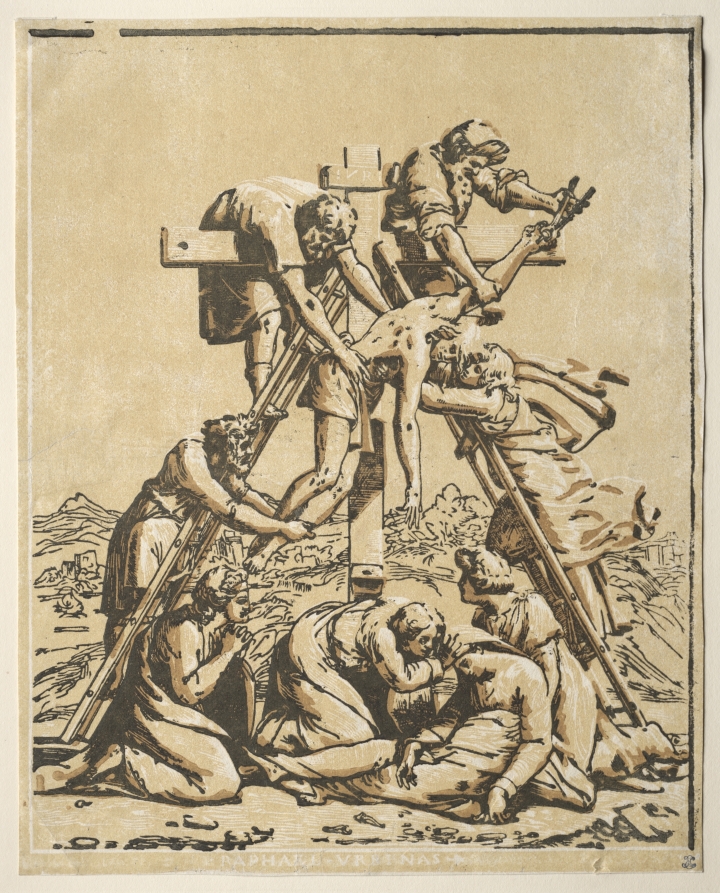
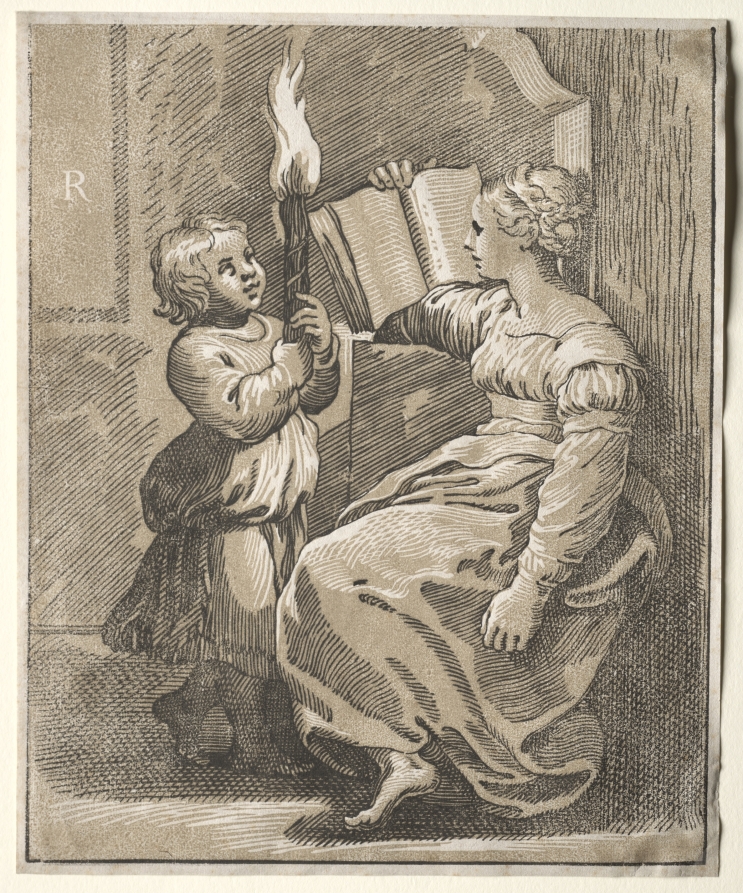
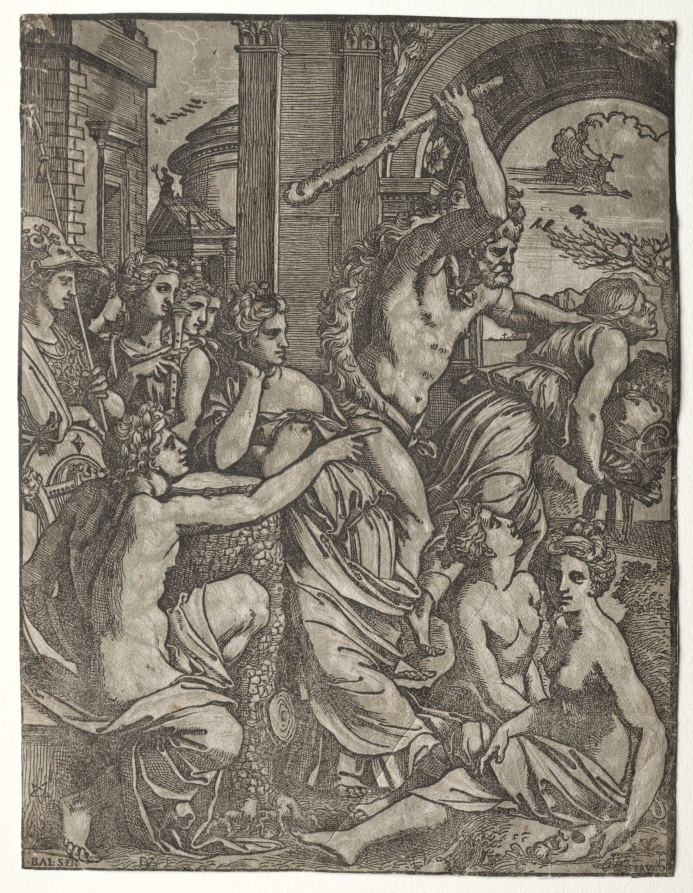
The term chiaroscuro combines the Italian words chiaro (light) and scuro (dark). Invented to emulate drawings with light and dark pigments on tinted paper, the printing technique uses multiple woodblocks to layer different tones of color. Here, Ugo da Carpi—the progenitor of the chiaroscuro woodcut in Italy—used two blocks in black and gray on a beige paper.
In this allegory, not linked to a particular myth, Hercules applies his brute force in the service of art and knowledge. Pointing toward the archway, Apollo banishes the vice of Avarice from the Temple of the Muses. A personification of greed, Avarice carries a hoard of treasure in her arms as Hercules, a character of virtuous strength, chases her out. Apollo sits next to the war goddess Athena, identified by her helmet, shield, and spear. Here she represents wisdom, and fulfills a civilizing role as patroness of the arts.
In this allegory, not linked to a particular myth, Hercules applies his brute force in the service of art and knowledge. Pointing toward the archway, Apollo banishes the vice of Avarice from the Temple of the Muses. A personification of greed, Avarice carries a hoard of treasure in her arms as Hercules, a character of virtuous strength, chases her out. Apollo sits next to the war goddess Athena, identified by her helmet, shield, and spear. Here she represents wisdom, and fulfills a civilizing role as patroness of the arts.
Provenance
Ralph King [1855-1926], Cleveland Heights, OH (?-1925); The Cleveland Museum of Art, Cleveland, OH (March 24, 1925)
Accession Number
1925.443
Medium
chiaroscuro woodcut (in black and gray)
Dimensions
Sheet: 29.5 x 22.5 cm (11 5/8 x 8 7/8 in.)
Classification
Credit Line
Gift of Ralph King