Provenance
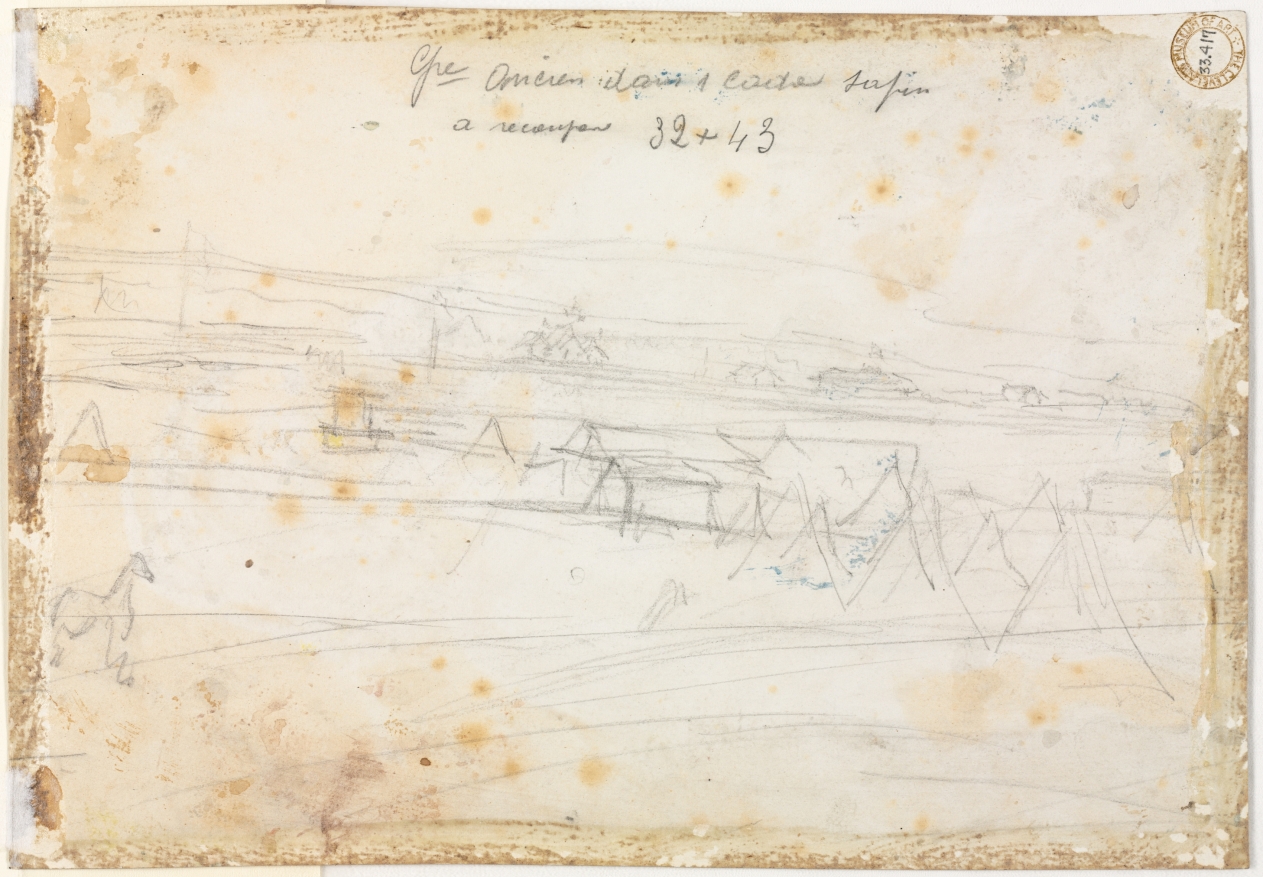
M. D. Zayas (1917 ); John Quinn; [Joseph Brummer Gallery]; M. D. Zayas (not stamped, not in Lugt) (according to departmental card); John Quinn (not stamped, not in Lugt) (according to departmental card purchased from Zayas in 1917; inscribed on verso of secondary support). [Joseph Brummer Gallery]
Accession Number
1926.50
Medium
pen and black ink and brush and gray wash over graphite
Dimensions
Sheet: 21.1 x 25.6 cm (8 5/16 x 10 1/16 in.); Secondary Support: 29 x 35.2 cm (11 7/16 x 13 7/8 in.)
Classification
Drawing
Credit Line
Dudley P. Allen Fund
Tags
Drawing Neoclassical & Romantic (1751–1850) Ink Graphite & Pencil French Color: Brown Color: Gray
Background & Context
Background Story
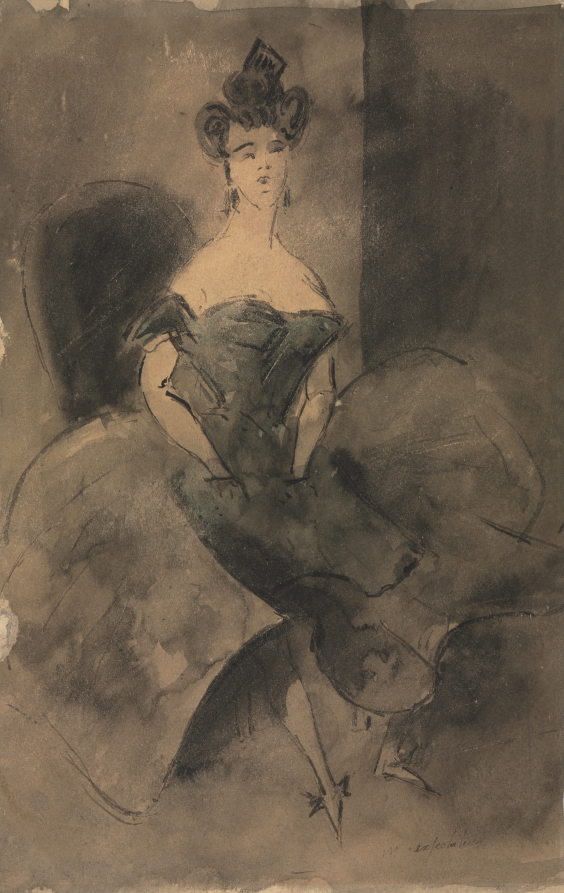
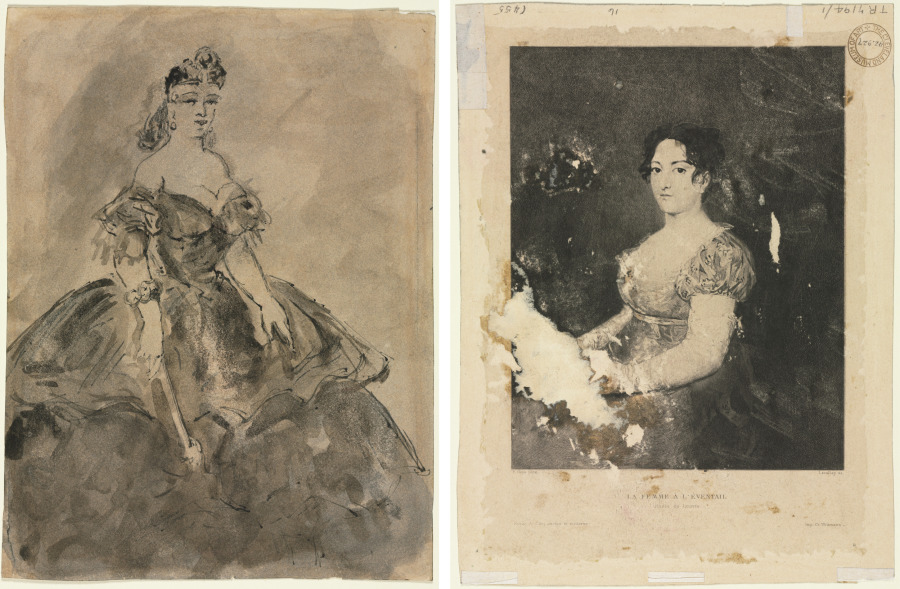
A Stop in the Park captures a moment of rest during a promenade — the brief pause in social movement that reveals more about the participants than their forward motion ever could. Guys's combination of pen and ink with gray wash over graphite gives the drawing both the specificity of line and the atmospheric depth of tonal wash, producing a sense of observed reality rather than studio invention. The park is almost certainly a Parisian park — the Tuileries, the Luxembourg, or the Bois de Boulogne — and the figures are almost certainly fashionable Parisians taking a break in their daily social rounds.
Cultural Impact
The park was one of the great social theaters of 19th-century Paris, and Guys was its most attentive observer. Where other artists painted parks as landscapes, Guys drew them as social spaces — stages for the performance of fashion, status, and desire. His quick, economical line captures the essential gesture of each figure: the way a woman holds her parasol, the angle of a man's cane, the direction of a glance.
Why It Matters
A Stop in the Park is Guys's sociology made art: a moment of rest that reveals the social dynamics of Second Empire Paris more clearly than any amount of forward motion. The park bench is where the performance drops its guard — and Guys is there to catch it.