Provenance
William Sommer (the artist) [1867-1949] (1927); The Print Club of Cleveland, Cleveland, OH, given to The Cleveland Museum of Art, Cleveland, OH (1927); The Cleveland Museum of Art, Cleveland, OH (May 13, 1927-)
Accession Number
1927.177
Medium
sanguine
Dimensions
Sheet: 41.2 x 25.4 cm (16 1/4 x 10 in.)
Classification
Drawing
Credit Line
Gift of The Print Club of Cleveland
Tags
Color: White
Background & Context
Background Story
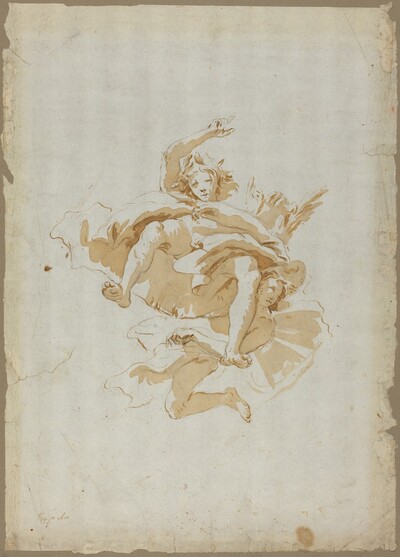
William Sommer's "Nude Figure" (c. 1927) continues the artist's exploration of the human form in sanguine, building on the tradition of red chalk figure drawing that stretches back to Leonardo da Vinci and Michelangelo. Sommer (1867–1949) produced numerous figure studies throughout his career, treating the nude form as a vehicle for exploring line, volume, and expressive gesture. This drawing, executed in the mid-1920s when Sommer was at the height of his powers as a teacher and practitioner, shows a model in a seated or reclining pose, the body rendered in confident, flowing lines. Sommer's technique in sanguine is notable for its economy—he uses the minimum number of strokes necessary to capture the essential form and gesture, allowing the pale paper to serve as the highlights. This reflects his training in Munich, where academic draftsmanship emphasized structural understanding over superficial detail. As a central figure in the Kokoon Arts Club and the Cleveland School, Sommer exerted enormous influence on Midwestern modernism, advocating for the importance of drawing as the foundation of all artistic expression.
Cultural Impact
Sommer's figure drawings embody the integration of European academic tradition with American modernism, representing a vital chapter in the development of Midwestern art education and practice.
Why It Matters
This sanguine study showcases Sommer's masterful draftsmanship and his commitment to the figure as the primary subject of artistic investigation, revealing the strong foundation in drawing that underlay his modernist experiments.