Description
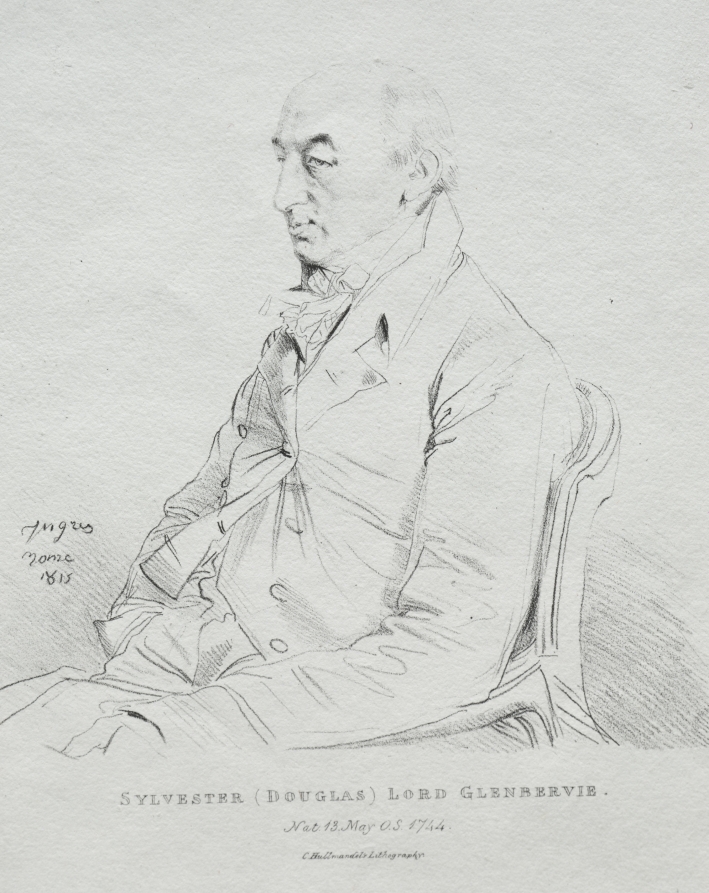
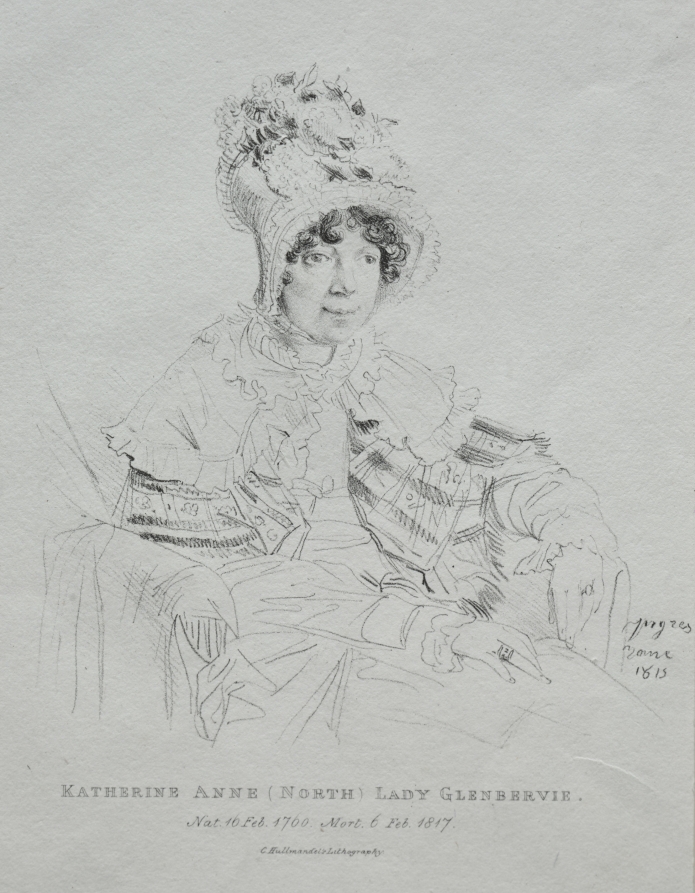
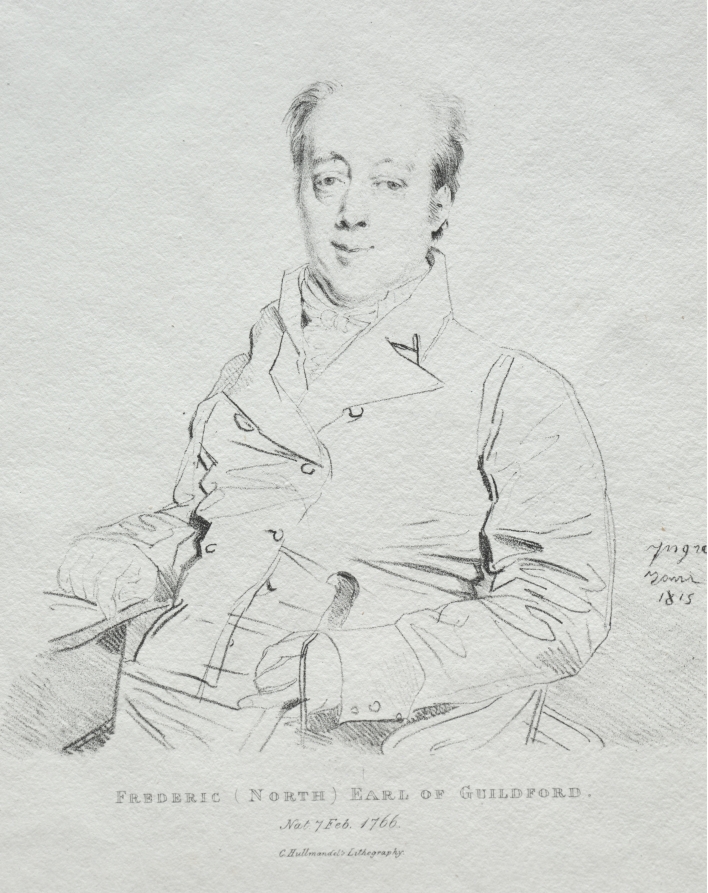
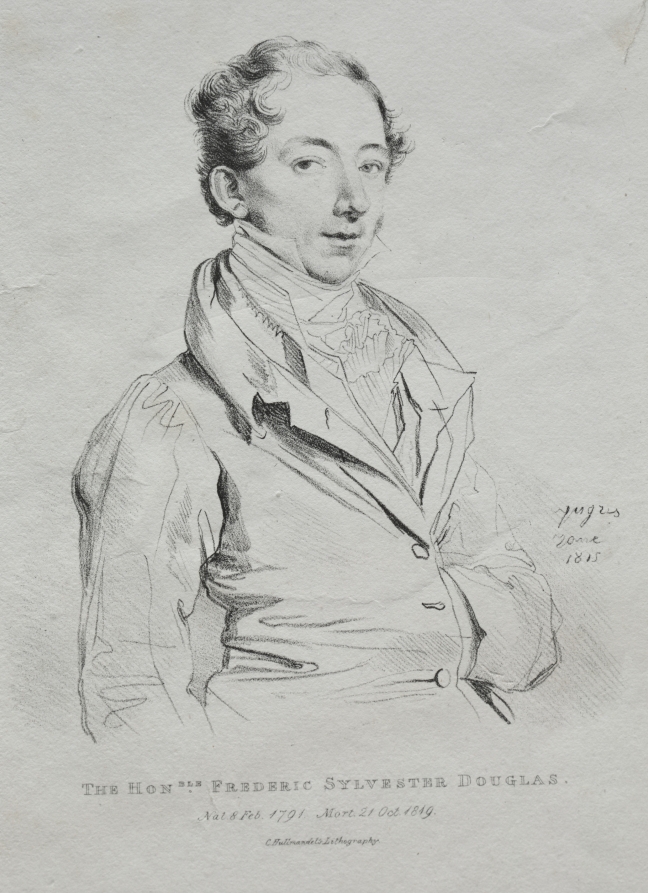
While living in Rome, Jean-Auguste-Dominique Ingres began making commissioned graphite portraits as a way of providing additional income. He aspired to a career as a history painter, however, and made such works only as gifts for friends after achieving professional success. This sheet was a gift for its sitter's husband, a famous archaeologist to whom Ingres dedicated it at lower right. The subject of the drawing, Antoinette-Claude Houdon, was the youngest daughter of Jean-Antoine Houdon (1741–1828), an important 18th-century French sculptor. Using the style he developed for such works, the artist drew in stark, confident lines, with no apparent erasing or correction.
Provenance
Désiré Raoul-Rochette [1790–1854] (sitter’s husband), Paris, by descent to his wife, Madame Désiré Raoul-Rochette (probably 1830-1854); Madame Désiré Raoul-Rochette, née Antoinette-Claude Houdon [1790–1878], Paris, by descent to her grandson, Raoul Perrin (1854-1878); Raoul Perrin [1841–1910], by descent to his widow, Madame Raoul Perrin (1878-1910); Madame Raoul Perrin [?–1912], by descent to her son, Edmond Perrin (1910-1912); by descent to her son, Edmond Perrin [d. 1919] (1912-by 1918); (Wildenstein & Co., Inc., New York, sold to the Cleveland Museum of Art, Cleveland, OH) (1918-1927); Cleveland Museum of Art, Cleveland, OH (1927-)
Accession Number
1927.437
Medium
graphite on cream wove paper
Dimensions
Sheet: 32.2 x 24 cm (12 11/16 x 9 7/16 in.)
Classification
Drawing
Credit Line
Purchase from the J. H. Wade Fund
Tags
Color: White Color: Gray
Background & Context
Background Story
Jean-Auguste-Dominique Ingres's portrait drawing of Madame Désiré Raoul-Rochette (1830) exemplifies the artist's supreme mastery of graphite portraiture. Ingres (1780–1867) was the great champion of Neoclassical draftsmanship, famously declaring that "drawing is the probity of art." Throughout his long career, he produced hundreds of pencil portraits that are today considered among the finest drawings in Western art. This portrait depicts the wife of Désiré Raoul-Rochette, a prominent French archaeologist and art historian. The drawing is executed with Ingres's characteristic precision: every contour is perfectly modulated, every line is placed with unfailing certainty. The sitter's face is rendered with subtle hatching that models the forms without ever becoming mechanical, while her elaborate dress and shawl are suggested with lighter, more economical strokes. Ingres's portrait drawings were highly sought after by French society; they served both as independent works of art and as preparatory studies for oil portraits. This drawing dates from Ingres's mature period, when he was at the height of his reputation as director of the French Academy in Rome and the most respected exponent of classical tradition in European painting.
Cultural Impact
Ingres's pencil portraits represent the apex of the Neoclassical tradition in draftsmanship, and their influence can be traced through Degas, Picasso, and Matisse, all of whom studied Ingres's linear precision.
Why It Matters
This portrait drawing captures the essence of Ingres's genius: perfect control of line, subtle psychological insight, and the ability to invest a commissioned portrait with monumental dignity through pure draftsmanship.