Provenance
Italico Brass, Venice (according to departmental card); [Harold W. Parsons] (according to departmental card)
Accession Number
1931.56
Medium
black chalk, stumped (and wetted?), with black chalk wash, heightened with white chalk
Dimensions
Sheet: 41.8 x 33.4 cm (16 7/16 x 13 1/8 in.)
Classification
Drawing
Credit Line
Margaret Huntington Smith McCarthy Fund
Tags
Drawing Baroque (1600–1750) Italian Color: Brown Color: Gray
Background & Context
Background Story
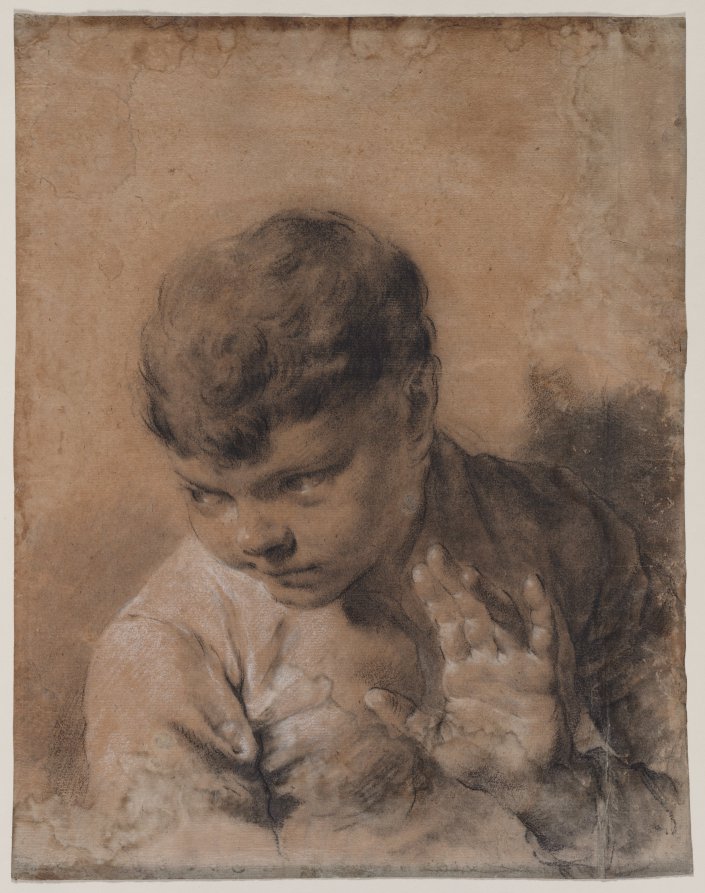
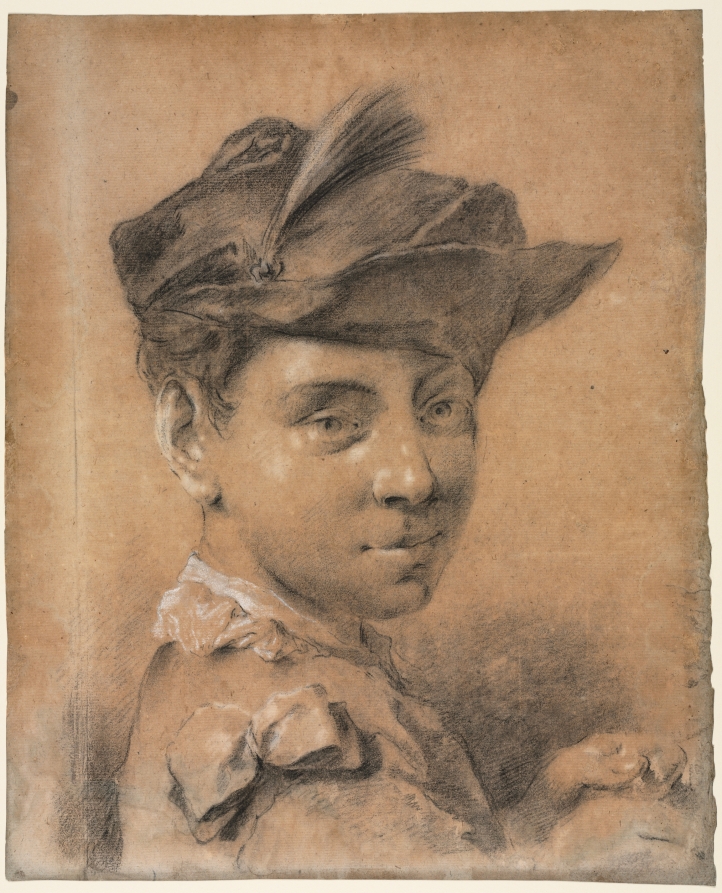
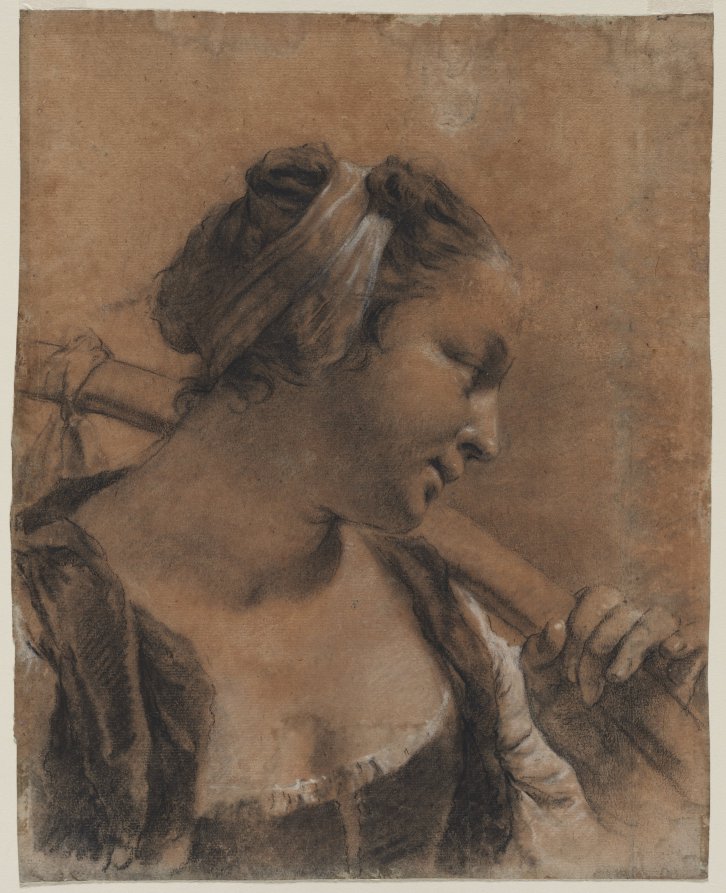
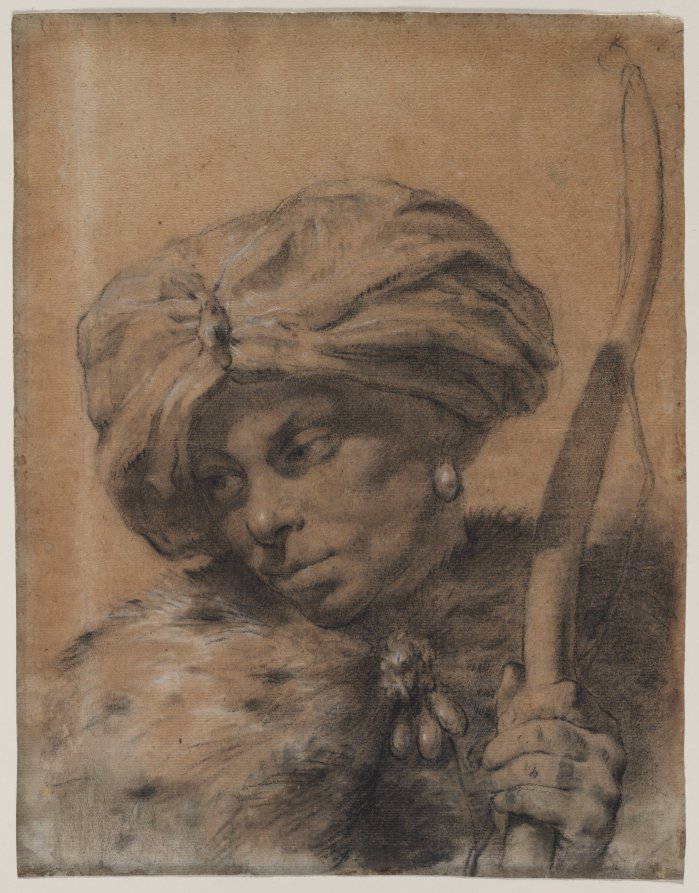
Man with a Fur Cap is one of Piazzetta's most powerful character studies — a head study rendered in black chalk with the stumping and wash techniques that give his drawings their characteristic tonal richness. The fur cap identifies the sitter as a specific social type (probably a northern European traveler or merchant), and Piazzetta's treatment gives the face the same psychological depth and sculptural presence that he brings to his religious figures. The combination of stumping (for smooth tonal transitions), chalk wash (for broader shadows), and white chalk highlights (for the lightest passages) produces a drawing that approaches the tonal range of a painting.
Cultural Impact
Piazzetta's head studies are among the most sought-after Venetian drawings of the 18th century, prized for their combination of psychological intensity and technical sophistication. The Man with a Fur Cap is a study in character as well as a study in technique — the face is rendered with the same tenebrist drama that Piazzetta brings to his religious paintings, but the subject is secular and the treatment is observational rather than devotional.
Why It Matters
Man with a Fur Cap is Piazzetta's drawing at its most powerful: a character study rendered with the tenebrist drama of a religious painting but the observational specificity of a portrait. The fur cap, the furrowed brow, and the chalk highlights that model the face create an image that is simultaneously a study in technique and a study in character.