Accession Number
1934.125
Medium
pencil
Dimensions
Sheet: 17.7 x 23.1 cm (6 15/16 x 9 1/8 in.); Image: 15.5 x 22.8 cm (6 1/8 x 9 in.)
Classification
Drawing
Credit Line
Gift of Richard Seymour Bayham
Tags
Drawing Neoclassical & Romantic (1751–1850) Graphite & Pencil American Color: White Color: Gray
Background & Context
Background Story
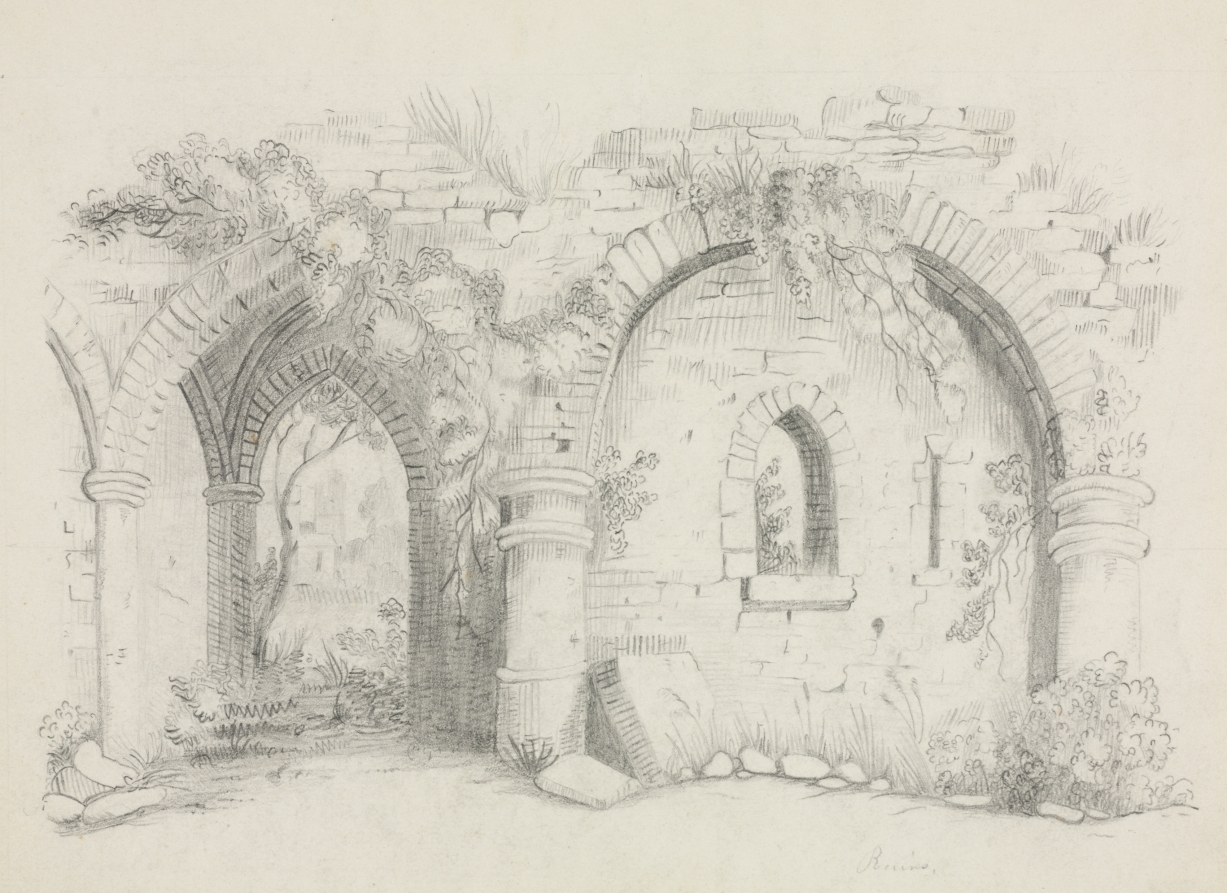
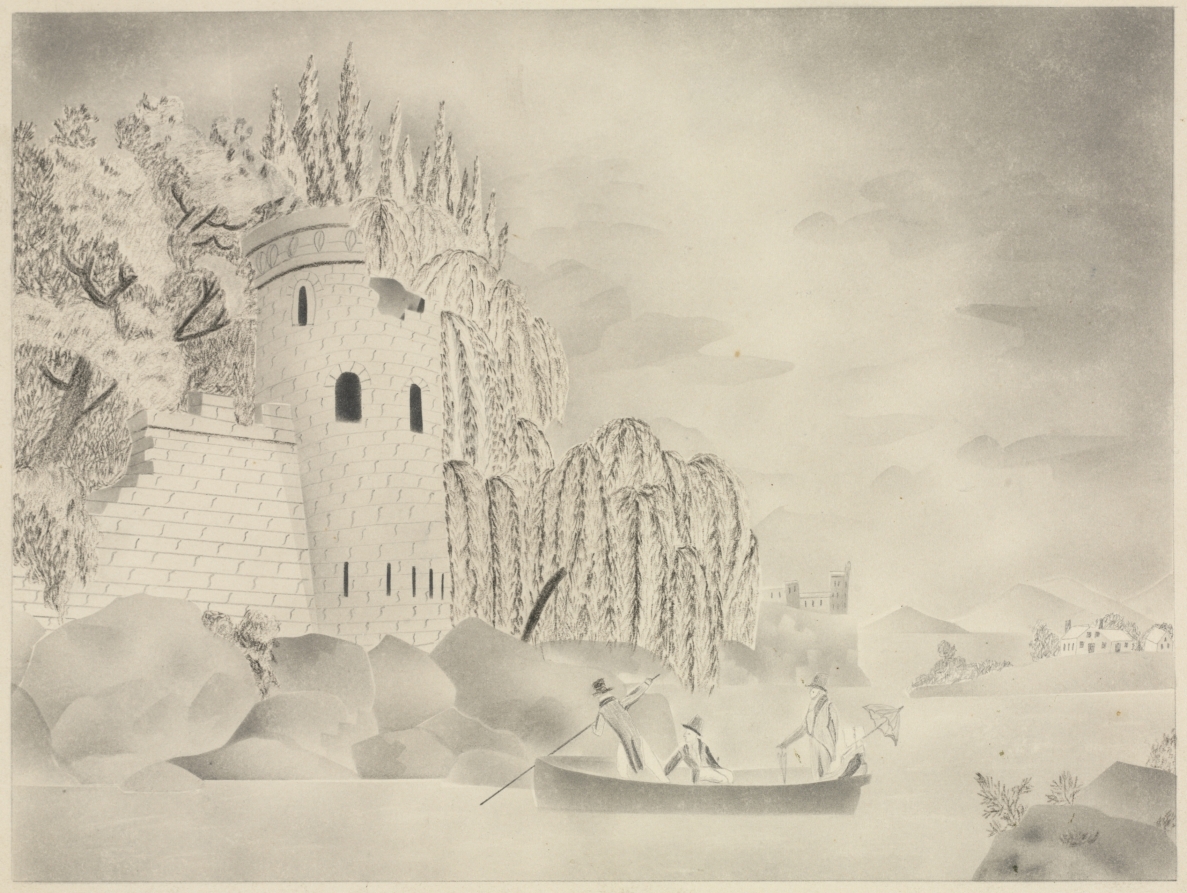
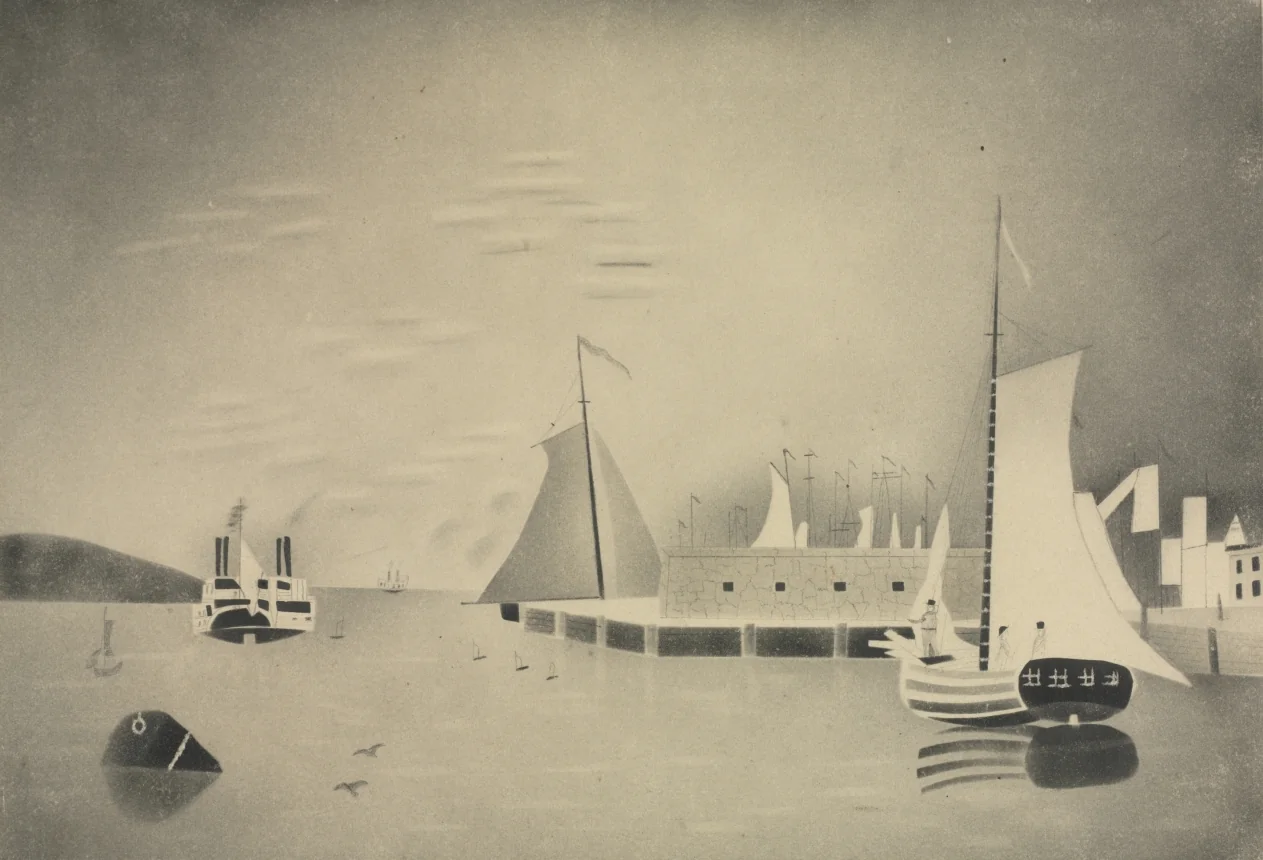
Mary Altha Nims was a 19th-century American woman working in the traditionally male domain of topographical drawing. This harbor scene, rendered in pencil with careful attention to the rigging of ships and the architecture of waterfront buildings, demonstrates the precision and patience required of artists working before photography made visual documentation easy. Nims's pencil line is sure and economical, capturing the essential structure of each vessel with the minimum of strokes — a skill developed through long practice drawing directly from observation.
Cultural Impact
Nims's work belongs to a tradition of American women's topographical drawing that has only recently received scholarly attention. These drawings served practical purposes — documenting harbors, coastlines, and buildings — but they also provided women artists with a legitimate entry into professional-grade draftsmanship. The harbor, with its complex rigging and architectural detail, was an ideal subject for developing and demonstrating observational skill.
Why It Matters
Harbor Scene is evidence that American women artists of the 19th century were producing professional-caliber work in traditionally male subjects. Nims's precision and economy of line would be impressive in any context; in the context of a woman working without formal professional training, they are remarkable.