Provenance
Mrs. Henry A. Everett, Willoughby, OH (?-1938); The Cleveland Museum of Art, Cleveland, OH (June 3, 1938)
Accession Number
1938.123
Medium
pencil and crayon
Dimensions
Image: 20 x 11.6 cm (7 7/8 x 4 9/16 in.); Sheet: 21.3 x 15.7 cm (8 3/8 x 6 3/16 in.)
Classification
Drawing
Credit Line
Bequest of Mrs. Henry A. Everett for the Dorothy Burnham Everett Memorial Collection
Tags
Drawing Impressionist & Modern (1851–1900) Graphite & Pencil American Color: White
Background & Context
Background Story
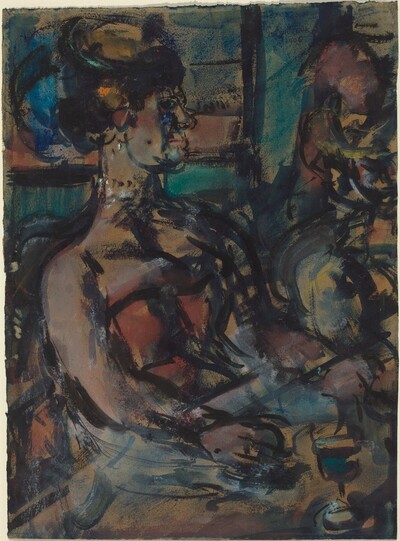
The Toiler by James Carroll Beckwith, painted before 1917, represents a significant work by an artist who occupied an important position in American art at the turn of the twentieth century. Beckwith, a highly accomplished painter and influential teacher, was a leading figure in New York's art establishment—a founding member of the Society of American Artists, a National Academician, and a close associate of John Singer Sargent. His work blended academic training received in Paris with an American sensibility, and The Toiler likely depicts a laboring figure with the same technical refinement that characterized Beckwith's best portraiture. The title invokes the longstanding artistic tradition of representing labor, from Millet's monumental peasants to the Ashcan School's urban workers. Beckwith's approach would have been informed by his academic training—he was known for his figure painting and understanding of classical compositional principles—while also reflecting the early twentieth century's growing social awareness. Painted before 1917, the work emerges during a period when American artists were increasingly engaging with social themes, influenced by Progressive Era reforms and the labor movement. The word toiler carries connotations of dignified persistence rather than mere labor.
Cultural Impact
Beckwith's work bridges the gap between academic tradition and social engagement in American art, demonstrating how establishment artists participated in the growing cultural interest in labor and working-class subjects.
Why It Matters
This painting reveals how a leading American academic artist engaged with themes of labor and dignity, connecting formal painting traditions to the social consciousness emerging in early twentieth-century art.