Accession Number
1939.280
Medium
watercolor
Dimensions
N/A
Classification
Drawing
Credit Line
Gift of The Print Club of Cleveland in memory of A. Donald Gray
Tags
Drawing Neoclassical & Romantic (1751–1850) Watercolor French Color: White
Background & Context
Background Story
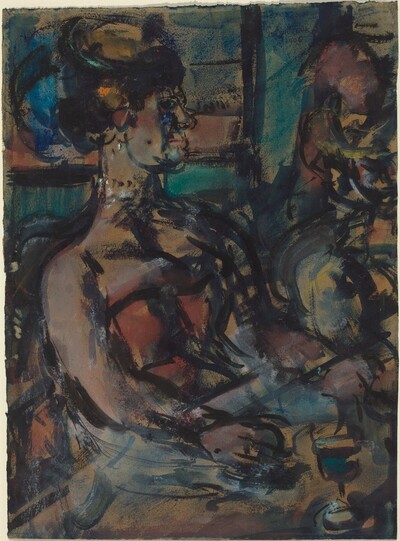
Damascus Plum by B. Michel, dated 1768, is a striking example of still life painting from the eighteenth century. The title suggests a depiction of the Damascus plum—a variety of fruit with ancient origins in the Eastern Mediterranean and a long history of cultivation across the Levant. The naming of the fruit evokes Damascus, one of the world's oldest continuously inhabited cities and a historic center of trade connecting East and West. In eighteenth-century European still life tradition, fruit carried rich symbolic weight: plums could represent sensuality, the fleeting nature of earthly pleasures (vanitas), or the abundance of nature's bounty. The choice of the Damascus plum specifically adds an exotic dimension, reflecting the eighteenth century's fascination with Eastern commodities and global trade networks. Michel's painting likely displays the fruit with the meticulous detail characteristic of the period's still life tradition, setting the plum against a complementary background that showcases its color and form. The year 1768 places this work in the rococo period, when still life painting balanced naturalistic observation with decorative elegance. This was an era when botanical illustration and fine art overlapped, and paintings of specific fruit varieties served both aesthetic and quasi-scientific purposes.
Cultural Impact
The painting exemplifies the eighteenth-century European fascination with exotic natural specimens and global trade, reflecting how still life painting served as both aesthetic expression and documentation of expanding horticultural knowledge.
Why It Matters
This work preserves the intersection of art, botany, and global trade in the eighteenth century, demonstrating how still life painting documented cultural exchange through the depiction of specific fruit varieties.