Provenance
Dr. Daniel A. Heubsch, Cleveland, OH (?–?); Robert Hays Gries, Shaker Heights, OH, given to The Cleveland Museum of Art, Cleveland, OH (?–1939); The Cleveland Museum of Art, Cleveland, OH (December 19, 1939–)
Accession Number
1939.648
Medium
oil
Dimensions
Sheet: 23.2 x 16.2 cm (9 1/8 x 6 3/8 in.)
Classification
Drawing
Credit Line
Gift of Robert Hays Gries
Tags
Drawing Neoclassical & Romantic (1751–1850) Oil Painting Swiss Color: Brown Color: Gray
Background & Context
Background Story
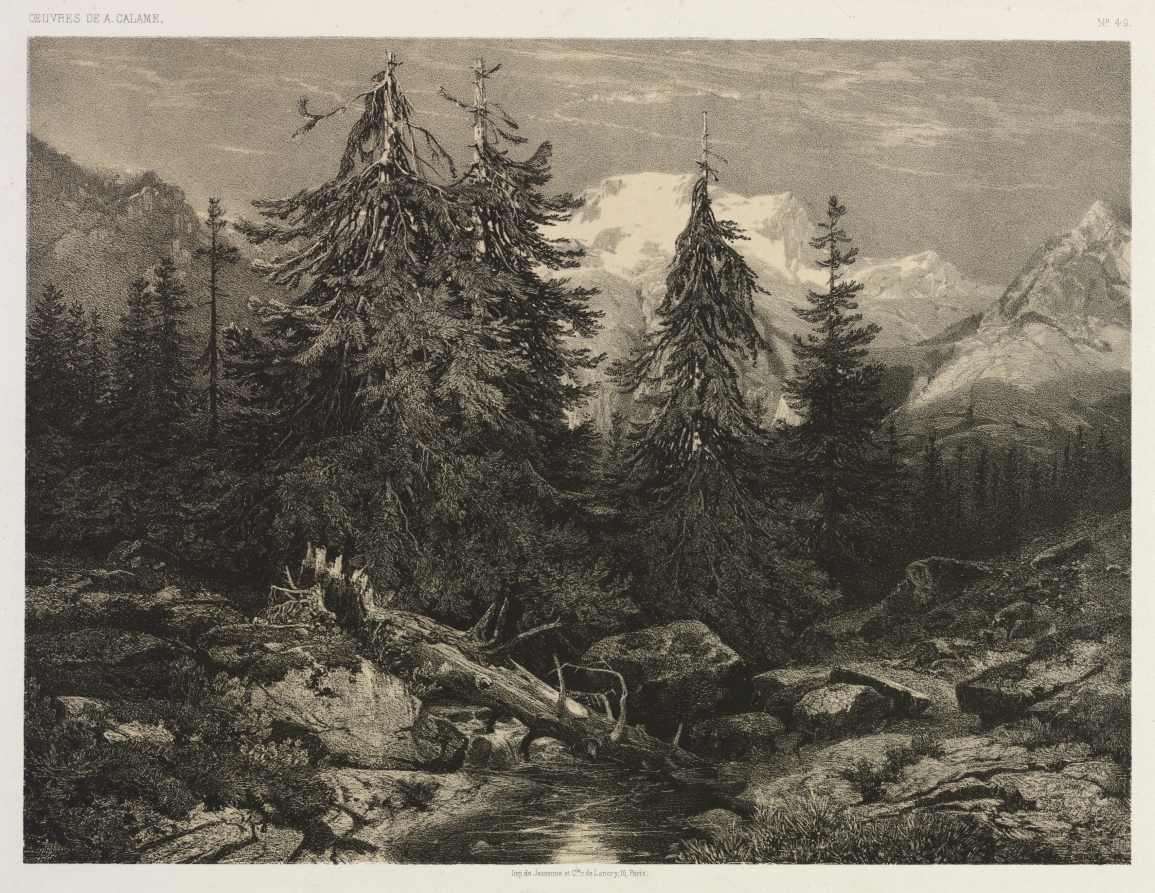
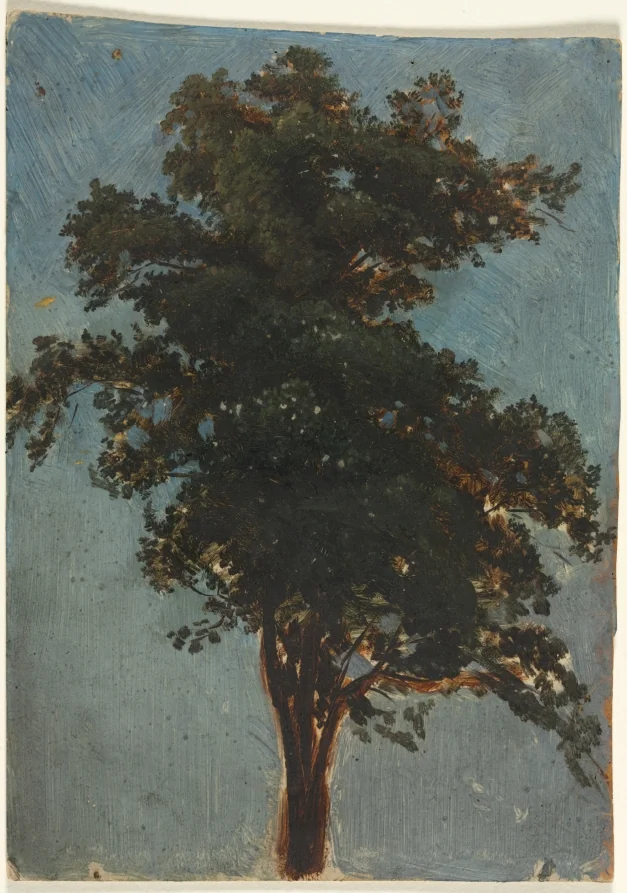
Alexandre Calame (1810-1864) was a Swiss painter known for the dramatically composed, precisely observed paintings of the Swiss Alps that make him one of the most important landscape painters of the 19th-century Swiss tradition. Tree Study from c. 1830-64 depicts a tree study in the precisely observed, atmospheric manner that distinguishes Calame's best work from the more general landscape painting of his contemporaries. Calame was known for his ability to depict the dramatic scenery of the Swiss Alps with both precise observation and dramatic composition, and the tree study subject shows his ability to find drama even in the study of a single tree.
Cultural Impact
Tree Study is important in the history of Swiss landscape painting because it demonstrates the precisely observed, atmospheric manner that Calame brought to even the most modest landscape subject as one of the most important landscape painters of the 19th-century Swiss tradition. Calame's precisely observed landscape studies—finding drama even in the study of a single tree with the precise observation and atmospheric effect that are his most distinctive contributions—represent one of the most accomplished traditions in 19th-century landscape painting, and the c. 1830-64 painting shows this tradition at its most precisely observed.
Why It Matters
Tree Study is Calame's precisely observed landscape: a single tree rendered in the atmospheric manner of one of the most important landscape painters of the 19th-century Swiss tradition. The c. 1830-64 painting shows Calame's ability to find drama even in the most modest landscape subject with precise observation and atmospheric effect.