Provenance
Estate of James Parmelee, Washington, D.C. (?-1940); The Cleveland Museum of Art, Cleveland, OH (October 30, 1940-)
Accession Number
1940.727
Medium
charcoal
Dimensions
N/A
Classification
Drawing
Credit Line
Bequest of James Parmelee
Tags
Drawing Impressionist & Modern (1851–1900) Charcoal British Color: Orange
Background & Context
Background Story
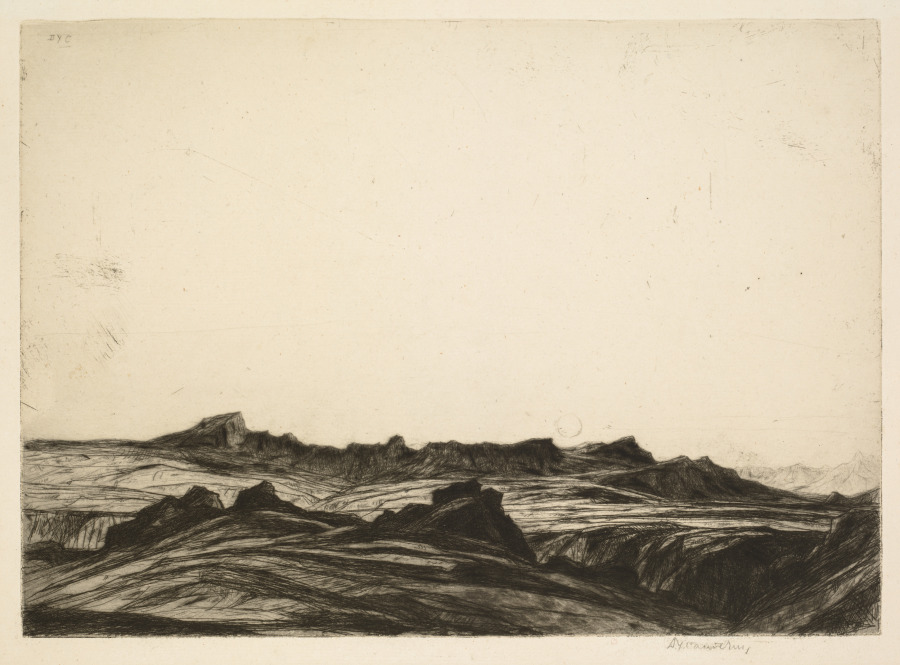
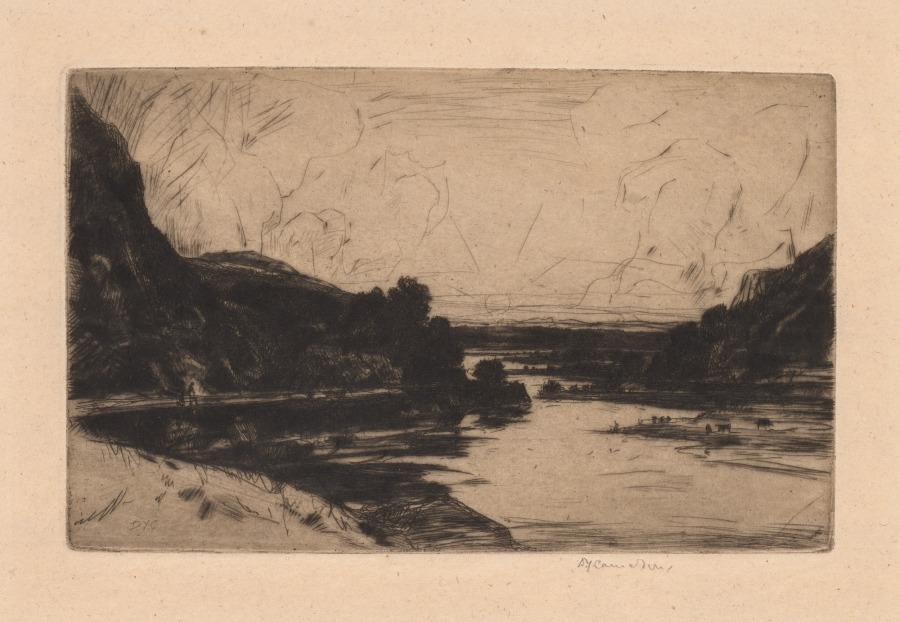
Loch Ness, Scotland's most famous lake (and its most mythologized), is rendered by Cameron in charcoal—the medium that combines the tonal richness of painting with the linear immediacy of drawing. The charcoal medium is ideally suited to the atmospheric conditions of Loch Ness, where clouds, mountains, and water create a landscape of constantly shifting tonal relationships. Cameron's charcoal handling is broad and decisive, capturing the essential masses of mountain, water, and sky with the economy of an etcher who knows exactly how much information is needed and how much can be left to the viewer's imagination.
Cultural Impact
Loch Ness was one of Cameron's most frequently painted subjects, and his many versions of it constitute a sustained exploration of the loch's atmospheric possibilities. Each version captures a different set of conditions—mist, full sun, overcast, rain—demonstrating Cameron's belief that a landscape's character is determined as much by its atmosphere as by its topography.
Why It Matters
Loch Ness in charcoal is Cameron's Scotland at its most atmospheric: the broad tonal masses of mountain and water rendered in a medium that matches the moody landscape, with charcoal's richness providing the depth that graphite's linearity would sacrifice. The monster may be imaginary, but the atmosphere is real.