Accession Number
1940.739
Medium
graphite; framing lines in graphite
Dimensions
Sheet: 13.8 x 22.2 cm (5 7/16 x 8 3/4 in.); Image: 13.2 x 21.5 cm (5 3/16 x 8 7/16 in.)
Classification
Drawing
Credit Line
Bequest of James Parmelee
Tags
Drawing Neoclassical & Romantic (1751–1850) Graphite & Pencil French Color: White
Background & Context
Background Story
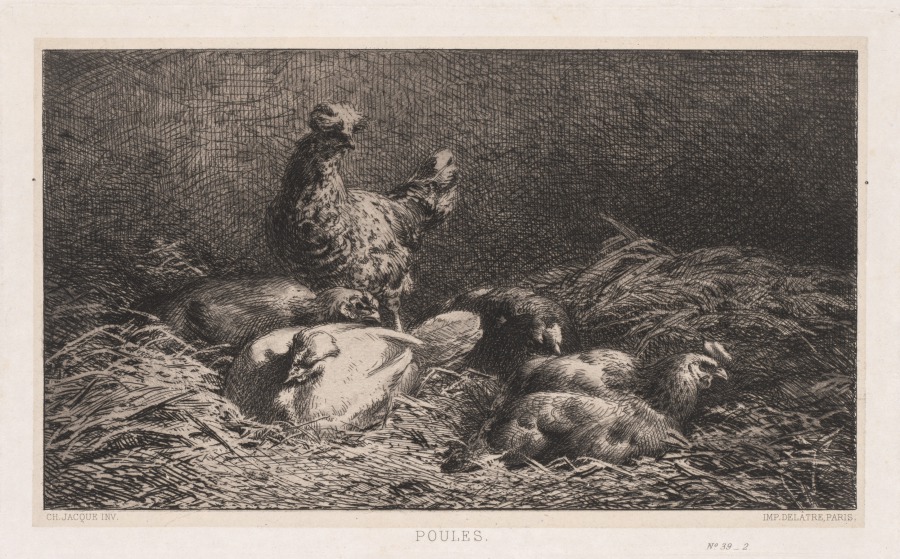
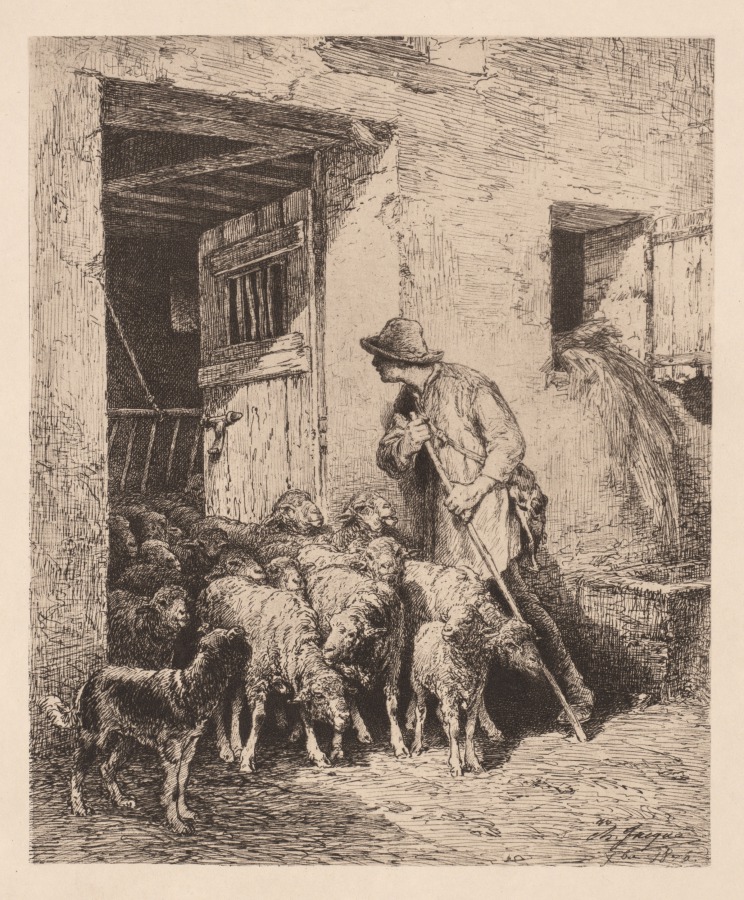
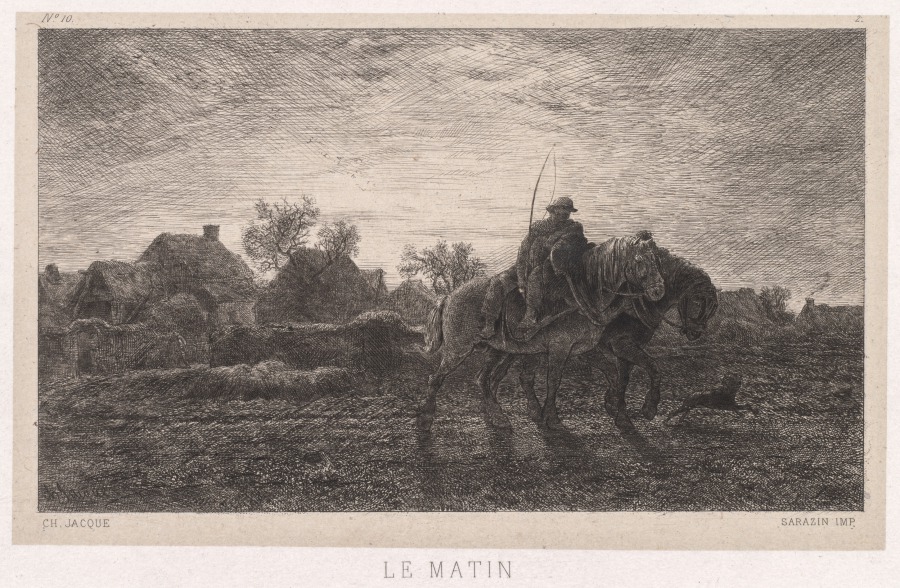
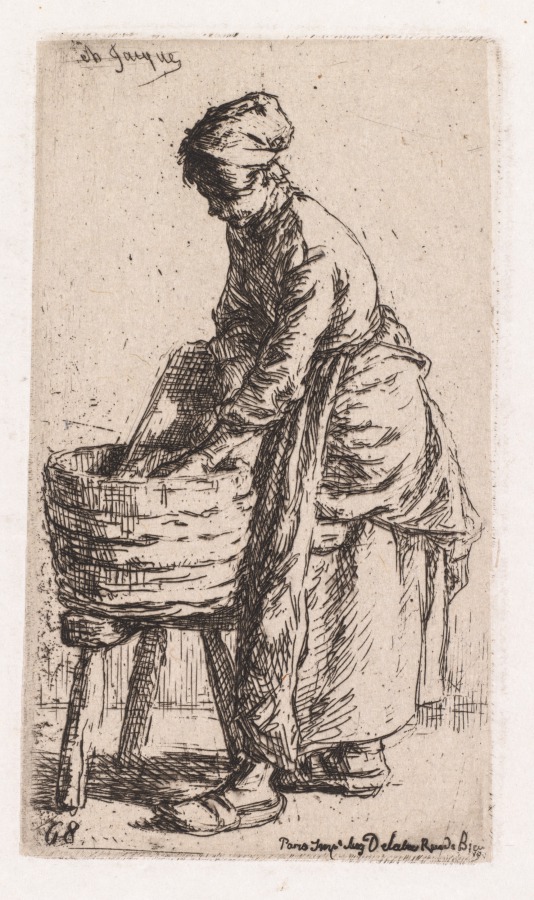
Herd of Pigs (c. 1845) represents Charles-Émile Jacque's engagement with the animal painting tradition that was his primary subject and his most significant contribution to the Barbizon school. While other Barbizon painters—Rousseau, Millet, Corot—focused on landscape and human figures, Jacque specialized in the animal subjects that gave the Barbizon movement its connection to the rural economy that surrounded the Forest of Fontainebleau. Pigs, unlike the sheep and cattle that dominated animal painting, were a specifically rural and domestic animal—kept by peasant families for food and associated with the agricultural economy that sustained the French countryside. The 1845 date places this during Jacque's most productive period, when he was establishing the animal painting practice that would make him one of the Barbizon school's most commercially successful members. His treatment of the pigs—their specific breeds, their characteristic behavior, and the rural setting where they were kept—demonstrates an ethnographic precision that distinguishes his work from the more idealized animal paintings of the Academic tradition. The pig herd, with its association with rural poverty rather than aristocratic hunting, represents the Barbizon school's democratic engagement with the working countryside rather than the leisured landscape that Salon painting typically depicted.
Cultural Impact
Jacque's pig paintings influenced how the rural economy was represented in Barbizon art, documenting the animal husbandry practices that sustained French peasant families. The paintings influenced later Realist painters who similarly found subjects in the working rather than the leisured countryside. The pig-herd subject influenced how animal painting's democratic dimension was understood, connecting rural economy to artistic significance.
Why It Matters
This painting matters because it represents the Barbizon school's democratic engagement with the working countryside—the pig herd that sustained rural families rather than the aristocratic hunting subjects that Academy painting preferred—and does so with the ethnographic precision that gives Jacque's animal painting both artistic and documentary value.