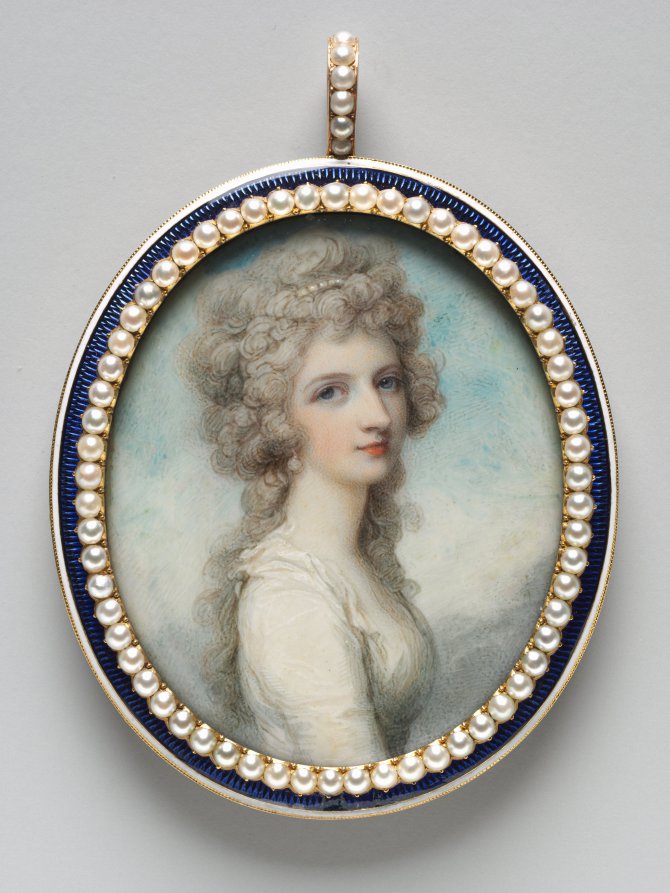
Description
Mary Frances (Fanny) Swinburne (d. 1828) was the eldest daughter of the travel writer Henry Swinburne. This portrait was painted around 1786, when Richard Cosway was reaching the mature stage of his career and was among the most sought after miniature painters in London. In this work the sitter’s hair is adorned with pearls—a style commonly seen in portraits of the period. She wears an earring in her right ear. Her bright blue eyes, rosy cheeks, and red lips are accentuated by her mass of curled, powdered hair and her pale skin and gown. This work is a classic example of Cosway’s elegant female portraits, exhibiting the nearly monochromatic palette and free style that would be so decisively rejected in the next century by such artists as Andrew Robertson (1777–1845) and William Charles Ross (1794–1860). The miniature is placed in a twentieth-century revival period gold and blue enamel frame with graduated split pearls. This ornate type of frame was especially popular among early-twentieth-century collectors who felt that it suited the grandeur of miniatures by Cosway and his circle, the female portraits of which were so often composed of the pale tones of gauzy dresses, blue skies, and pearl-ornamented hair.
Provenance
(Leo Schidlof (1886-1966), Paris, France, sold to Edward B. Greene) (-1930); Edward B. Greene (1878-1957), Cleveland, OH, gifted to the Cleveland Museum of Art (1930-1941); The Cleveland Museum of Art, Cleveland, OH (1941-)
Accession Number
1941.553
Medium
watercolor on ivory in a gold, enamel, and split pearl frame
Dimensions
Framed: 7 x 5.8 cm (2 3/4 x 2 5/16 in.); Sight: 6.8 x 5.7 cm (2 11/16 x 2 1/4 in.)
Classification
Portrait Miniature
Credit Line
The Edward B. Greene Collection
Related Artworks
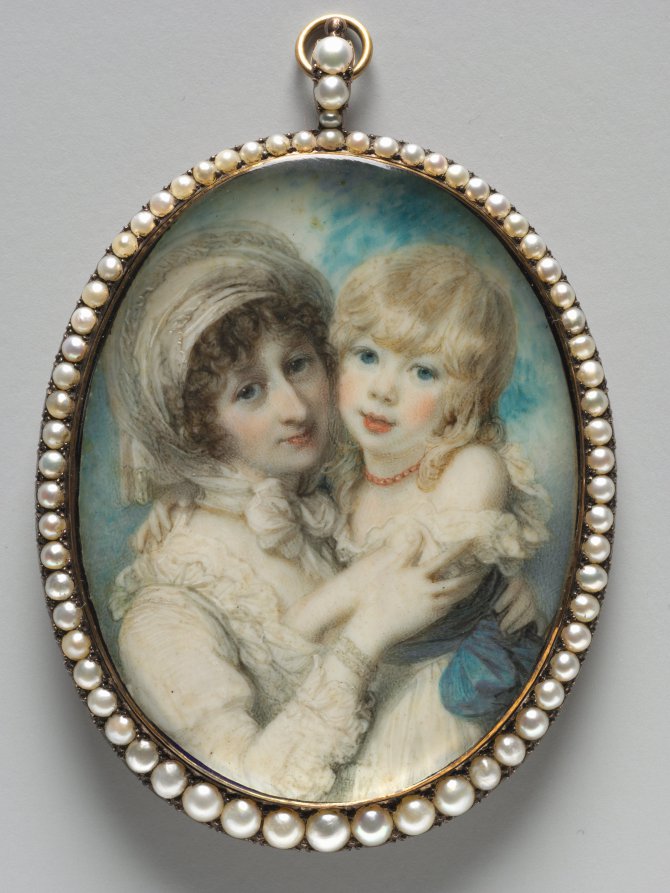
Portrait of Catherine Clemens and Her Son, John Marcus Clemens
Richard Cosway
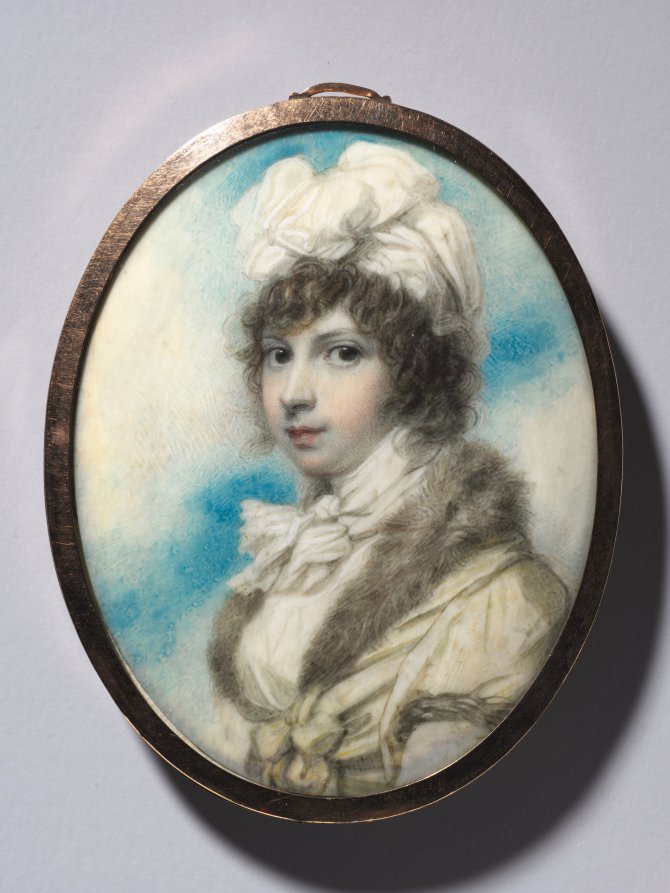
Portrait of the Hon. Anne Annesley, later Countess of Mountnorris
Richard Cosway
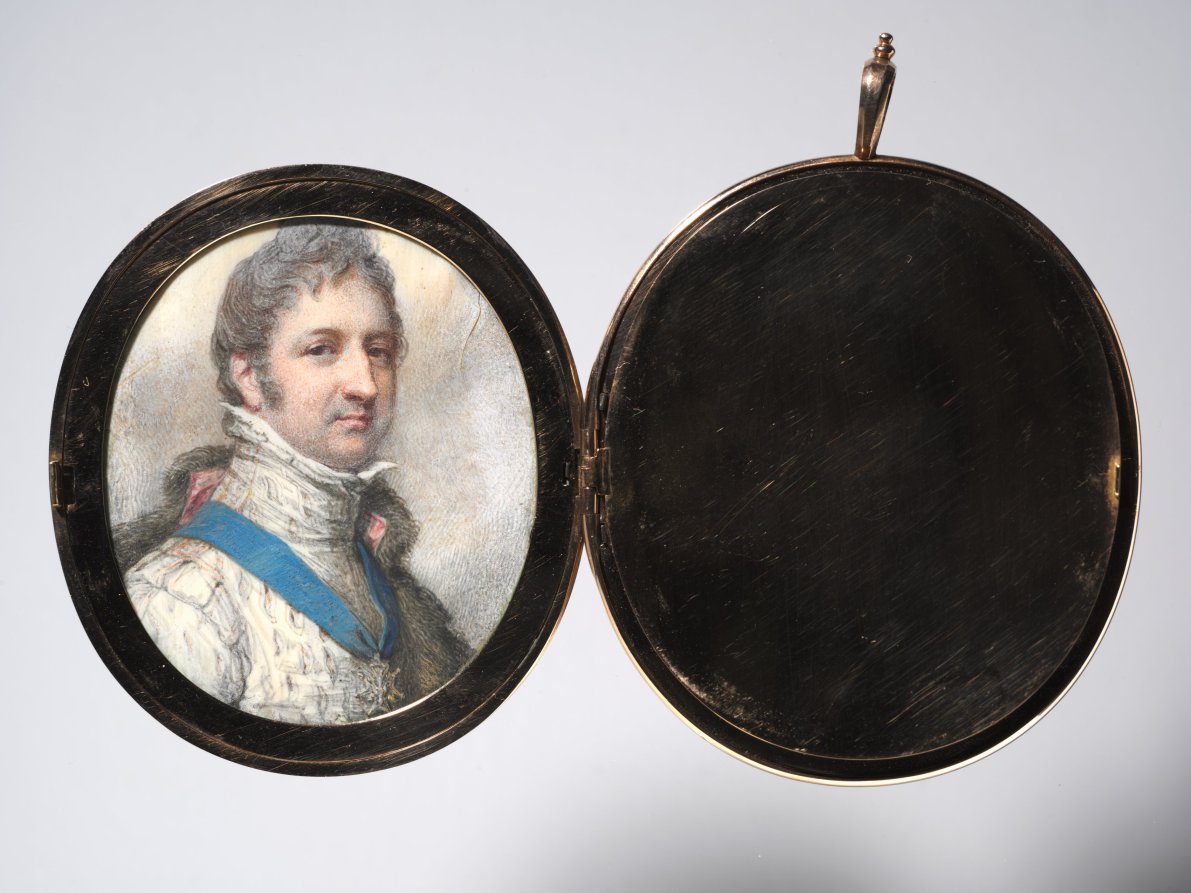
Portrait of Louis-Philippe, Duke of Orléans, later King of the French
Richard Cosway

Marianne Dorothy Harland (1759–1785), Later Mrs. William Dalrymple
Richard Cosway