Accession Number
1943.272
Medium
pen and brown ink and brush and gray wash over graphite; framing lines in brown ink
Dimensions
Sheet: 38.6 x 48.8 cm (15 3/16 x 19 3/16 in.)
Classification
Drawing
Credit Line
Dudley P. Allen Fund
Tags
Drawing Baroque (1600–1750) Ink Graphite & Pencil Flemish Color: White
Background & Context
Background Story
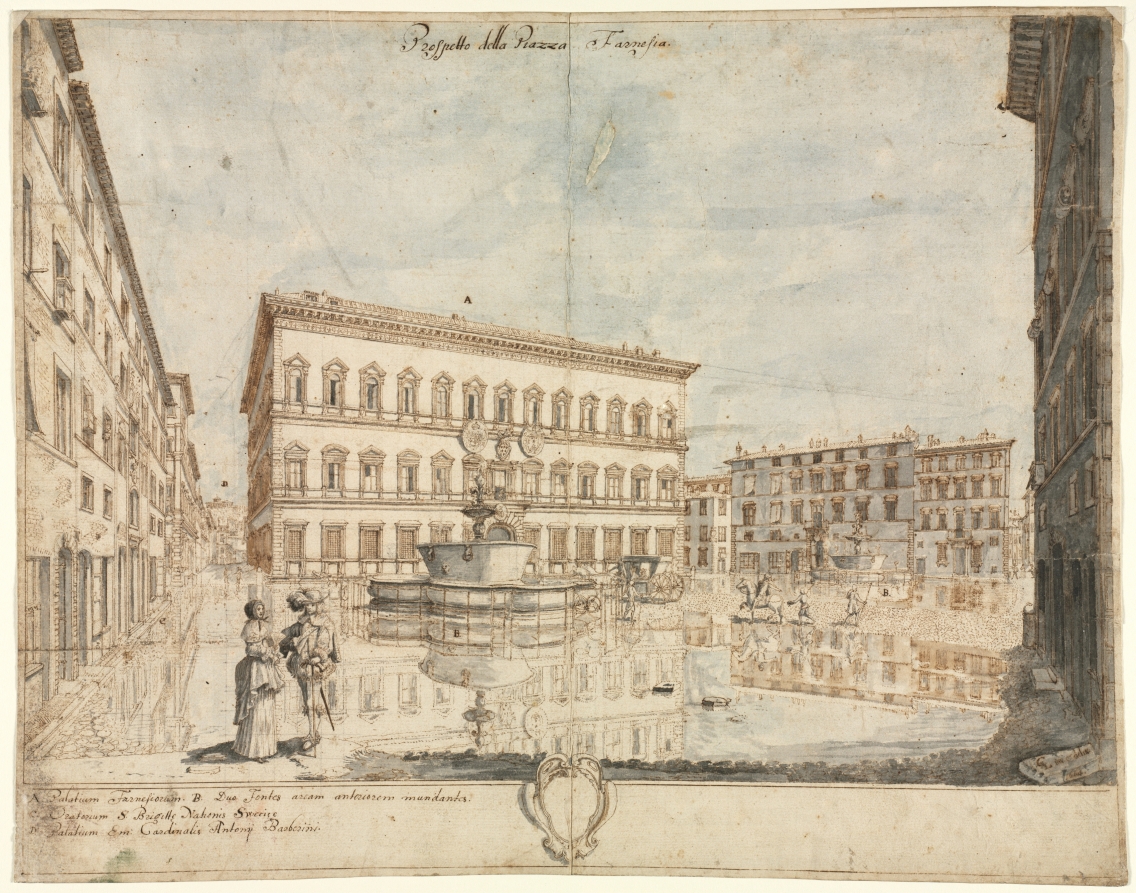
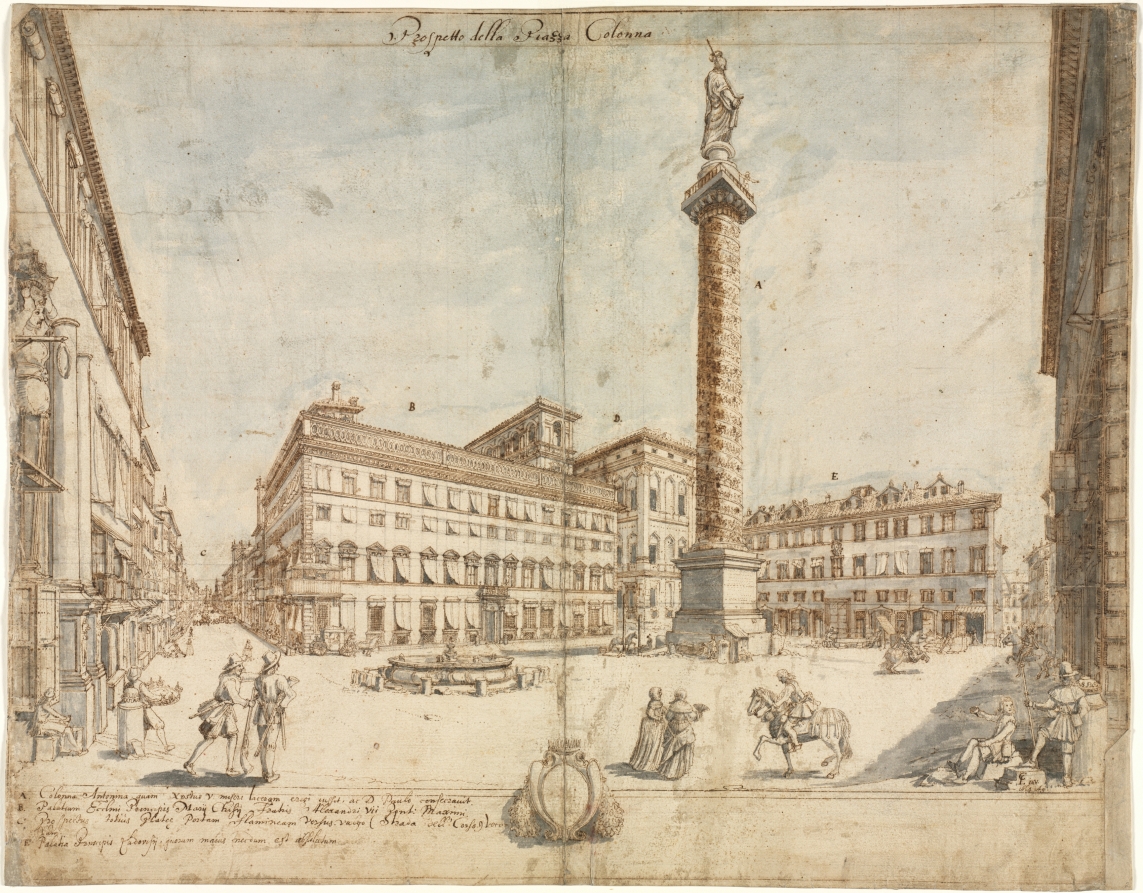
Lievin Cruyl (c. 1640-1720) was a Flemish draftsman and etcher known for his topographical views of Rome that are important documents of the city's appearance in the 17th century. Eighteen Views of Rome: The Trevi Fountain from 1665 depicts the Trevi Fountain in Rome in the precisely observed topographical manner that distinguishes Cruyl's best views of the city. The 1665 date places this before the present Trevi Fountain was built (1762), and Cruyl's etching shows the earlier fountain that stood on the site, making it an important document of the appearance of Rome before the major Baroque rebuilding of the city.
Cultural Impact
Eighteen Views of Rome: The Trevi Fountain is important in the history of Roman topography because it documents the appearance of the Trevi Fountain site before the present fountain was built. Cruyl's etching shows the earlier Renaissance fountain designed by Leon Battista Alberti that stood on the site before Nicolo Salvi's Baroque Trevi Fountain (completed 1762), making it an important document for the history of Roman urban development.
Why It Matters
Eighteen Views of Rome: The Trevi Fountain is Cruyl documenting Rome before the Baroque rebuilding: the earlier fountain on the site of the present Trevi Fountain, showing the appearance of Rome before the major Baroque rebuilding. The 1665 etching is an important topographical document of Roman urban development before the present Trevi Fountain was built.