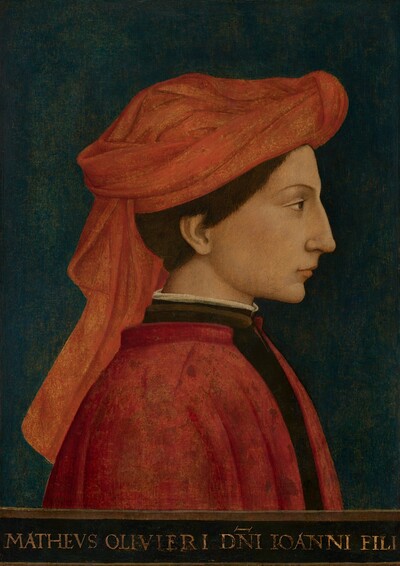
Accession Number
1946.70
Medium
oil on panel
Dimensions
Unframed: 49.5 x 36.8 cm (19 1/2 x 14 1/2 in.)
Classification
Painting
Credit Line
Gift of Mrs. Ralph Perkins in memory of Coburn Haskell
Tags
Painting Impressionist & Modern (1851–1900) Oil Painting Panel Painting American Color: Orange Color: Brown
Background & Context
Background Story
Portrait of Mr. C. by Max Bohm, painted in the early 1890s, is a work by an American artist who would become known for his powerful figure compositions and dramatic narrative scenes. Bohm, born in 1868, studied in Paris at the Academie Julian and was influenced by the European symbolist and classical revival movements. A portrait titled only by the sitter's initial suggests a measure of discretion or mystery about the subject's identity, which was common in portraits where the full name was withheld for privacy or artistic reasons. The early 1890s found Bohm developing his distinctive style, one that combined rigorous academic training with a modern sensibility toward psychological penetration and dramatic composition. American portraiture of this period was transitioning from the grand manner established by earlier painters toward a more intimate and psychologically nuanced approach, influenced by developments in European art including the work of Whistler, Sargent, and the early modernists. The abbreviated title also creates a dynamic between revelation and concealment that was characteristic of Gilded Age portraiture, where the display of wealth and status was often balanced against a desire for privacy. Bohm's later work would earn him significant recognition, including acceptance into the National Academy of Design, and his portraits provide valuable documentation of the people and aesthetics of his era.
Cultural Impact
Bohm's portrait practice exemplifies the transition in American art from Gilded Age formalism to a more psychologically engaged modernism, documenting the individuals who shaped turn-of-the-century American cultural and commercial life.
Why It Matters
This portrait represents an important phase in the development of an American artist whose work bridged academic tradition and modernist sensibility, capturing the intersection of privacy and public identity in Gilded Age society.
![Saint Bernard and Saint Catherine of Alexandria with the Virgin of the Annunciation [right panel]](https://api.nga.gov/iiif/e6890364-4d99-4684-a62b-5060ee3c3446/full/400,/0/default.jpg)