
Description
The third scene in the series depicts one of the final events of the pope’s stay. At the back of the magnificent audience hall of Santi Giovanni e Paolo, the doge (in gold and white) approaches the throne to receive his papal blessing, with a line of red-robed senators in his wake.
Provenance
Jakob Goldschmidt, 1882-1955 (Berlin, Germany and New York, New York), by 1929, sold through; Jacques Seligman & Co. (New York, New York), to the Cleveland Museum of Art, 1949.; [Galerie Matthiessen, Berlin, 1944]
Pope Pius VI Descending the Throne to Take Leave of the Doge in the Hall of SS. Giovanni e Paolo, 1782
c. 1783
Accession Number
1949.187.1
Medium
oil on canvas
Dimensions
Framed: 69.2 x 86.4 x 10.2 cm (27 1/4 x 34 x 4 in.); Unframed: 51.4 x 68.8 cm (20 1/4 x 27 1/16 in.)
Classification
Painting
Credit Line
Gift of the Hanna Fund
Tags
Painting Neoclassical & Romantic (1751–1850) Oil Painting Canvas Italian Color: Yellow
Background & Context
Background Story
This painting records a specific historical event: Pope Pius VI's visit to Venice in 1782, when he took leave of Doge Paolo Renier in the great hall of SS. Giovanni e Paolo. Guardi transforms this diplomatic ceremony into a spectacular visual display, filling the vast architectural space with figures, light, and pageantry. The Hall of SS. Giovanni e Paolo—a Dominican church long associated with Venice's doges, who were buried there—provided a setting charged with funerary and dynastic symbolism appropriate to such a formal occasion. Guardi's composition skillfully balances the architecture's immensity against the crowd's density, creating a sense of both grandeur and intimacy. The pope's white figure provides a focal point amid the dark robes and gilded decorations, while the architecture frames the ceremony like a theater set. Painted around 1783, this work documents one of the last great diplomatic ceremonies of the Venetian Republic before Napoleon dissolved it in 1797. The painting thus carries a poignancy its contemporary viewers could not have anticipated: this was a civilization staging its own finale in the language of eternal ceremony.
Cultural Impact
This painting serves as an invaluable historical document of Venetian ceremonial life in its final decades. It influenced how 18th-century Venetian statecraft was understood and visualized by later historians and artists. Guardi's ceremonial paintings also shaped the tradition of depicting official occasions, influencing how political events were represented in art from David's coronation paintings to 20th-century photojournalism of state events.
Why It Matters
This work matters as both art and history. As art, it demonstrates Guardi's ability to organize vast, complex compositions without losing visual coherence. As history, it records the precise appearance of a ceremony that would never be repeated—the Venetian Republic itself would vanish within fifteen years. The painting thus exemplifies art's unique capacity to preserve experiences that no other medium can record.
Related Artworks
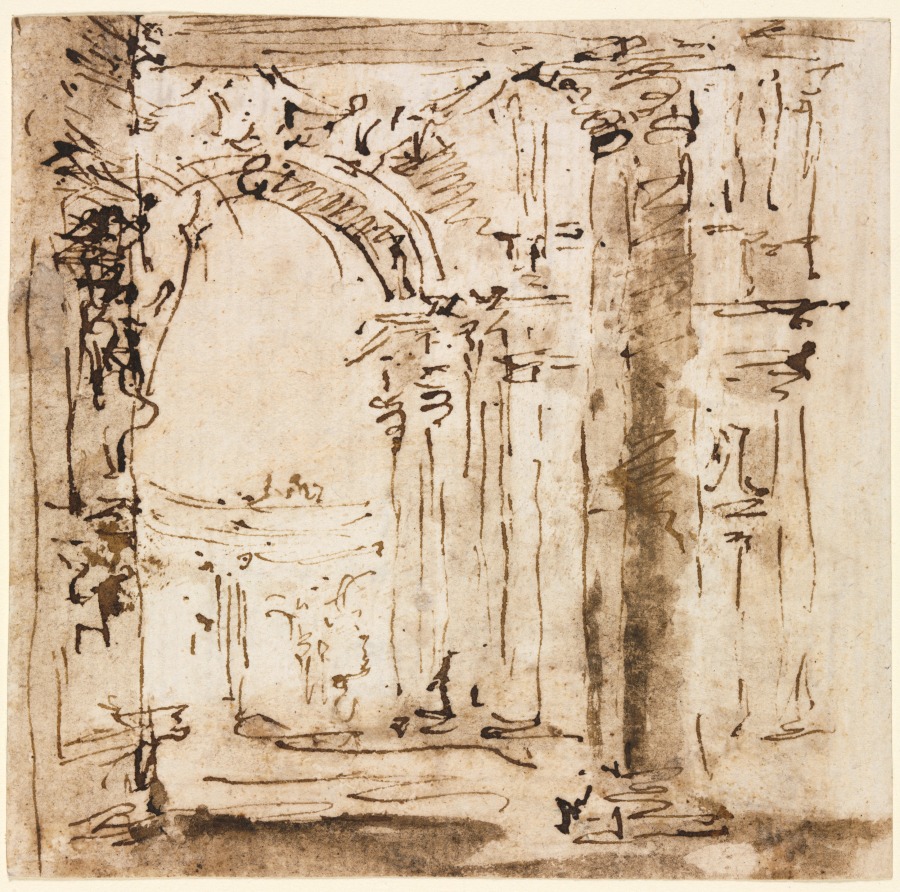
Pair of Drawings: Sketch of the Labyrinth of the Villa Pisani and Piazza San Marco with Doges' Palace
Francesco Guardi
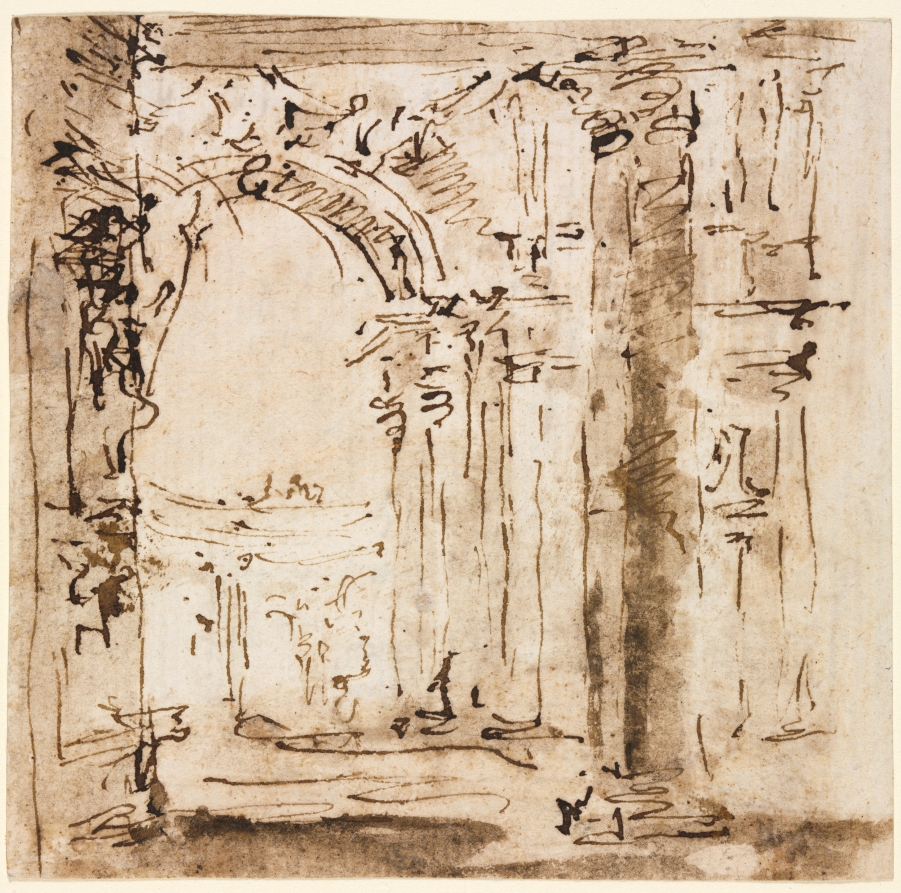
Sketch of the Labyrinth of the Villa Pisani
Francesco Guardi
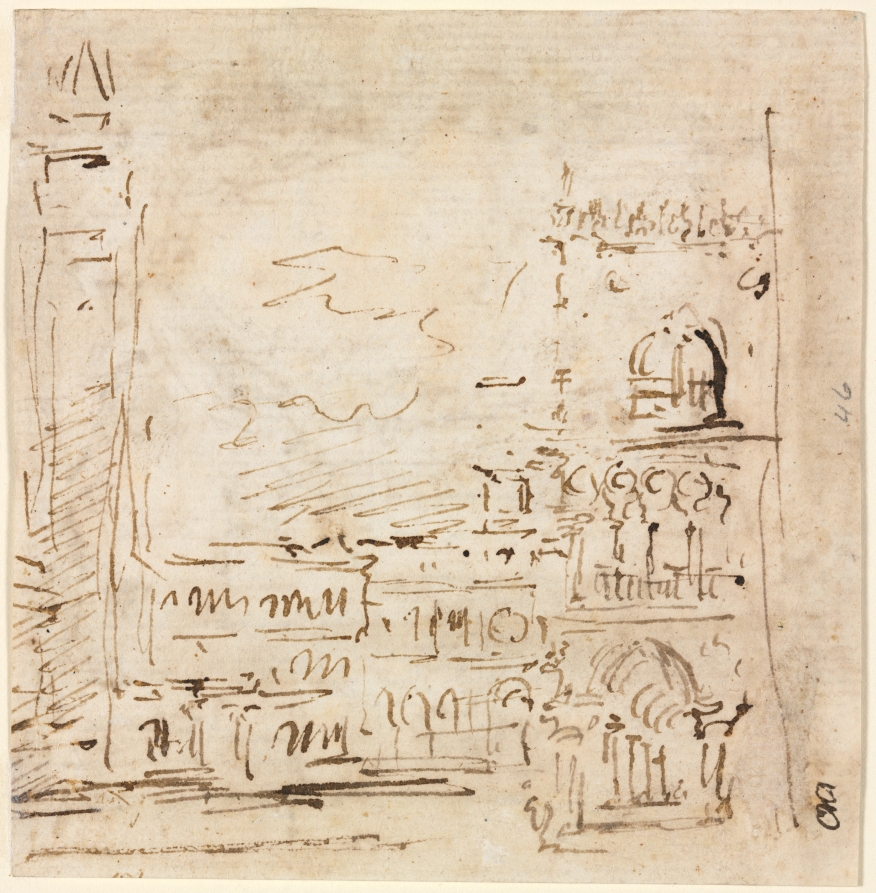
Piazza San Marco with Doges' Palace
Francesco Guardi
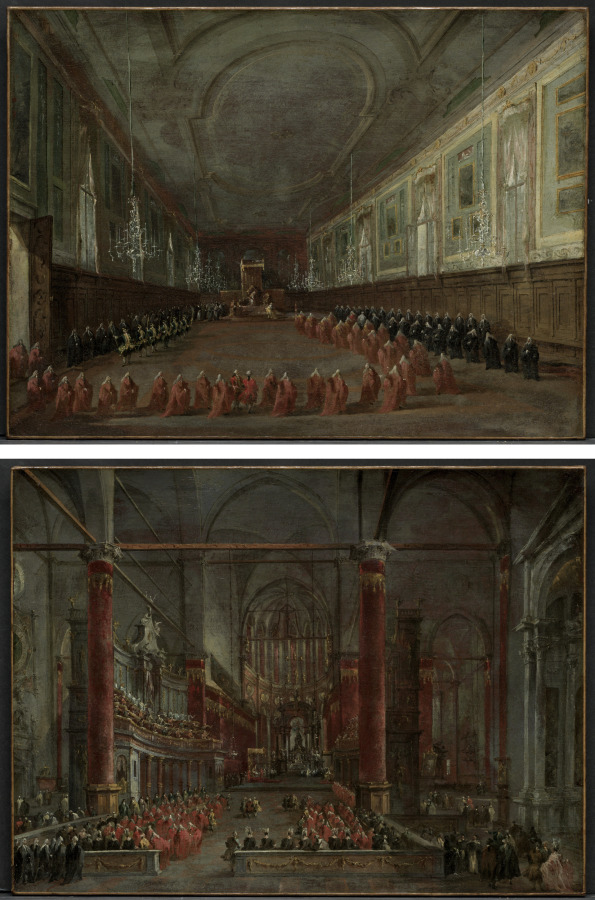
Pope Pius VI Descending the Throne to Take Leave of the Doge in the Hall of SS. Giovanni e Paolo, 1782 and Pontifical Ceremony in SS. Giovanni e Paolo, Venice, 1782 (pair)
Francesco Guardi