
Description
The second scene in the series depicts Pius VI celebrating mass in the Basilica of Santi Giovanni e Paolo, one of the largest churches in Venice and the pope’s residence during his stay. The mass included a performance of the Te Deum, a prayer of thanksgiving set to music by the Venetian composer Antonio Vivaldi (1678–1741). Traditionally, the Te Deum was recited in thanks to God for a special blessing, including a papal election or a royal coronation, and thus was appropriate for this historic papal visit.
Provenance
Jakob Goldschmidt, Berlin, 1929, and New York;; [Galerie Matthiessen, Berlin, 1944];; [Jacques Seligman & Co., New York], sold to the Cleveland Museum of Art, 1949.
Accession Number
1949.187.2
Medium
oil on canvas
Dimensions
Framed: 69.2 x 87 x 11.4 cm (27 1/4 x 34 1/4 x 4 1/2 in.); Unframed: 51.4 x 68.8 cm (20 1/4 x 27 1/16 in.)
Classification
Painting
Credit Line
Gift of the Hanna Fund
Tags
Painting Neoclassical & Romantic (1751–1850) Oil Painting Canvas Italian Color: Orange Color: Brown
Background & Context
Background Story
This companion piece to the Pope Pius VI farewell painting captures another aspect of the same pontifical visit to Venice in 1782. Guardi depicts the interior ceremony within the great Dominican church, emphasizing the splendor of the ecclesiastical occasion and the vastness of the architectural setting. The painting showcases Guardi's skill at managing complex interior scenes with multiple light sources and layers of architectural detail. Candlelight, natural light from clerestory windows, and the reflected glow from gilded surfaces create a luminous atmosphere that dissolves the boundary between interior and the divine light the ceremony invokes. The Dominican church of SS. Giovanni e Paolo, known as the Pantheon of Venice for its dogal tombs, provides a setting whose historical weight amplifies the ceremony's significance. Painted around 1783, the work captures the Catholic Church's political theater at a moment when the papacy was navigating the Enlightenment's challenges to religious authority. The ceremony's magnificence was itself an argument for the Church's continued cultural relevance.
Cultural Impact
Guardi's ceremonial paintings influenced how church interiors and religious ceremonies were depicted in European art. His sophisticated handling of multiple light sources within architectural interiors influenced later painters of church interiors from the Nazarenes to the Symbolists. These Venetian ceremony paintings also shaped the international perception of Venetian Catholicism as spectacular, theatrical, and deeply integrated with civic life.
Why It Matters
This work demonstrates how ceremony and architecture can be visually unified—the ceremony makes no sense without the architecture, and the architecture seems designed precisely for such ceremonies. Guardi's painting reveals the essential relationship between ritual practice and sacred space, offering insights relevant to architects, liturgists, and anyone interested in how built environments shape and are shaped by human activities.
Related Artworks
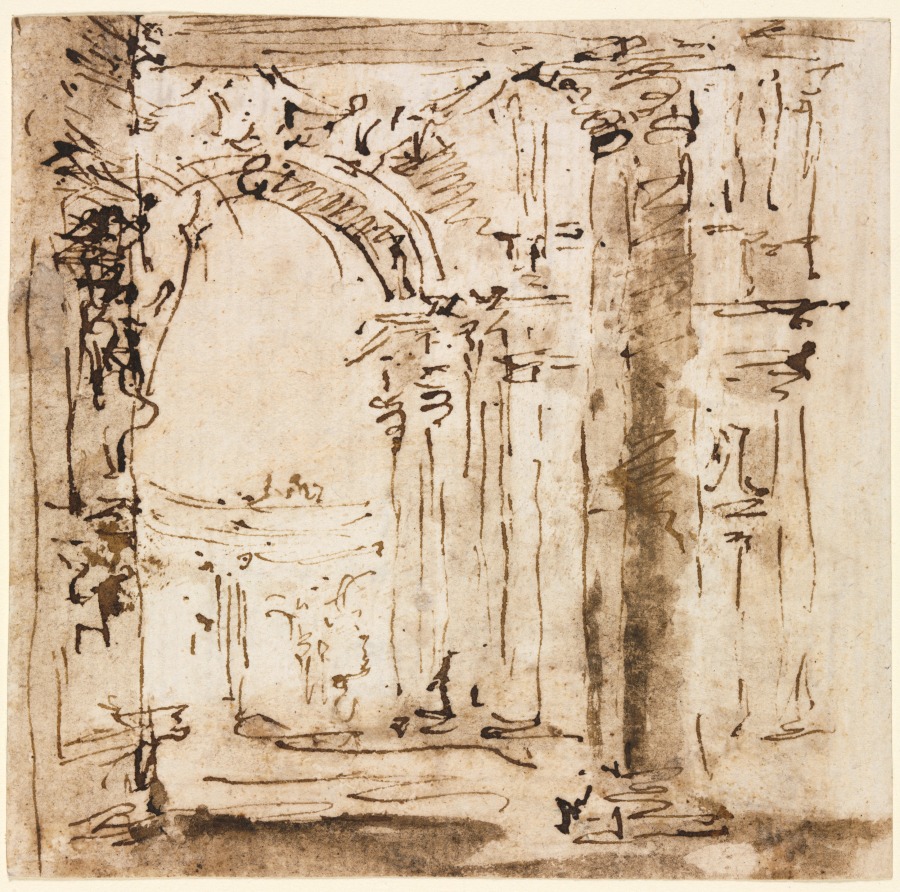
Pair of Drawings: Sketch of the Labyrinth of the Villa Pisani and Piazza San Marco with Doges' Palace
Francesco Guardi
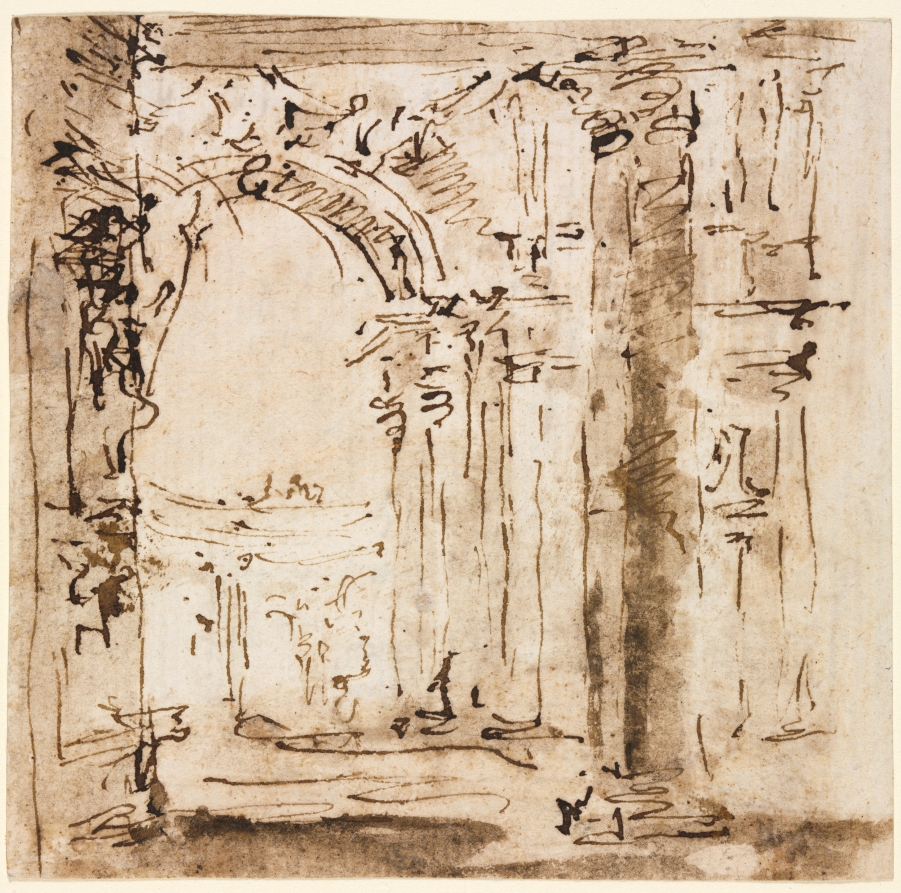
Sketch of the Labyrinth of the Villa Pisani
Francesco Guardi
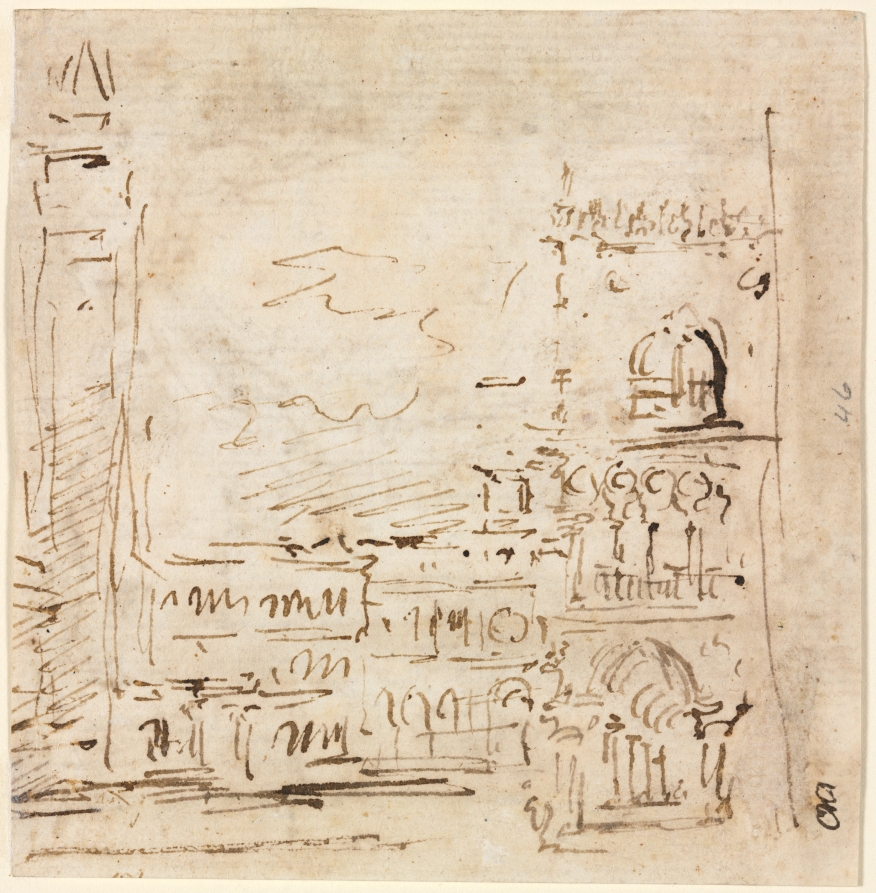
Piazza San Marco with Doges' Palace
Francesco Guardi
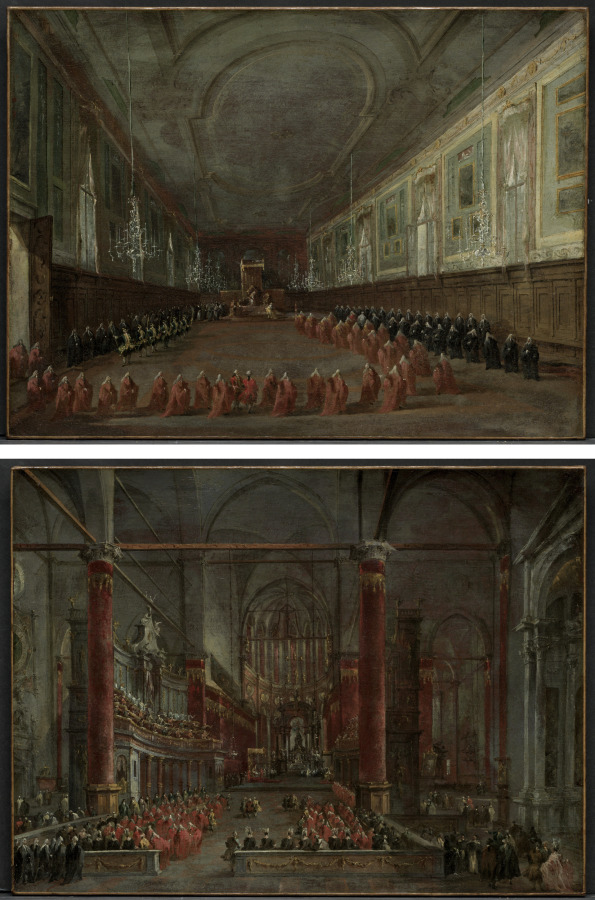
Pope Pius VI Descending the Throne to Take Leave of the Doge in the Hall of SS. Giovanni e Paolo, 1782 and Pontifical Ceremony in SS. Giovanni e Paolo, Venice, 1782 (pair)
Francesco Guardi