
Provenance
Mrs. John A. [Marianne Elizabeth Millikin] Hadden [1896–1992], Cleveland, OH, given to the Cleveland Museum of Art (?–1949); The Cleveland Museum of Art, Cleveland, OH (1949–)
Accession Number
1949.382
Medium
hanging scroll; color and gold on silk
Dimensions
Overall: 88 x 32.1 cm (34 5/8 x 12 5/8 in.)
Classification
Painting
Credit Line
Gift of Mrs. John A. Hadden
Tags
Painting Impressionist & Modern (1851–1900) Silk Painting Gold Leaf Japanese Color: Orange Color: White
Background & Context
Background Story
Kubo Shunman (1757-1820) was a Japanese painter and print designer of the Edo period, known for his refined bijinga (pictures of beautiful women) and his kachoga (bird-and-flower paintings). Woman and Two Children is a hanging scroll in color and gold on silk depicting a woman with two children—a subject that combines Shunman's bijinga aesthetic with the domestic intimacy of a family group. The gold highlights on silk create the luminous background that distinguishes Edo-period hanging scrolls from less formal formats, and the refined brushwork and subtle color demonstrate the level of technical accomplishment that Shunman brought to both painting and print design.
Cultural Impact
Shunman's Woman and Two Children participates in the bijinga tradition of Edo-period painting while expanding it to include domestic subject matter. The combination of the bijinga aesthetic (the beautiful woman rendered with refined brushwork) with the domestic subject (a mother with her children) creates a hybrid that suggests the influence of the Ukiyo-e tradition's interest in everyday life on the more refined bijinga format.
Why It Matters
Woman and Two Children is Shunman's bijinga meeting domestic life: a beautiful woman rendered with refined brushwork and gold on silk, accompanied by two children who expand the bijinga tradition to include the family group. The gold highlights and silk format give the domestic subject the formality and luminosity of the bijinga tradition.
Related Artworks
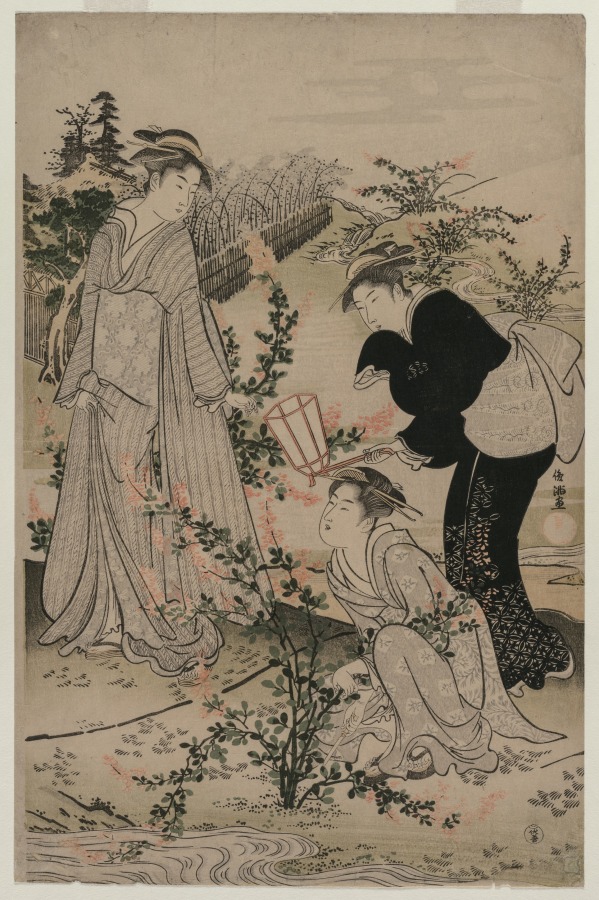
Women Cutting Branches of Bush Clover; The Noji Tama River in Omi Province, from an untitled series of the Six Tama Rivers
Kubo Shunman
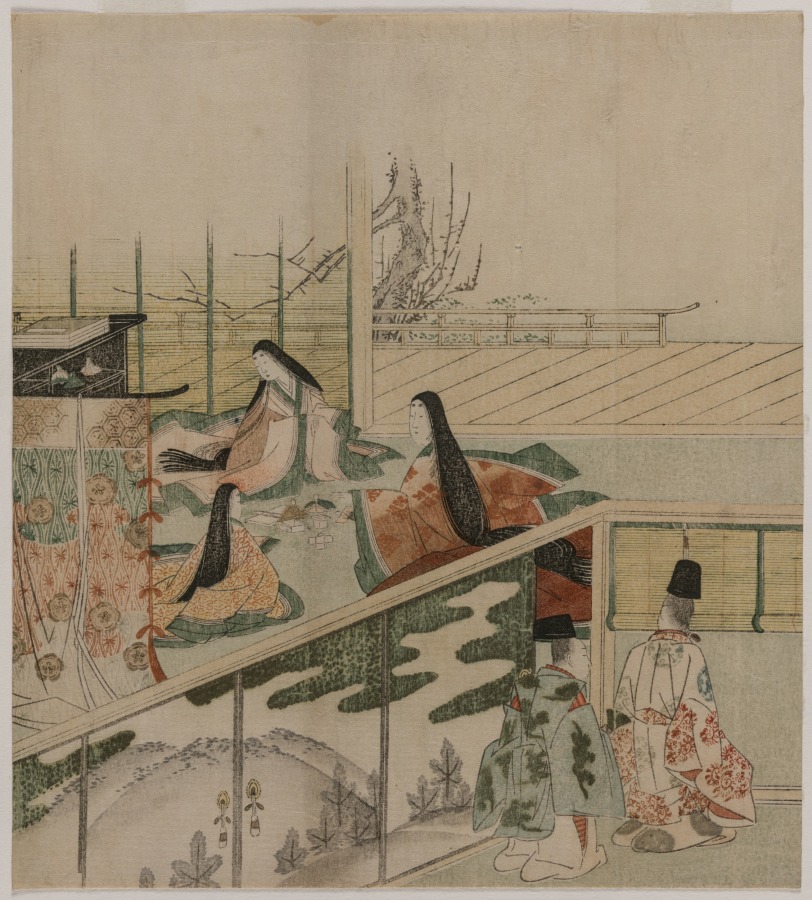
Court Ladies Making Dolls
Kubo Shunman
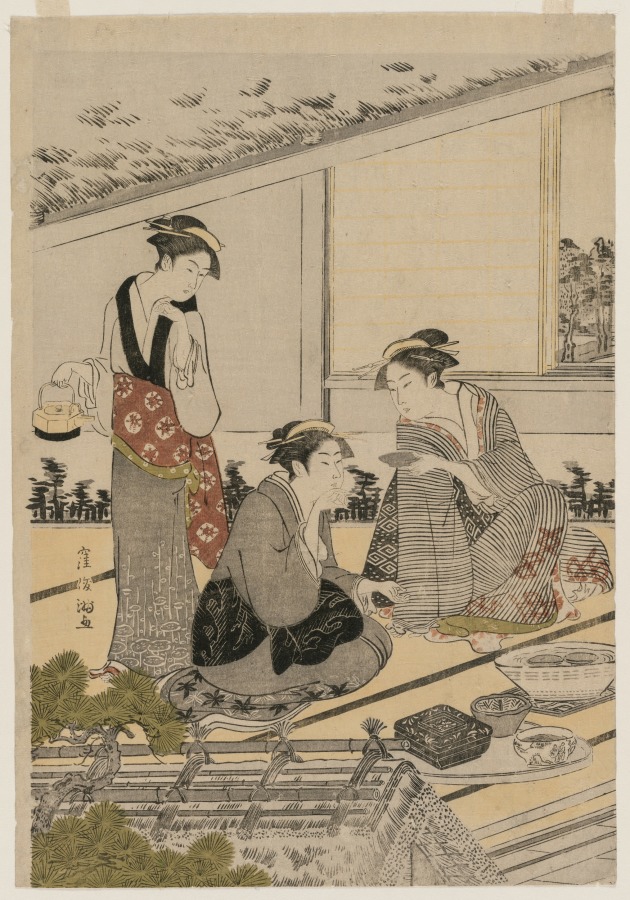
Women in a Tea House
Kubo Shunman
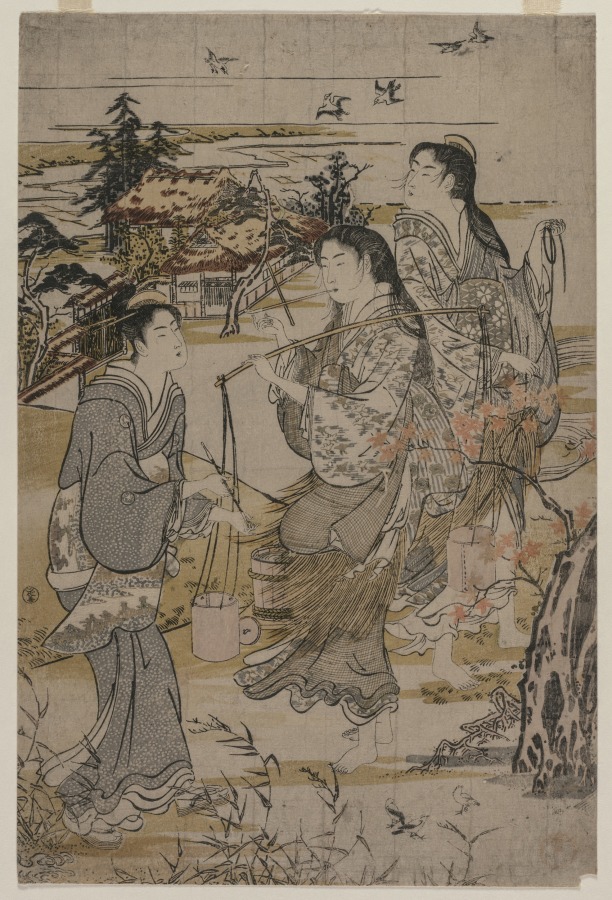
Women with Salt Pails; The Noda Tama River in Mutsu Province, from an untitled series of the Six Tama Rivers
Kubo Shunman