Description
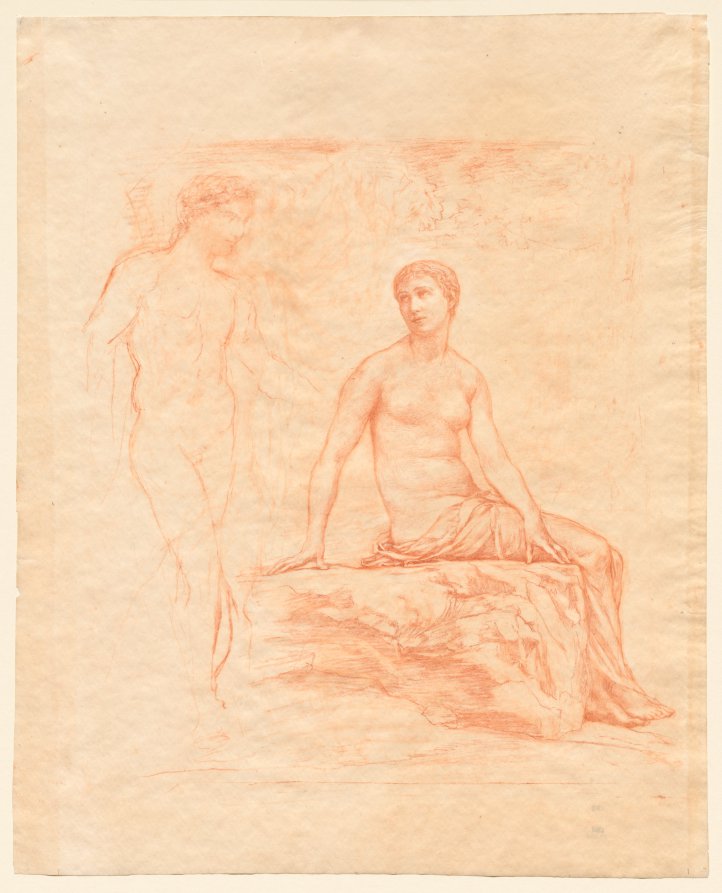
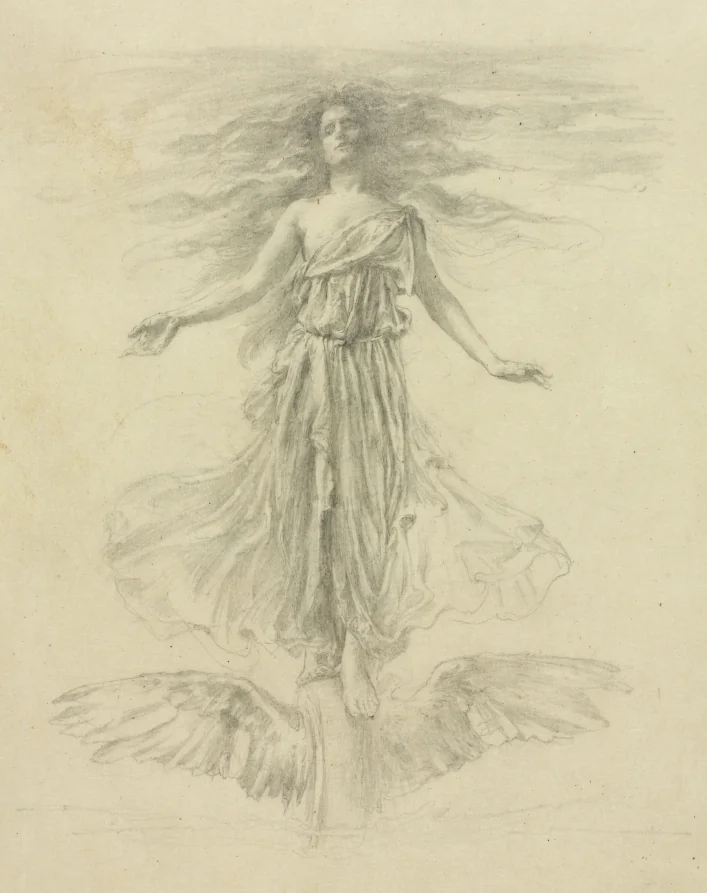
When commissioned in 1901 to make a stained glass window for the Frick office building in Pittsburgh, John La Farge produced this strange design of Fortune balancing precariously on a wheel—an emblem of the fickleness of fortune. The hazy, mysterious handling of the face of the central figure recalls contemporary French Symbolist painters such as Odilon Redon (1840–1916).
Provenance
William G. Mather [1857-1951], Bratenahl, OH (?-1950); The Cleveland Museum of Art, Cleveland, OH (October 10, 1950)
Accession Number
1950.316
Medium
graphite
Dimensions
Sheet: 27.7 x 20 cm (10 7/8 x 7 7/8 in.)
Classification
Drawing
Credit Line
Gift of William G. Mather
Tags
Drawing Early Modern (1901–1950) Graphite & Pencil American Color: White
Background & Context
Background Story
Fortune, drawn in graphite in 1901, is one of La Farge's most refined drawings — a study for a figure (probably an allegorical personification of Fortune) rendered with the precision of a master draftsman nearing the end of his career. The graphite medium, with its silvery tonal range and capacity for fine detail, allows La Farge to study the figure's pose, drapery, and expression without the distraction of color. The drawing demonstrates that La Farge's reputation as a colorist should not obscure his equally impressive command of line and tone — the fundamentals that underpin his more spectacular achievements in stained glass and mural painting.
Cultural Impact
La Farge's graphite drawings are the foundation of his creative process, but they are also independent works of art that demonstrate his mastery of traditional academic drawing. Fortune, with its allegorical subject, connects La Farge to the Beaux-Arts tradition in which he was trained — a tradition that valued figure drawing as the basis of all visual art, and allegorical personification as the highest form of subject matter.
Why It Matters
Fortune is La Farge's draftsmanship at its purest: no color, no glass, no mural — just graphite on paper and the discipline of a lifetime of drawing. The allegorical figure is a reminder that every stained glass angel and mural saint began as a drawing exactly like this one.