Description
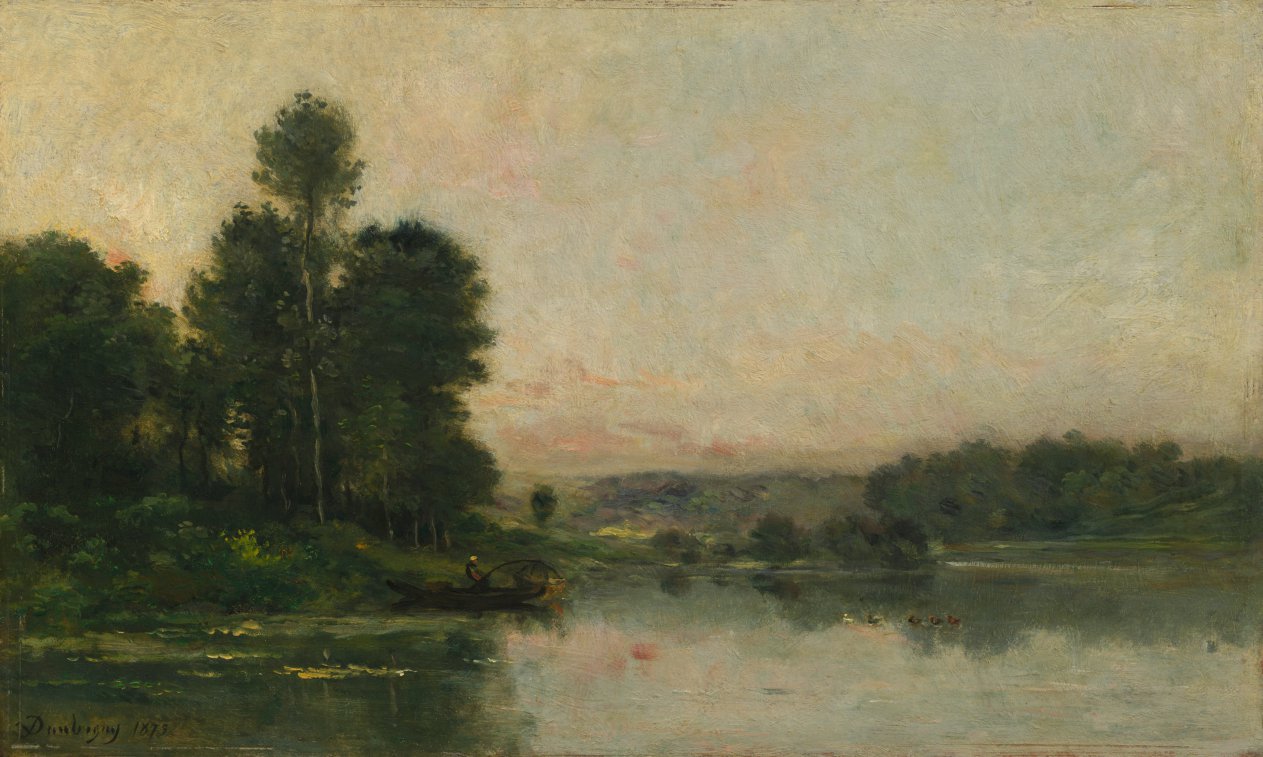
The town of Villerville on the Normandy coast appears just to the right of center in this expansive landscape by Daubigny, a pioneer of outdoor painting and a major influence on Claude Monet and the Impressionists. Daubigny introduced a new kind of natural landscape based on outdoor studies of light, water, and atmospheric conditions. Here, streaks of bright light along the horizon set off the dark masses of the rocky shore in the foreground.
Provenance
Bought from the artist in 1878 by Count Armand Doria [1824-1896] Paris, France, for ff 2,500.; (Galerie Heinemann, Munich, Germany, December 1912, sold to C.A. Platt for William G. Mather) (1912); William G. Mather [1857-1951] Cleveland, OH, bequethed to the Cleveland Museum of Art (1912-1951); The Cleveland Museum of Art, Cleveland, OH (1951-)
Accession Number
1951.323
Medium
oil on fabric
Dimensions
Framed: 80 x 141.5 x 7.5 cm (31 1/2 x 55 11/16 x 2 15/16 in.); Unframed: 54.2 x 116.2 cm (21 5/16 x 45 3/4 in.)
Classification
Painting
Credit Line
Bequest of William G. Mather
Tags
Painting Impressionist & Modern (1851–1900) Oil Painting French Color: White Color: Gray
Background & Context
Background Story
Villerville, a small fishing village on the Normandy coast, became one of Daubigny's favorite subjects after he discovered the region in the 1850s. This view from Le Ratier, a hilltop overlooking the village, shows the compact settlement nestled between the sea and the green Normandy countryside. Daubigny captures the unique light of the Norman coast — silvery, changeable, often overcast — with the tonal subtlety that distinguished him from the more dramatic Barbizon painters. Where Corot painted poetry and Rousseau painted grandeur, Daubigny painted the quiet truth of specific places at specific times.
Cultural Impact
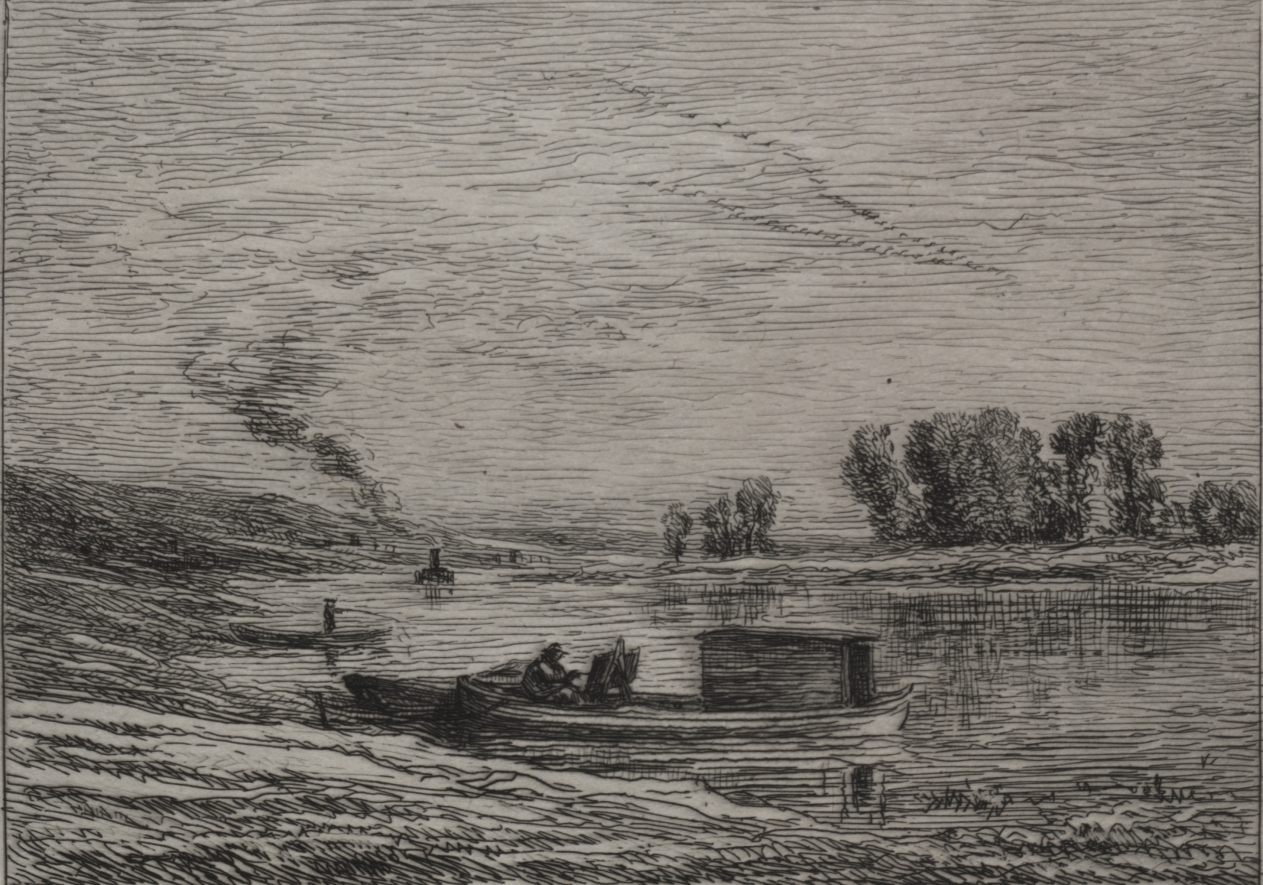
Daubigny's Normandy paintings are crucial links between Barbizon naturalism and Impressionist marine painting. His practice of painting from a boat (his studio boat Le Botin) gave him access to river and coastal views that no land-based painter could reach. Monet, who would later paint at Villerville and Honfleur, acknowledged Daubigny as a direct precursor and guide.
Why It Matters
Villerville Seen from Le Ratier is Daubigny's Normandy at its most characteristic: a specific place rendered with such fidelity that the light and atmosphere become the true subjects, and the village becomes a landmark in the history of how painters learned to see the coast.