
Description
This series of paintings predominantly tells the Old Testament story of Abraham and Isaac, and each of the canvases treats the interaction of humans and angels. In three works, angels appear to Abraham and, in one particularly dramatic canvas, an angel intercepts Abraham before he sacrifices his own son. Like another work in this series, Tobias and the Angels, the Sacrifice of Isaac is a narrative about fathers and sons as well as obedience inspired by faith.
Provenance
For individual provenance history for each painting in the series, refer to component records.
The Sacrifice of Isaac, Tobias and the Angel, The Angels Appearing to Abraham, Abraham Welcoming the Three Angels (painting series)
1750s
Accession Number
1952.235
Medium
oil on canvas
Dimensions
Framed: 71 x 90.5 x 5.5 cm (27 15/16 x 35 5/8 x 2 3/16 in.); Unframed: 56.5 x 75.5 cm (22 1/4 x 29 3/4 in.)
Classification
Painting
Credit Line
Mr. and Mrs. William H. Marlatt Fund
Tags
Painting Baroque (1600–1750) Oil Painting Canvas Italian Color: Orange Color: Brown Color: Gray
Background & Context
Background Story
This composite work presents a series of Old Testament subjects—the Sacrifice of Isaac, Tobias and the Angel, the Angels Appearing to Abraham, and Abraham Welcoming the Three Angels—painted by Guardi in the 1750s. These biblical narratives share a common theme: the moment when divine intervention intersects with human life, when the ordinary is interrupted by the miraculous. Guardi's treatment of these subjects reveals an unexpected dimension of an artist primarily known for Venetian vedute. In the 1750s, before he established his reputation as a view painter, Guardi worked in his family's painting workshop producing religious and narrative works. These paintings show the younger Guardi absorbing the Venetian narrative tradition of Tiepolo and Ricci while developing the loose, atmospheric brushwork that would characterize his mature vedute. The 1750s context is significant: Venice was a major center of Catholic art production, and biblical narratives remained essential commissions even as genre painting and vedute gained market share. Guardi's choice of these particular subjects—all involving angels—allowed him to explore the visual problem of rendering the supernatural within naturalistic settings.
Cultural Impact
Guardi's religious paintings influenced how Old Testament subjects were interpreted in Venetian art circles, providing an alternative to Tiepolo's more theatrical approach. The series also demonstrated that veduta painters could work effectively in narrative genres, broadening the market for their work. These paintings influenced later collectors' and scholars' understanding of Guardi's artistic range, preventing him from being categorized solely as a view painter.
Why It Matters
This series matters because it reveals the artistic foundations on which Guardi built his vedute practice. The atmospheric treatment of light and the loose brushwork that make his Venice views so compelling were developed partly through these religious subjects, where supernatural light and angelic Visitations demanded exactly the kind of luminous, dissolving effects Guardi later applied to Venetian architecture and water. Understanding these early works deepens appreciation of Guardi's mature achievement.
Related Artworks
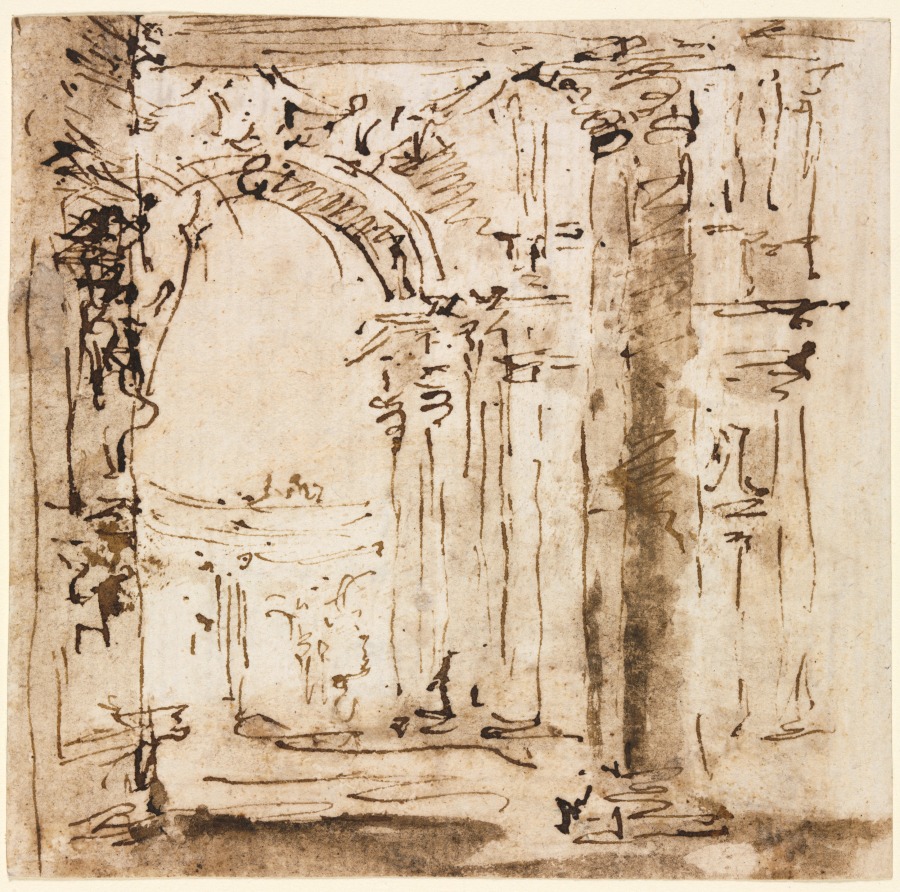
Pair of Drawings: Sketch of the Labyrinth of the Villa Pisani and Piazza San Marco with Doges' Palace
Francesco Guardi
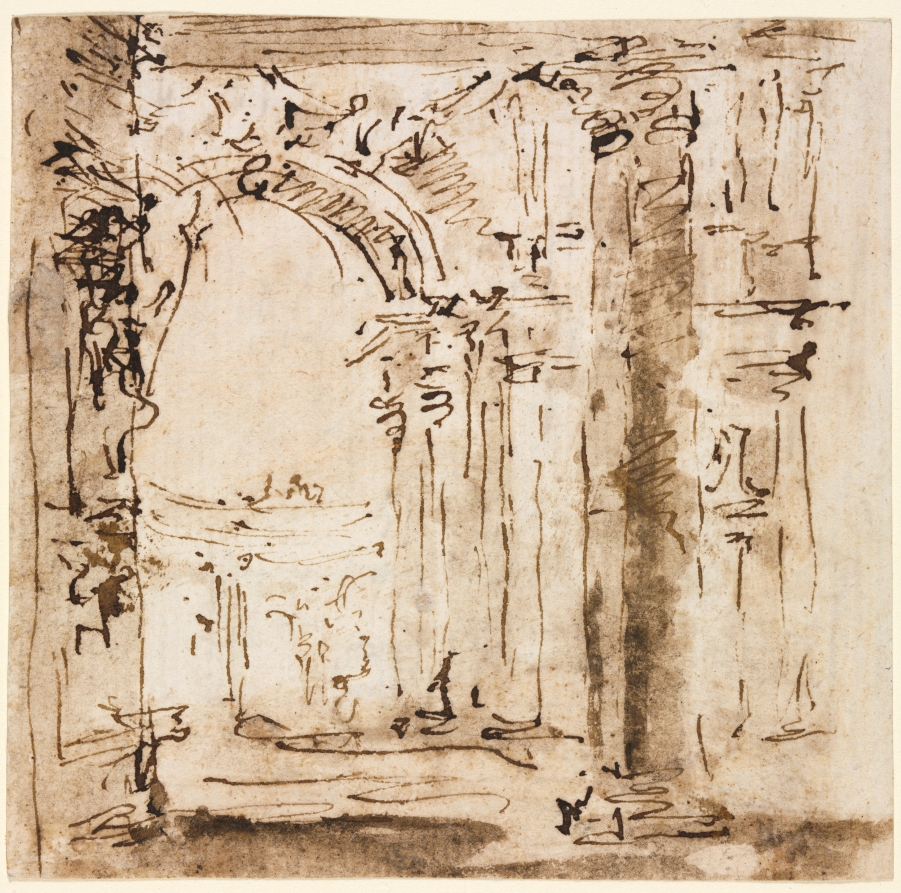
Sketch of the Labyrinth of the Villa Pisani
Francesco Guardi
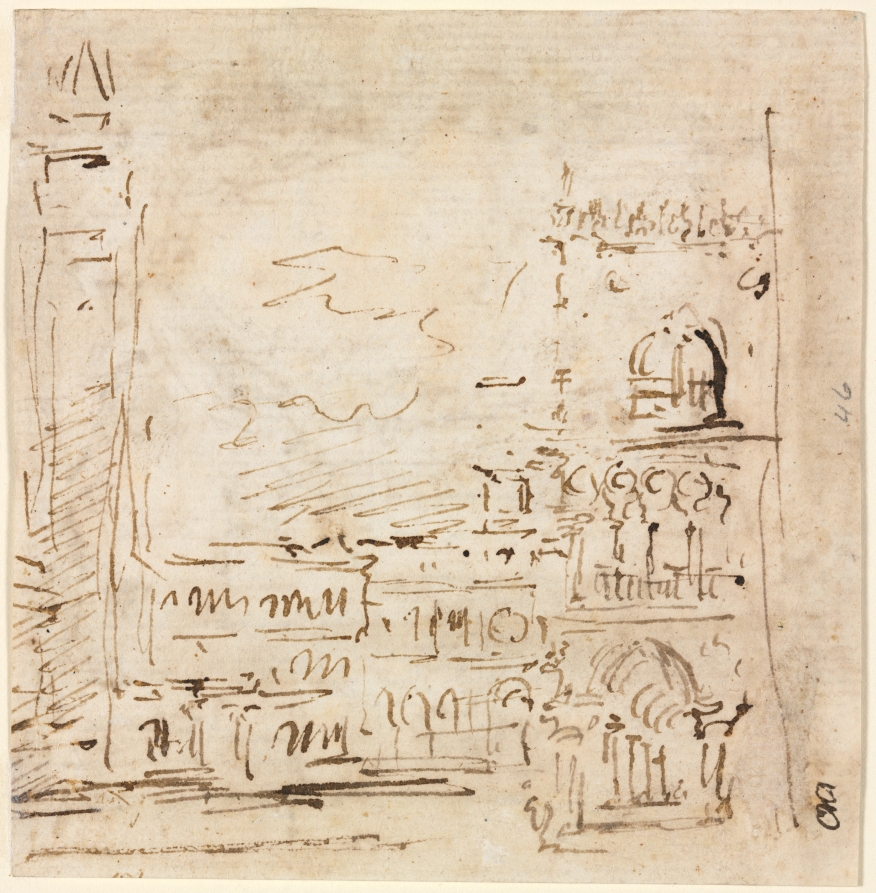
Piazza San Marco with Doges' Palace
Francesco Guardi
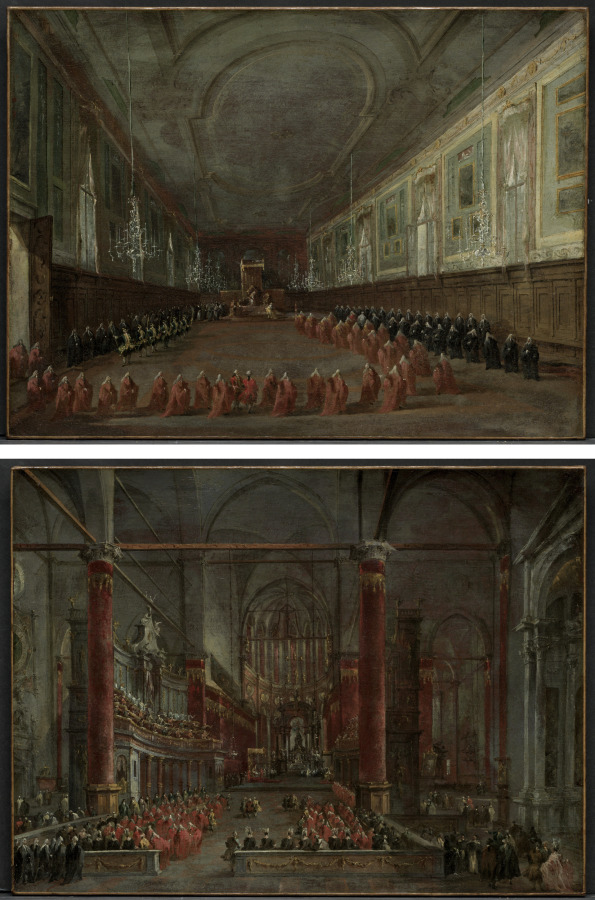
Pope Pius VI Descending the Throne to Take Leave of the Doge in the Hall of SS. Giovanni e Paolo, 1782 and Pontifical Ceremony in SS. Giovanni e Paolo, Venice, 1782 (pair)
Francesco Guardi