
Description
This series of paintings primarily tells the Old Testament story of Abraham and Isaac, and each of the canvases depicts the interaction of humans and angels. In three works, angels appear to Abraham, and in one particularly dramatic canvas, an angel intercepts Abraham before he sacrifices his own son. Like another work in this series, Tobias and the Angels, the Sacrifice of Isaac is a narrative about fathers and sons as well as obedience inspired by faith.
Provenance
[]
Accession Number
1952.235.1
Medium
oil on canvas
Dimensions
Framed: 71 x 90.5 x 5.5 cm (27 15/16 x 35 5/8 x 2 3/16 in.); Unframed: 56.5 x 75.5 cm (22 1/4 x 29 3/4 in.)
Classification
Painting
Credit Line
Mr. and Mrs. William H. Marlatt Fund
Tags
Painting Baroque (1600–1750) Oil Painting Canvas Italian Color: Brown
Background & Context
Background Story
Guardi's depiction of the Sacrifice of Isaac, painted in the 1750s, captures the Old Testament's most dramatic moment of faith and divine intervention: Abraham raising his knife to sacrifice his son Isaac before God provides a ram as substitute. This subject tested every painter's ability to render extreme emotion—Abraham's anguish, Isaac's terror, the angel's urgency—within a single frozen instant. Guardi approaches the subject with the atmospheric sensibility that would later characterize his Venetian views. Rather than emphasizing anatomical drama or facial expressions as Caravaggio or Rembrandt did with the same subject, Guardi suffuses the scene with divine light that seems to dissolve the physical forms even as the narrative reaches its climax. The angel's intervention arrives as radiance rather than physical force—light itself intervenes to prevent the sacrifice. This treatment reflects mid-18th century Venetian religious painting's tendency toward the ethereal and immaterial, influenced by Tiepolo's ceiling frescoes where divine light seems to dissolve architecture and dissolve the boundary between painting and sky.
Cultural Impact
The Sacrifice of Isaac subject has been depicted by virtually every major Western artist, and each interpretation reveals as much about its era as about the biblical narrative. Guardi's version influenced Venetian religious painting by demonstrating how atmospheric effects could serve narrative purposes—showing that divine intervention could be rendered as light rather than as physical action. This approach influenced later Symbolist and abstract religious art that similarly used light and atmosphere to suggest divine presence without literal depiction.
Why It Matters
This painting matters because it demonstrates Guardi's ability to apply his distinctive atmospheric style to narrative subjects. The same qualities that make his Venetian views compelling—the dissolution of solid form into light, the preference for suggestion over statement—serve the religious subject perfectly, offering a model for how visual style can be adapted across genres without losing its essential character.
Related Artworks
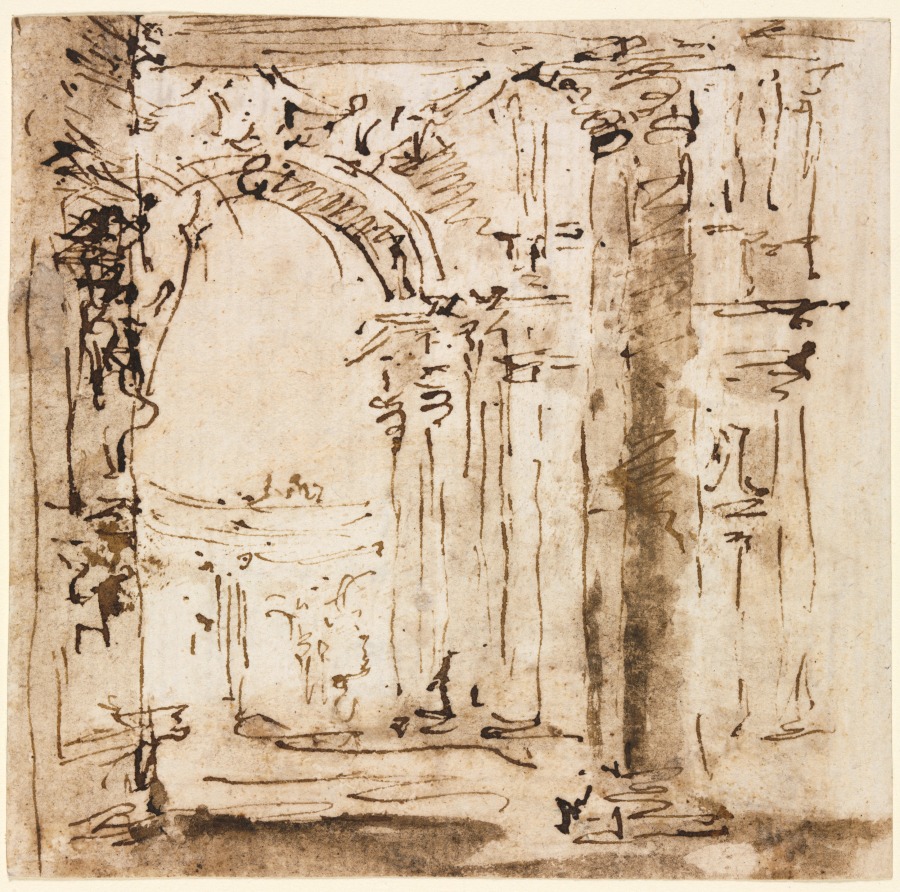
Pair of Drawings: Sketch of the Labyrinth of the Villa Pisani and Piazza San Marco with Doges' Palace
Francesco Guardi
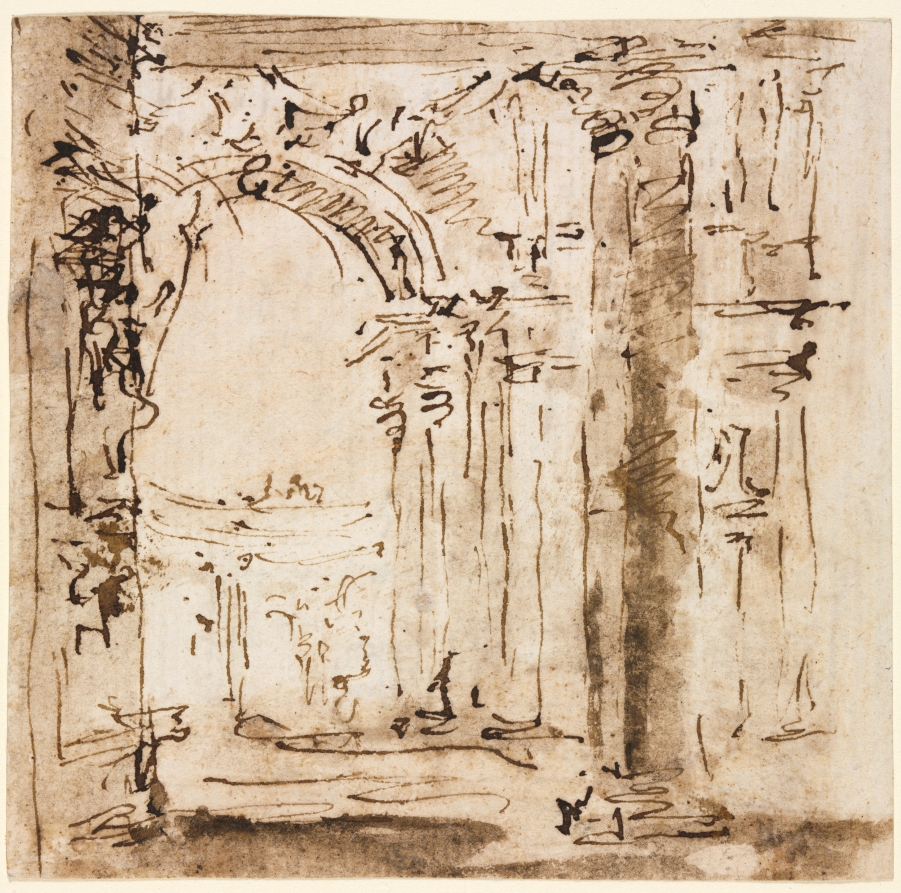
Sketch of the Labyrinth of the Villa Pisani
Francesco Guardi
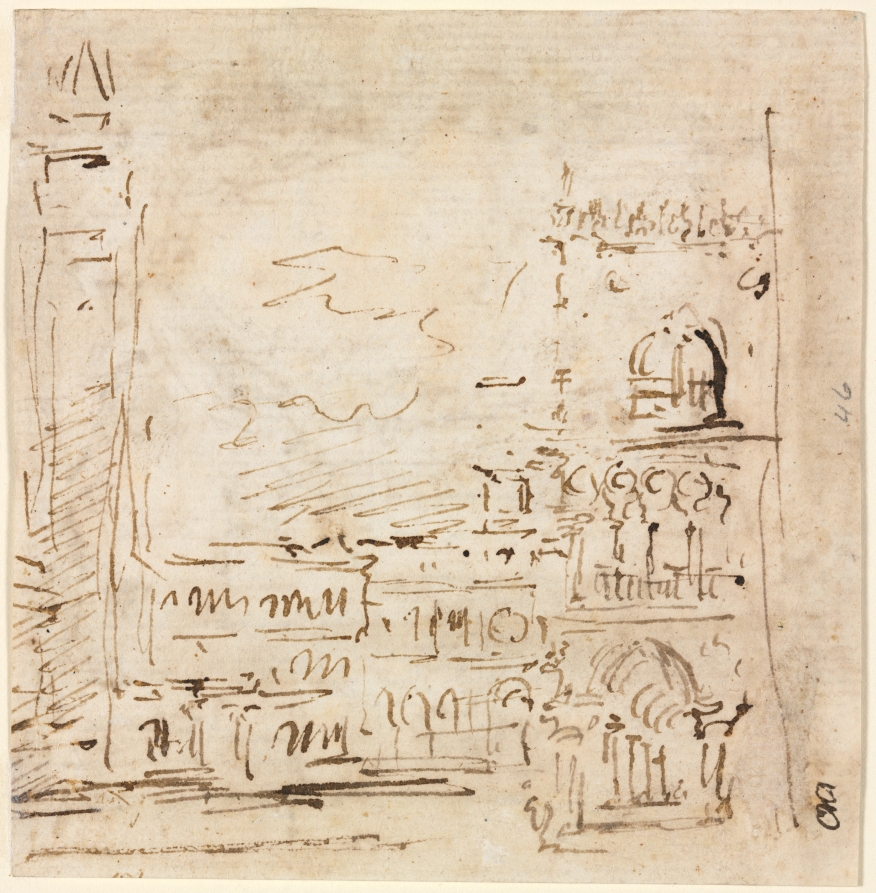
Piazza San Marco with Doges' Palace
Francesco Guardi
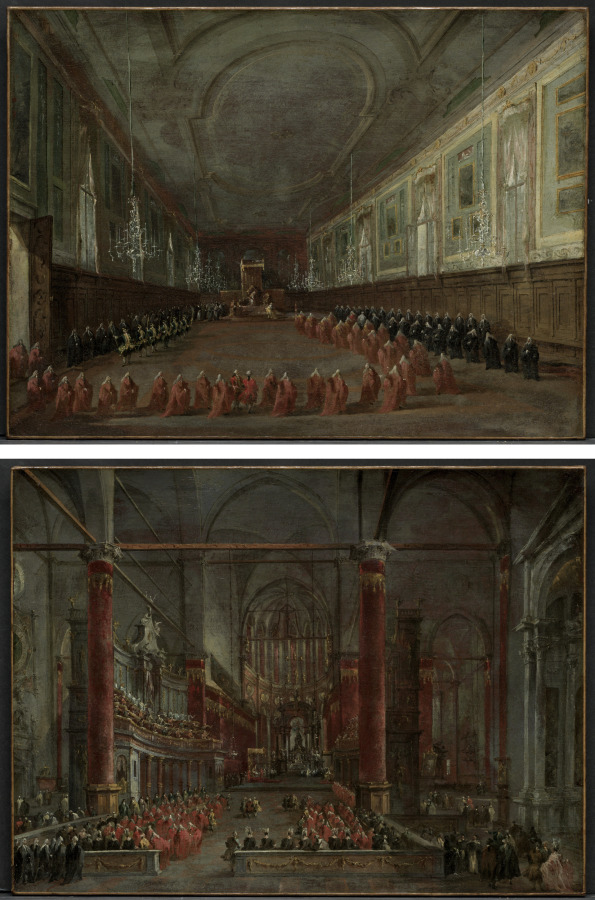
Pope Pius VI Descending the Throne to Take Leave of the Doge in the Hall of SS. Giovanni e Paolo, 1782 and Pontifical Ceremony in SS. Giovanni e Paolo, Venice, 1782 (pair)
Francesco Guardi