
Description
This series of paintings predominantly tells the Old Testament story of Abraham and Isaac, and each of the canvases treats the interaction of humans and angels. In three works, angels appear to Abraham. However, the narrative of Tobias and the Angel comes from an entirely different book of the Bible. The blind Tobit sends his son Tobias off to collect a sum of money in the distant town of Media, with the angel Raphael accompanying him in disguise as a human. This particular work depicts Raphael overseeing Tobias catching a fish, which would later be used to cure his father's blindness.
Provenance
Possibly Federigo Giovanelli, Venice (Until 1800); Baroness Valerie Groedel, Budapest (?); (Neumann Gallery, Vienna) (By 1933?); Francesco Pospisil, Venice, sold through Alessandro Brass to the Cleveland Museum of Art (1952); The Cleveland Museum of Art, Cleveland, Ohio (1952-)
Accession Number
1952.235.2
Medium
oil on canvas
Dimensions
Framed: 70.5 x 90.5 x 6.5 cm (27 3/4 x 35 5/8 x 2 9/16 in.); Unframed: 56.5 x 75.5 cm (22 1/4 x 29 3/4 in.)
Classification
Painting
Credit Line
Mr. and Mrs. William H. Marlatt Fund
Tags
Painting Baroque (1600–1750) Oil Painting Canvas Italian Color: Brown Color: Gray
Background & Context
Background Story
Guardi's Tobias and the Angel from the 1750s depicts the apocryphal story of young Tobias, guided by the Archangel Raphael on a journey to recover a debt and find a cure for his father's blindness. This subject was particularly beloved in Venice—Raphael as patron saint of travelers and healers resonated with a maritime republic whose prosperity depended on safe journeys. The story's key visual element—the fish that Tobias catches in the Tigris River, whose organs provide both cure and demon-repellent—gave artists an opportunity to combine landscape, narrative, and still life in a single composition. Guardi treats the journey as a pilgrimage through luminous Venetian-style landscape. The two figures—youth and angel—move through an environment bathed in golden light that suggests divine protection without explicitly depicting it. The 1750s dating places this work in Guardi's formative period, when he was absorbing the influences of Tiepolo's ceiling painting and the landscape traditions of Marco Ricci while developing his own approach to atmosphere and light.
Cultural Impact
The Tobias subject was deeply important to Venetian culture—charitable confraternities dedicated to Raphael (scuole piccole) commissioned numerous depictions, and the story was read as an allegory of Venice's own commercial journeying with divine protection. Guardi's interpretation influenced how this subject was treated in later Venetian art, moving it away from purely narrative illustration toward atmospheric landscape with narrative elements. The painting also contributed to the broader European tradition of depicting guardian angels and divine guidance.
Why It Matters
This work matters because it demonstrates how religious narratives can be integrated with landscape painting rather than separated from it. Guardi's Tobias and the Angel suggests that sacred and natural experience are continuous—that the angel walks through the same landscape the viewer inhabits. This integration of the spiritual and the natural anticipates later Romantic approaches to religious landscape painting.
Related Artworks
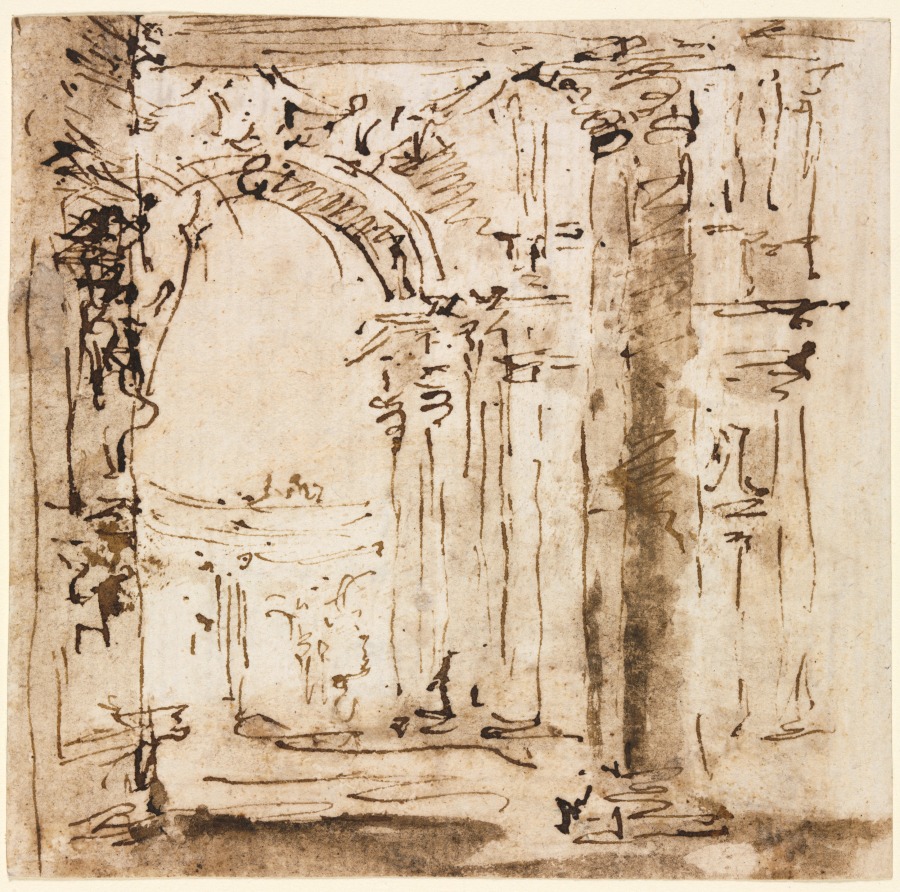
Pair of Drawings: Sketch of the Labyrinth of the Villa Pisani and Piazza San Marco with Doges' Palace
Francesco Guardi
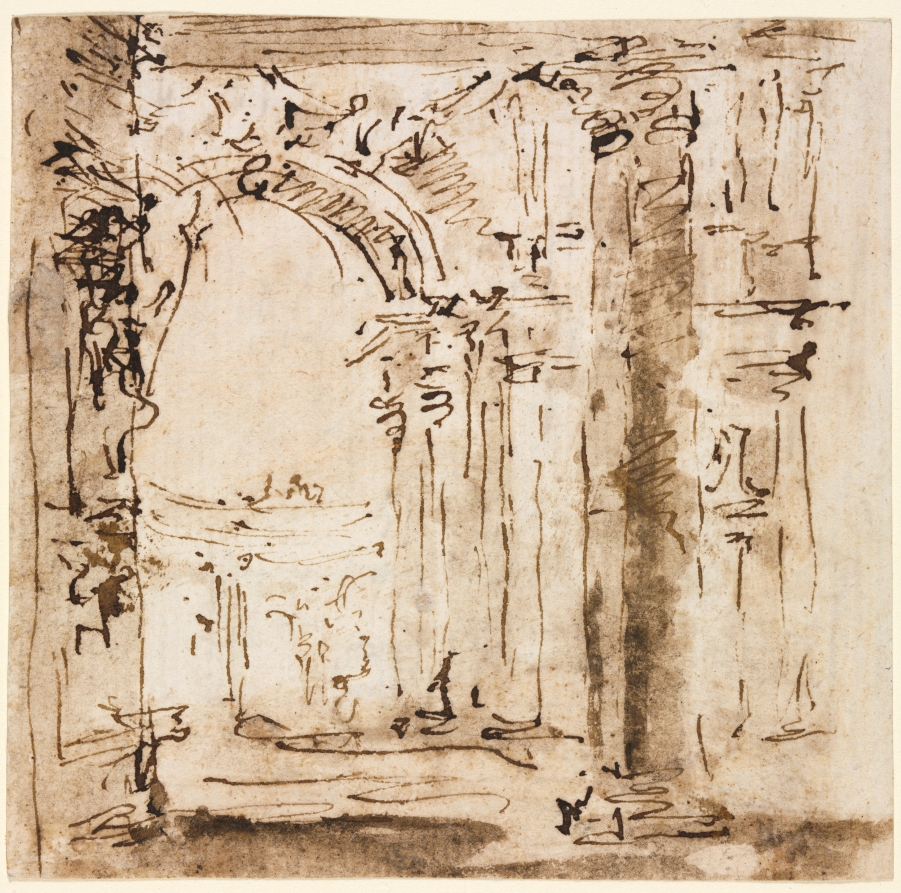
Sketch of the Labyrinth of the Villa Pisani
Francesco Guardi
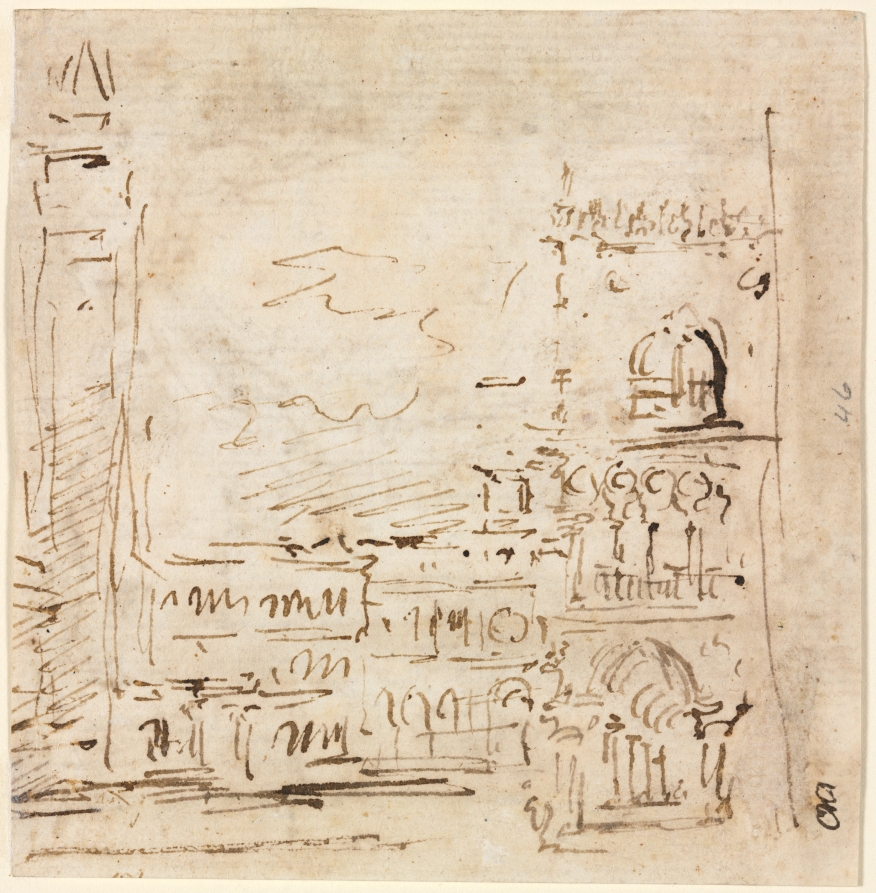
Piazza San Marco with Doges' Palace
Francesco Guardi
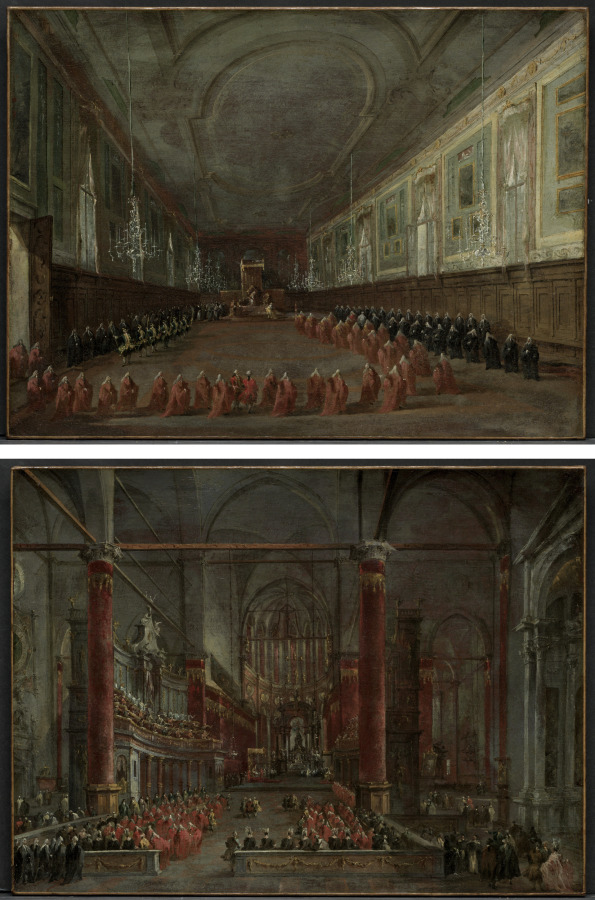
Pope Pius VI Descending the Throne to Take Leave of the Doge in the Hall of SS. Giovanni e Paolo, 1782 and Pontifical Ceremony in SS. Giovanni e Paolo, Venice, 1782 (pair)
Francesco Guardi