
Description
After their initial meeting, Abraham graciously offered to feed the angels and wash their feet. Following the meal, they announce that his wife Sarah, long past child-bearing age, will soon have a son, fulfilling a promise God had made earlier to Abraham. The artist presents the moment of revelation, the angels resplendent in their pastel gowns and feathery wings, with Sarah learning the news while hiding behind their cottage door.
Provenance
Possibly Federigo Giovanelli, Venice (Until 1800); Baroness Valerie Groedel, Budapest (?); (Neumann Gallery, Vienna) (By 1933?); (Francesco Pospisil, Venice, sold through Alessandro Brass to the Cleveland Museum of Art) (1952); The Cleveland Museum of Art, Cleveland, Ohio (1952-)
Accession Number
1952.235.3
Medium
oil on canvas
Dimensions
Framed: 71 x 90.5 x 7 cm (27 15/16 x 35 5/8 x 2 3/4 in.); Unframed: 56.5 x 75.5 cm (22 1/4 x 29 3/4 in.)
Classification
Painting
Credit Line
Mr. and Mrs. William H. Marlatt Fund
Tags
Painting Baroque (1600–1750) Oil Painting Canvas Italian Color: Brown
Background & Context
Background Story
Guardi's The Angels Appearing to Abraham from the 1750s depicts the mysterious encounter at Mamre when three angelic visitors appear to Abraham and Sarah, announcing that the elderly Sarah will bear a son. This subject has profound theological significance—Christian tradition interpreted the three visitors as a prefiguration of the Trinity, while Jewish tradition emphasized hospitality to strangers. For painters, the subject offered the challenge of rendering three identical divine figures who appear human yet carry supernatural authority. Guardi approaches this challenge through light and atmosphere rather than physical differentiation. The three angelic figures seem to generate their own illumination, casting the Abraham and Sarah figures into a responsive glow. The composition's emphasis on light as the visible sign of divine presence connects directly to the luminous atmospheric effects of Guardi's mature vedute—in both cases, light dissolves solid form and reveals a reality beyond the visible. Painted in the 1750s, this work belongs to the Venetian tradition of treating biblical subjects as opportunities for spectacular light effects, following the example of Tiepolo's ceiling frescoes where heavenly light seems to penetrate architectural barriers.
Cultural Impact
The Abraham and the Three Angels subject influenced Christian iconography of the Trinity, providing a visual model for depicting divine unity within multiplicity. In Venice, the subject was particularly associated with the tradition of sacred conversation paintings where divine and human figures occupy the same pictorial space. Guardi's interpretation, emphasizing atmospheric continuity between heavenly and earthly figures, influenced later artists who sought to depict transcendence without resorting to theatrical special effects.
Why It Matters
This painting matters because it demonstrates Guardi's ability to use atmospheric painting—the technique for which he became famous—to serve theological purposes. The same dissolution of solid form that makes his Venetian views feel dreamlike and ephemeral works in service of a religious message: that the divine and the human share the same light, the same atmosphere, the same reality.
Related Artworks
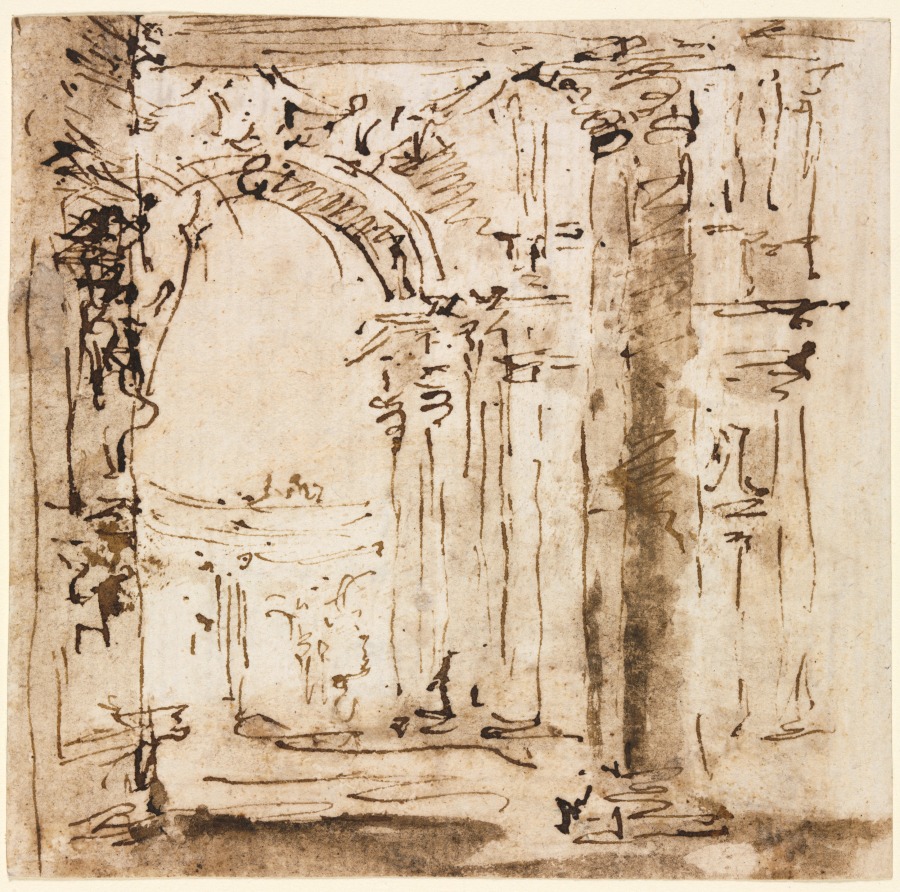
Pair of Drawings: Sketch of the Labyrinth of the Villa Pisani and Piazza San Marco with Doges' Palace
Francesco Guardi
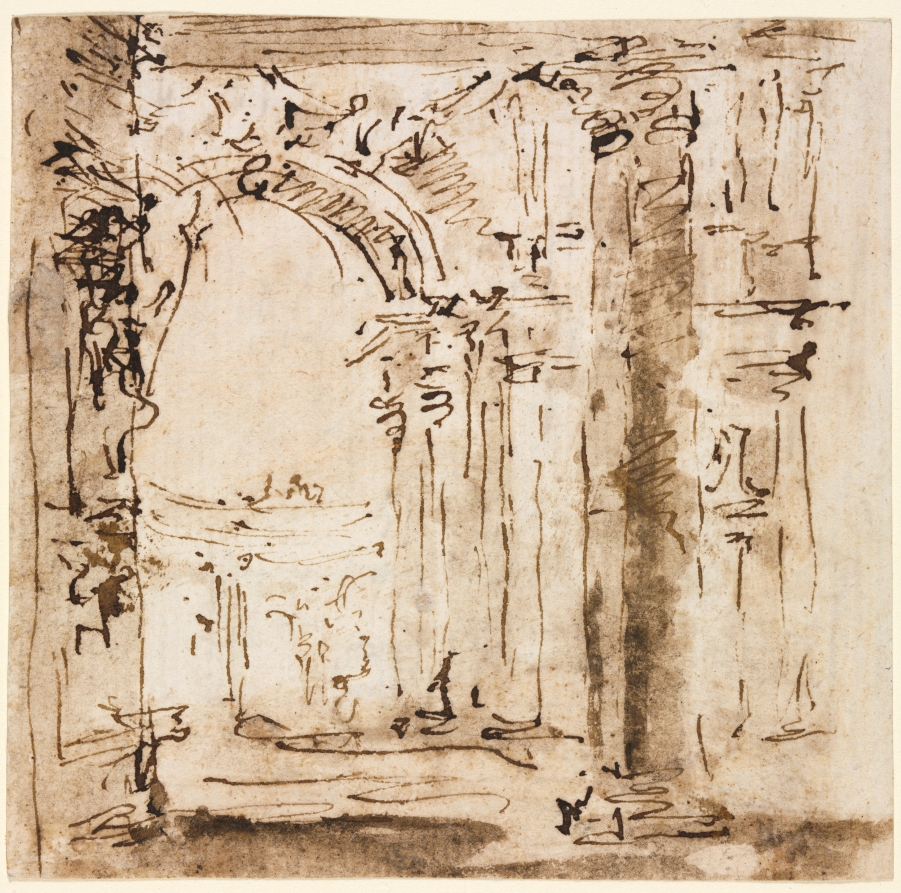
Sketch of the Labyrinth of the Villa Pisani
Francesco Guardi
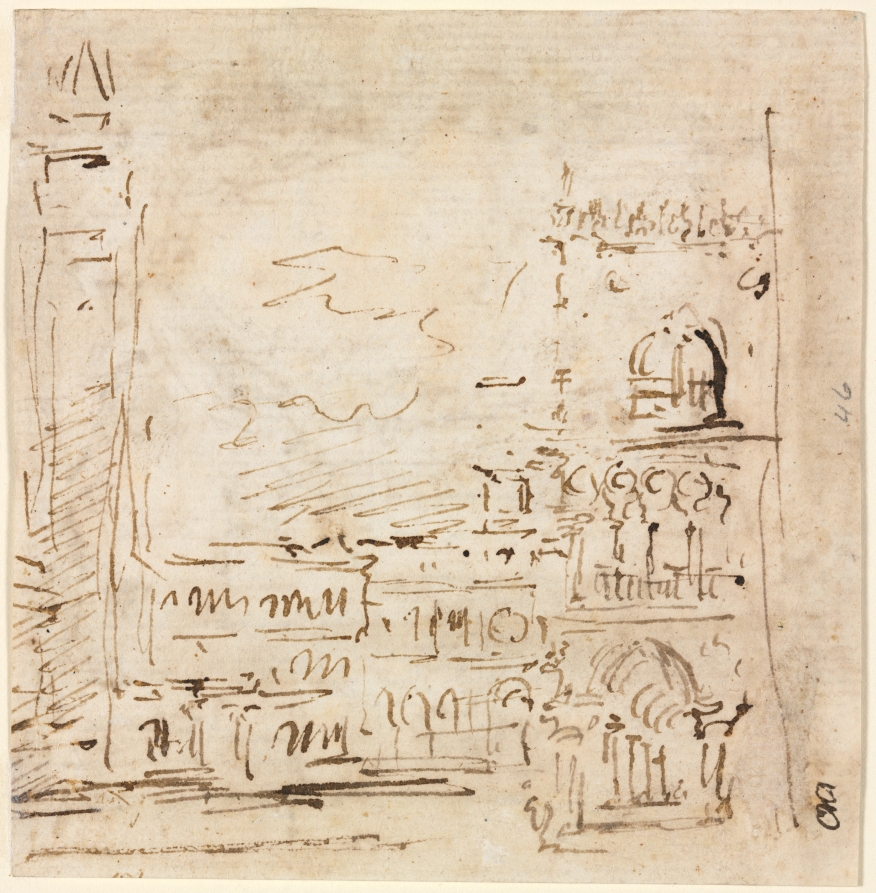
Piazza San Marco with Doges' Palace
Francesco Guardi
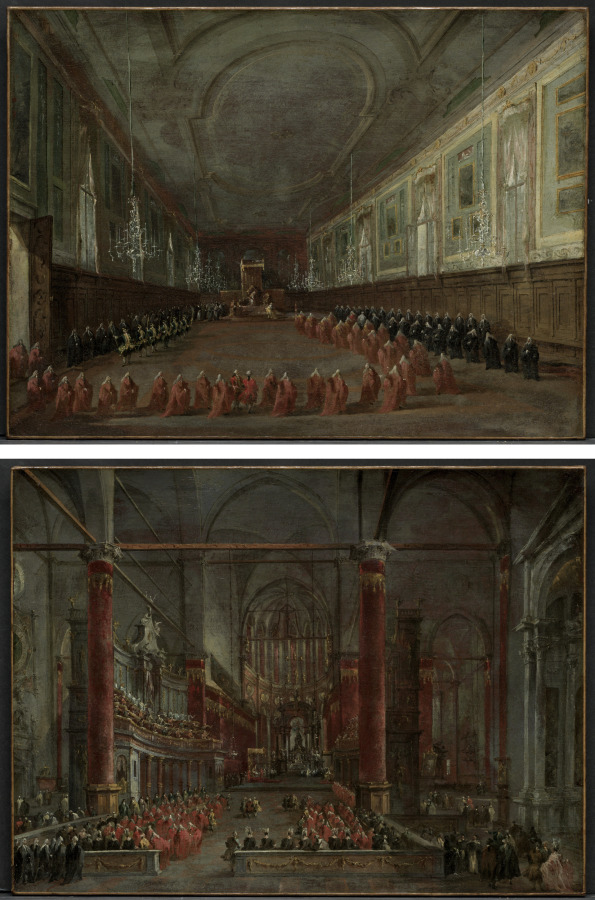
Pope Pius VI Descending the Throne to Take Leave of the Doge in the Hall of SS. Giovanni e Paolo, 1782 and Pontifical Ceremony in SS. Giovanni e Paolo, Venice, 1782 (pair)
Francesco Guardi