
Description
Three of the four pictures in the series depict episodes from the life of the Old Testament figure of Abraham, beginning with the angels appearing to Abraham. According to Genesis 18, Abraham met three men at midday, and, recognizing that they were angels, humbly bowed down to them with his face touching the ground. The encounter incongruously takes place before a marble, classical portico in which a woman lurks, presumably his wife Sarah.
Provenance
[]
Accession Number
1952.235.4
Medium
oil on canvas
Dimensions
Framed: 70.5 x 90.5 x 5.5 cm (27 3/4 x 35 5/8 x 2 3/16 in.); Unframed: 56.5 x 75.5 cm (22 1/4 x 29 3/4 in.)
Classification
Painting
Credit Line
Mr. and Mrs. William H. Marlatt Fund
Tags
Painting Baroque (1600–1750) Oil Painting Canvas Italian Color: Brown Color: Gray
Background & Context
Background Story
Guardi's Abraham Welcoming the Three Angels, painted in the 1750s, depicts the moment of hospitality when Abraham bows before his three mysterious visitors, offering them food, water, and rest beneath the oak of Mamre. This moment—when Abraham offers complete hospitality to strangers who turn out to be divine messengers—has been interpreted as the foundation of the Abrahamic hospitality ethic that underlies Judaism, Christianity, and Islam. For Guardi, the subject offers a theatrical opportunity: Abraham's humble gesture of welcome contrasts with the angels' supernatural presence, creating a visual drama of human reverence before divine mystery. The composition likely positions Abraham as a smaller, humbler figure against the three angelic visitors whose presence fills the space with light. Guardi's handling of this encounter emphasizes the exchange between earthly and heavenly realms through the medium of light—the same luminous atmosphere that suffuses his Venetian views. Painted in the 1750s, this work belongs to a Venetian religious painting tradition that valued atmospheric effects and emotional suggestion over precise narrative illustration, following the example of Tiepolo and Ricci.
Cultural Impact
The Abraham hospitality scene became a touchstone for discussions of religious tolerance and interfaith dialogue, as the three visitors were interpreted variously as angels, as the Trinity, and as human messengers. Guardi's depiction influenced how this subject was visualized in Venetian art education and contributed to the broader tradition of depicting hospitality scenes in European painting. The painting also influenced how Venetian collectors understood Guardi's artistic range beyond vedute.
Why It Matters
This work matters because it demonstrates how a single artist's characteristic style—the atmospheric dissolution of solid form into light—can serve both secular and sacred subjects. The same technique that makes Guardi's Venice views shimmer with reflective water and dissolving architecture here serves to visualize divine presence, suggesting that the artist's style itself carries theological implications about the relationship between appearance and reality.
Related Artworks
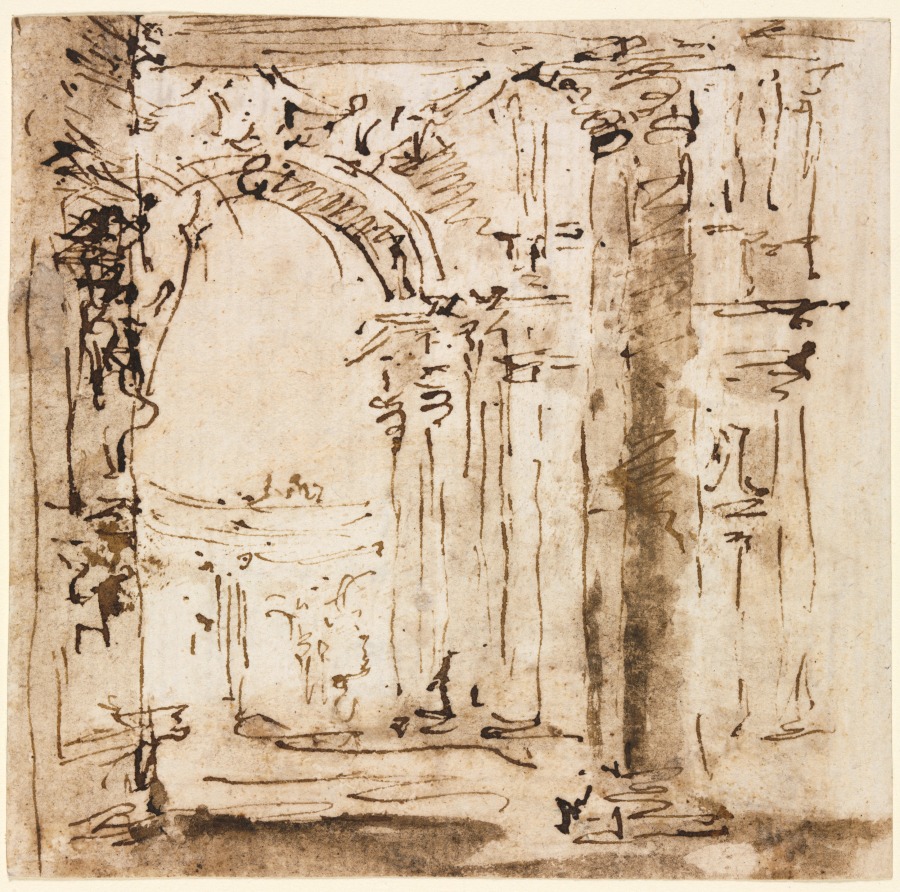
Pair of Drawings: Sketch of the Labyrinth of the Villa Pisani and Piazza San Marco with Doges' Palace
Francesco Guardi
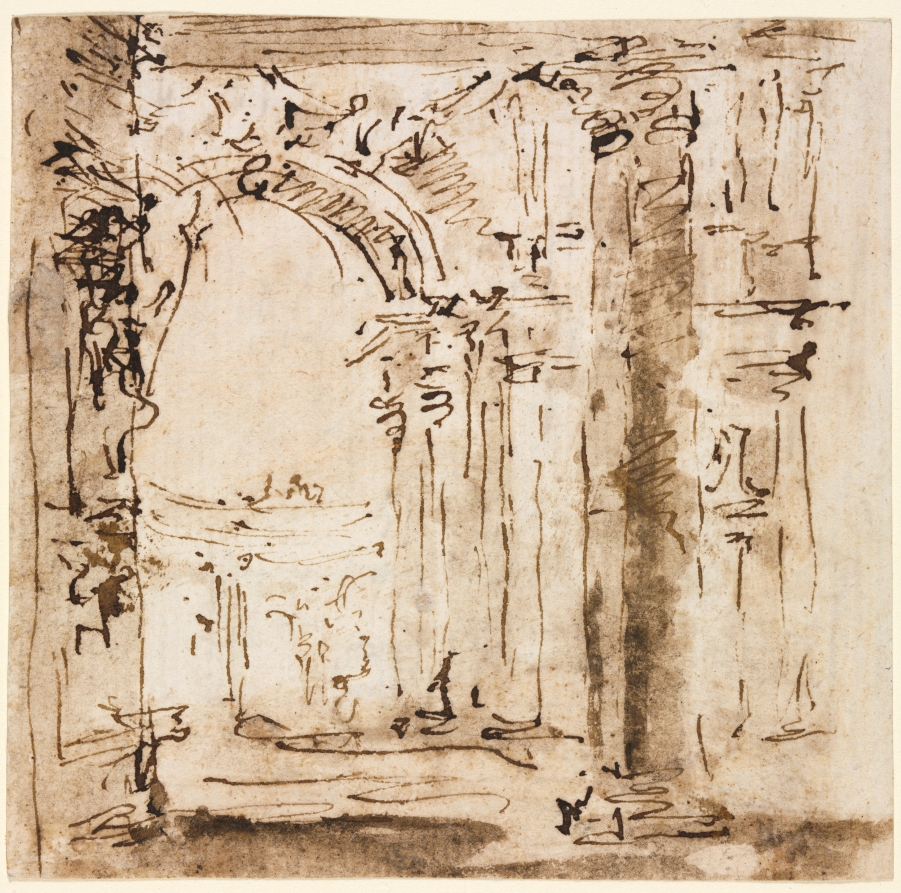
Sketch of the Labyrinth of the Villa Pisani
Francesco Guardi
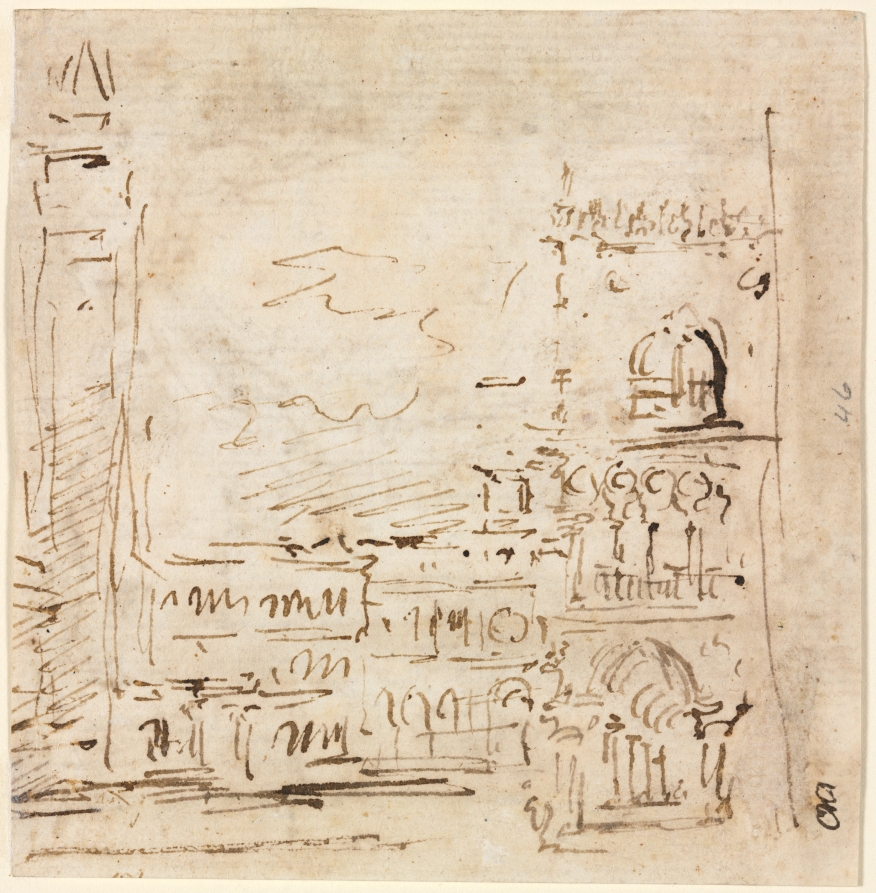
Piazza San Marco with Doges' Palace
Francesco Guardi
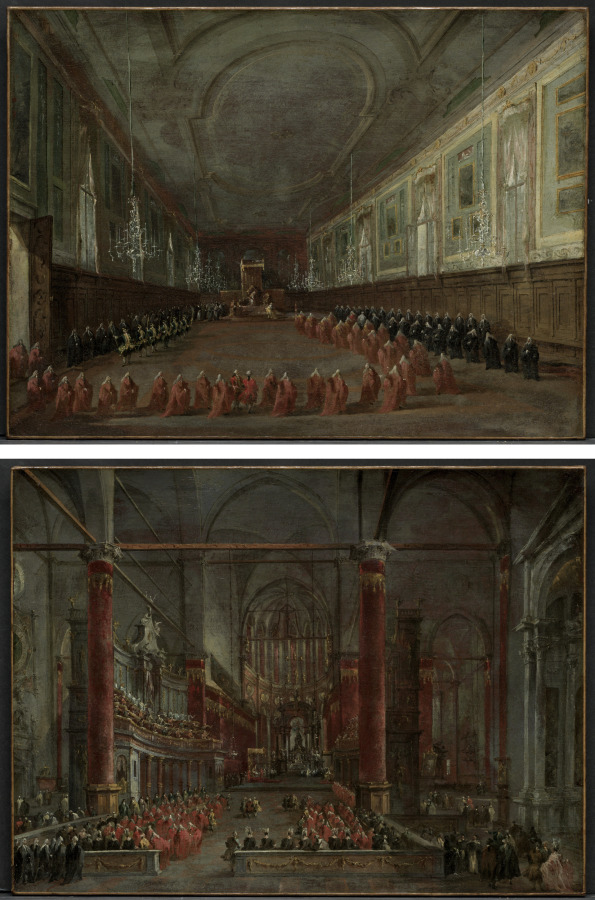
Pope Pius VI Descending the Throne to Take Leave of the Doge in the Hall of SS. Giovanni e Paolo, 1782 and Pontifical Ceremony in SS. Giovanni e Paolo, Venice, 1782 (pair)
Francesco Guardi