
Accession Number
1953.261
Medium
pen and brown ink over black chalk
Dimensions
Sheet: 9 x 12.1 cm (3 9/16 x 4 3/4 in.)
Classification
Drawing
Credit Line
Dudley P. Allen Fund
Tags
Drawing Baroque (1600–1750) Ink Italian Color: White
Background & Context
Background Story
Guardi's Farmers and Fisherman Working, executed in pen and brown ink over black chalk, reveals the artist as a draftsperson of remarkable vitality and directness. This drawing strips away the atmospheric effects of Guardi's oil paintings to reveal his fundamental graphic skill: the ability to capture working figures in rapid, sure strokes that convey both their physical effort and their integration into the Venetian environment. The brown ink drawing shows farmers and fishermen engaged in their daily labor—activities that sustained Venice's economy even as the city's elite engaged in the diplomatic and theatrical ceremonies Guardi also depicted. By the 18th century, Venice's terraferma (mainland) territories and lagoon fishing operations were the economic backbone of a republic whose aristocratic facade often obscured its working foundations. This drawing belongs to a tradition of Venetian genre drawing that includes works by Tiepolo and his son Domenico, who similarly captured Venetian daily life with affectionate attention. Guardi's treatment is less satirical than Tiepolo's—he records the laborers with straightforward respect, suggesting that their work constitutes its own form of dignity.
Cultural Impact
This drawing influenced how Venetian daily life was represented in art, contributing to a tradition of genre scenes that would flourish in 19th-century Venetian painting. It also demonstrated that Guardi's artistic concerns extended beyond vedute to include the humble but essential activities that sustained urban life. The work influenced later artists who depicted labor in Venice, from 19th-century genre painters to photographers documenting the city's working communities.
Why It Matters
This drawing matters because it reveals that Guardi's Venice was not just a city of ceremonies, churches, and architectural splendor but also a working city sustained by the labor of ordinary people. In an era when Venice is often reduced to a tourist fantasy of gondolas and palaces, this drawing reminds viewers that real economies and real labor underpin every civilization's cultural achievements.
Related Artworks
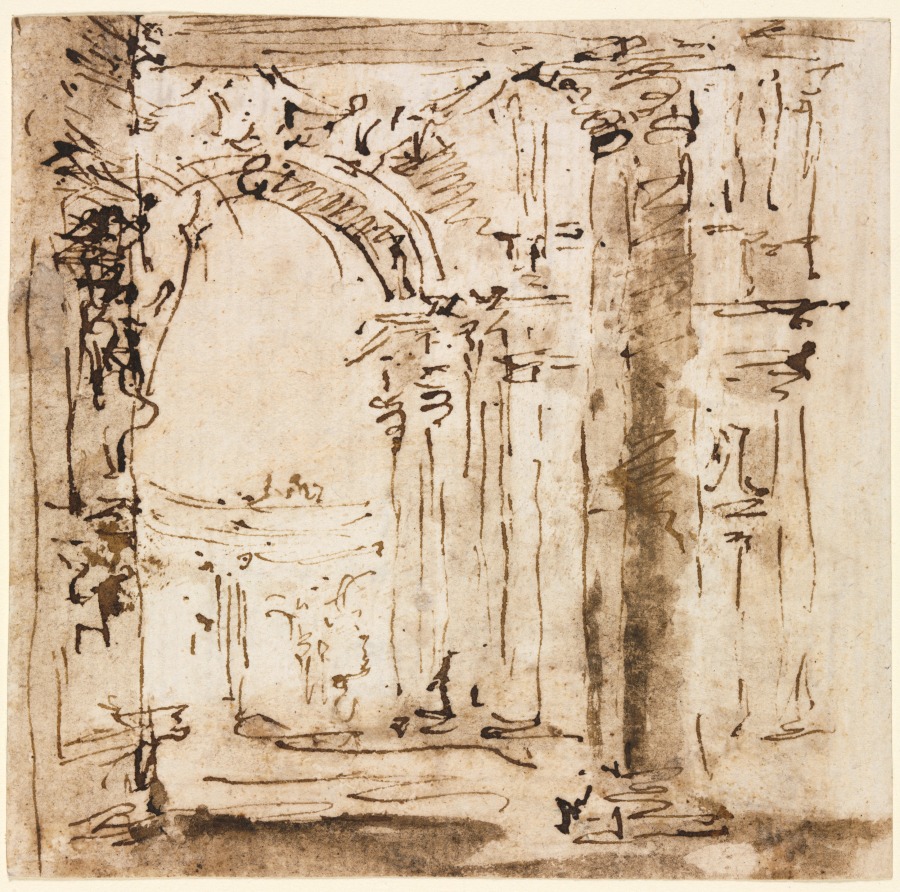
Pair of Drawings: Sketch of the Labyrinth of the Villa Pisani and Piazza San Marco with Doges' Palace
Francesco Guardi
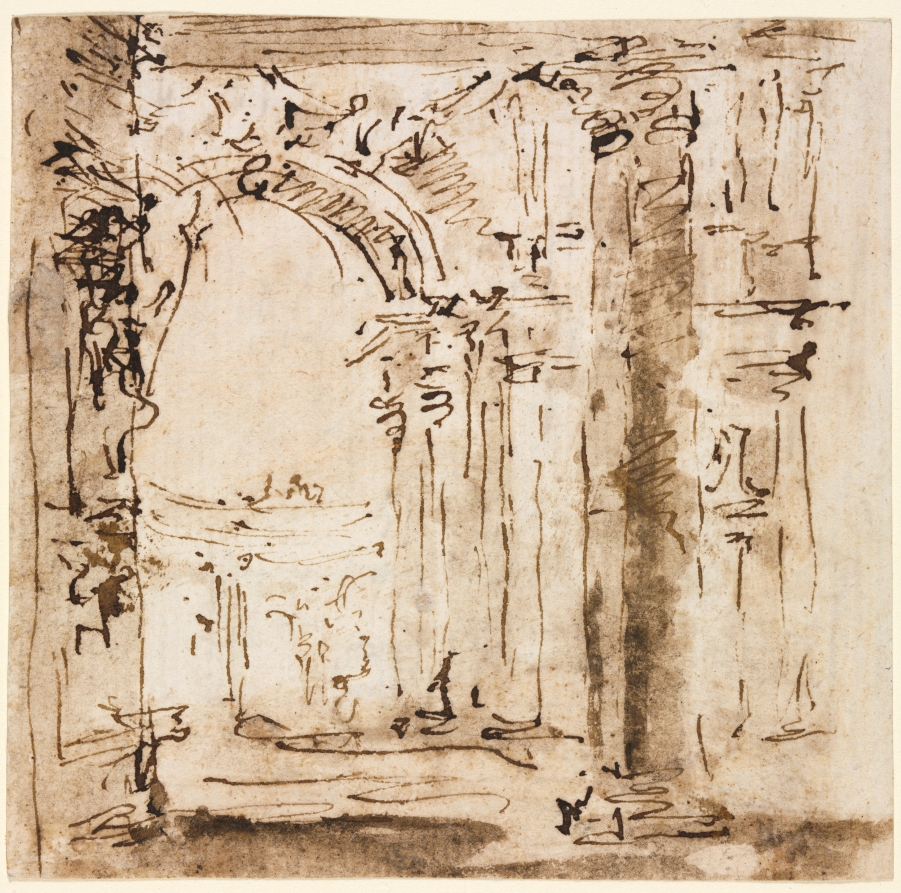
Sketch of the Labyrinth of the Villa Pisani
Francesco Guardi
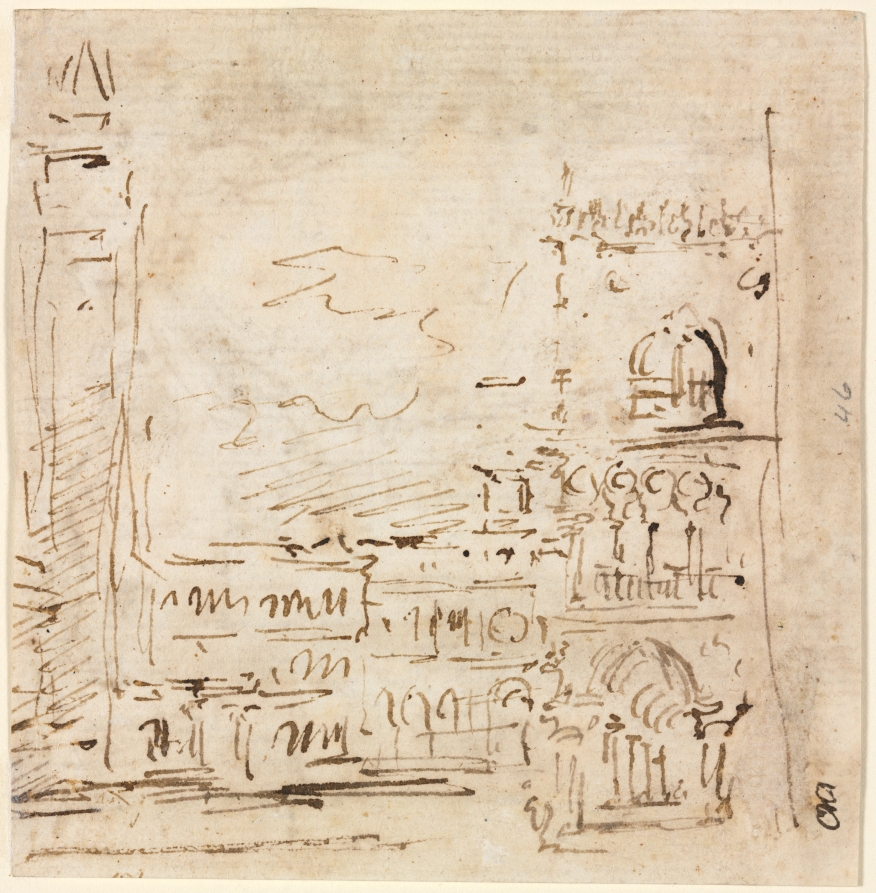
Piazza San Marco with Doges' Palace
Francesco Guardi
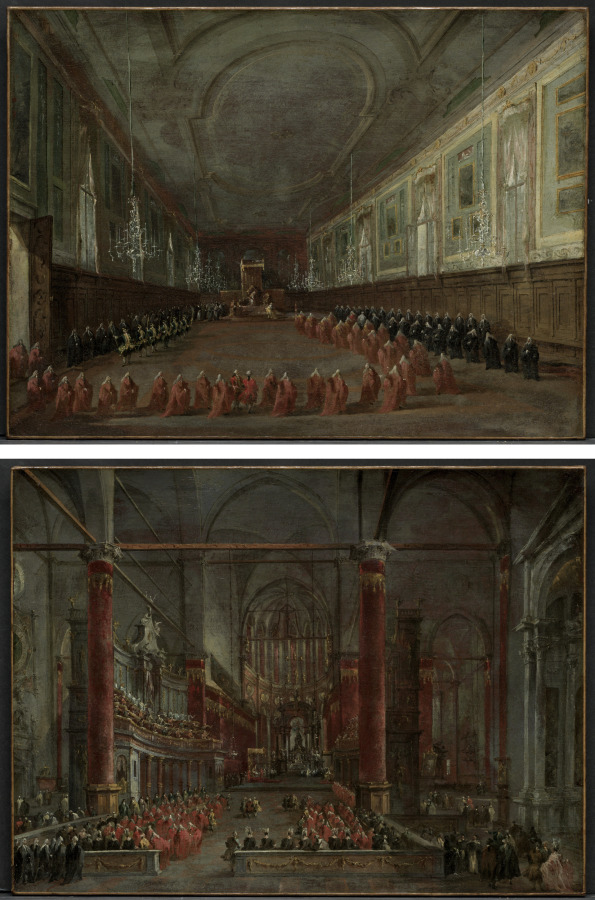
Pope Pius VI Descending the Throne to Take Leave of the Doge in the Hall of SS. Giovanni e Paolo, 1782 and Pontifical Ceremony in SS. Giovanni e Paolo, Venice, 1782 (pair)
Francesco Guardi