Description
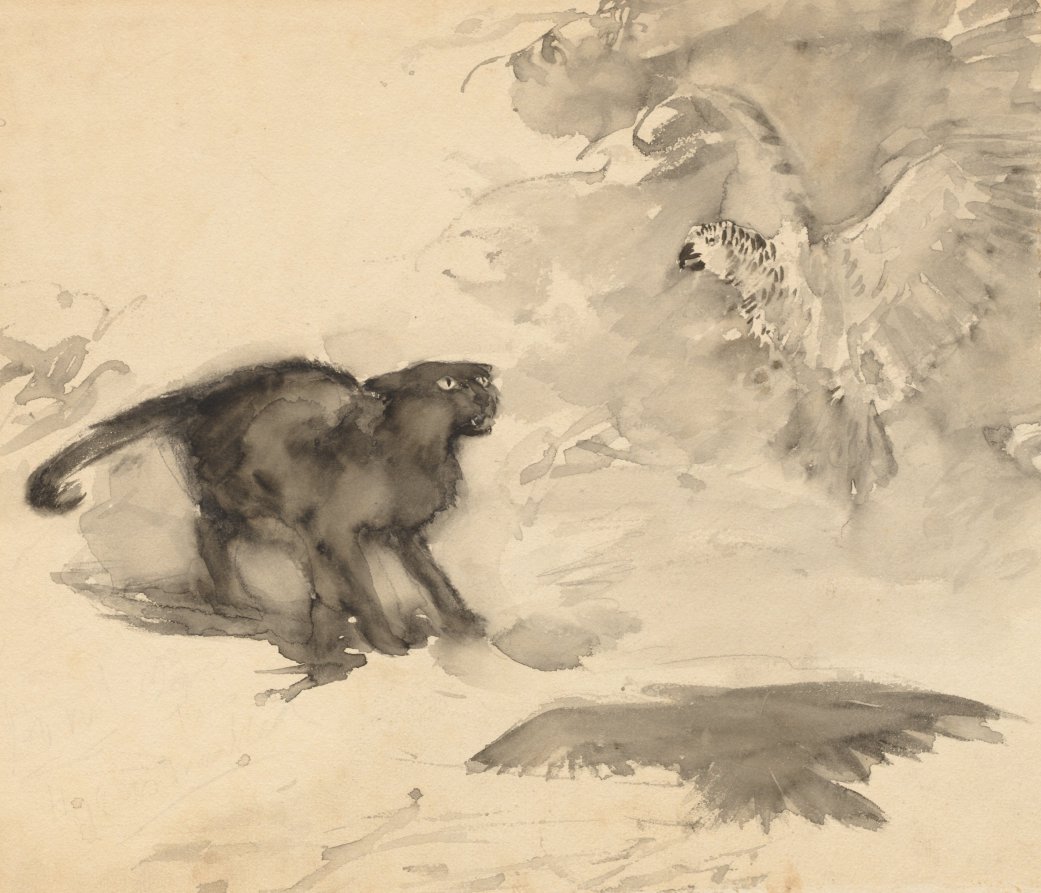
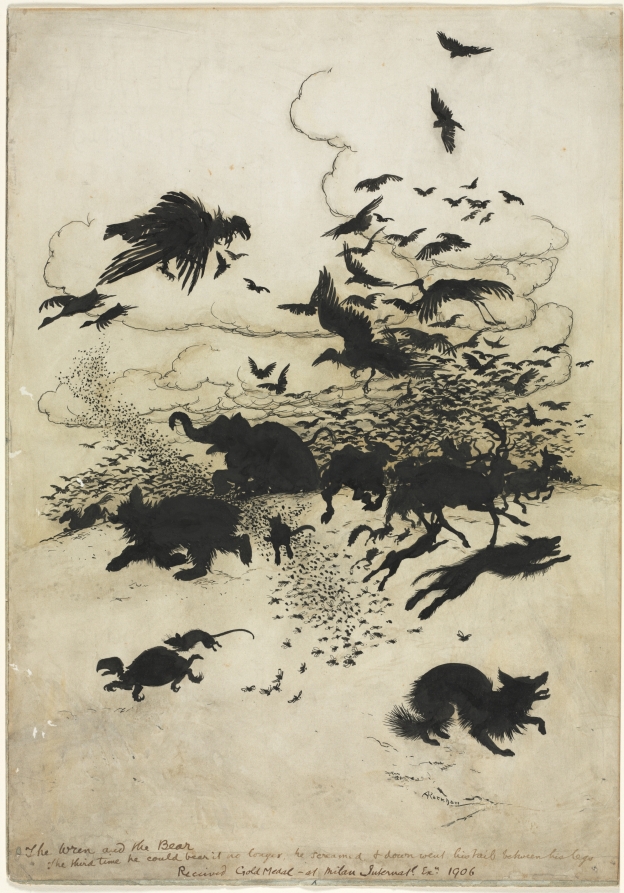
This drawing is one of 40 made by Arthur Rackham to illustrate William Shakespeare's comedy A Midsummer Night's Dream. It depicts the confrontation between Oberon and Titania, king and queen of the fairies, that takes place in the woods outside of Athens in act 2, scene 1. The artist painted a stormy sky looming over the magical couple to echo the story's mood. Rackham worked during a golden age of book illustration in England, around the turn of the 20th century, and the images he produced for literary works influenced future productions of Shakespeare's work.
Provenance
Mrs. Don Hunter, Albany, GA, given to the Cleveland Museum of Art, Cleveland, OH (?-1954); Cleveland Museum of Art, Cleveland, OH (1954-)
Accession Number
1954.651
Medium
pen and black ink and watercolor with scraping and minute touches of white gouache on artist's illustration board
Dimensions
Sheet: 38.6 x 27 cm (15 3/16 x 10 5/8 in.)
Classification
Drawing
Credit Line
Gift of Mrs. Don Hunter
Tags
Drawing Early Modern (1901–1950) Watercolor Ink Gouache Board British Color: Yellow
Background & Context
Background Story
Arthur Rackham (1867-1939) was the foremost English illustrator of the golden age of book illustration, known for his pen and ink drawings combined with subtle watercolor washes that created mysterious, fairy-tale atmospheres. 'And Now They Never Meet in Grove or Green' is an illustration for Shakespeare's A Midsummer Night's Dream, depicting the moment when the fairy lovers are separated by the enchantments of the forest. The title's archaic language and the image's combination of delicate pen work and atmospheric watercolor are characteristic of Rackham's approach to literary illustration: the image serves the text rather than competing with it, and the atmosphere is more important than the individual figures.
Cultural Impact
Rackham's illustrations for A Midsummer Night's Dream (1908) were among his most celebrated works, establishing the visual interpretation of Shakespeare's fairy world that would influence every subsequent production and illustration of the play. Rackham's approach—pen and ink for definition, watercolor for atmosphere, and white gouache for highlights—created the fairy-tale aesthetic that defined Edwardian book illustration and influenced the development of fantasy art throughout the 20th century.
Why It Matters
'And Now They Never Meet in Grove or Green' is Rackham's fairy-tale Shakespeare at its most atmospheric: pen and ink for definition, watercolor for mystery, and the silvery tonalities that made his fairy world instantly recognizable. The illustration serves the text rather than competing with it—Shakespeare's words provide the narrative, and Rackham provides the atmosphere.