Provenance
Ex Coll. S. Scarlett; Mrs. R. Henry Norweb [1895-1984], Cleveland, OH (?-1954); The Cleveland Museum of Art, Cleveland, OH (December 4, 1954-)
Accession Number
1954.660
Medium
ink and watercolor
Dimensions
Sheet: 19.2 x 14.1 cm (7 9/16 x 5 9/16 in.)
Classification
Drawing
Credit Line
The Norweb Collection
Tags
Drawing Neoclassical & Romantic (1751–1850) Watercolor Ink British Color: Brown
Background & Context
Background Story
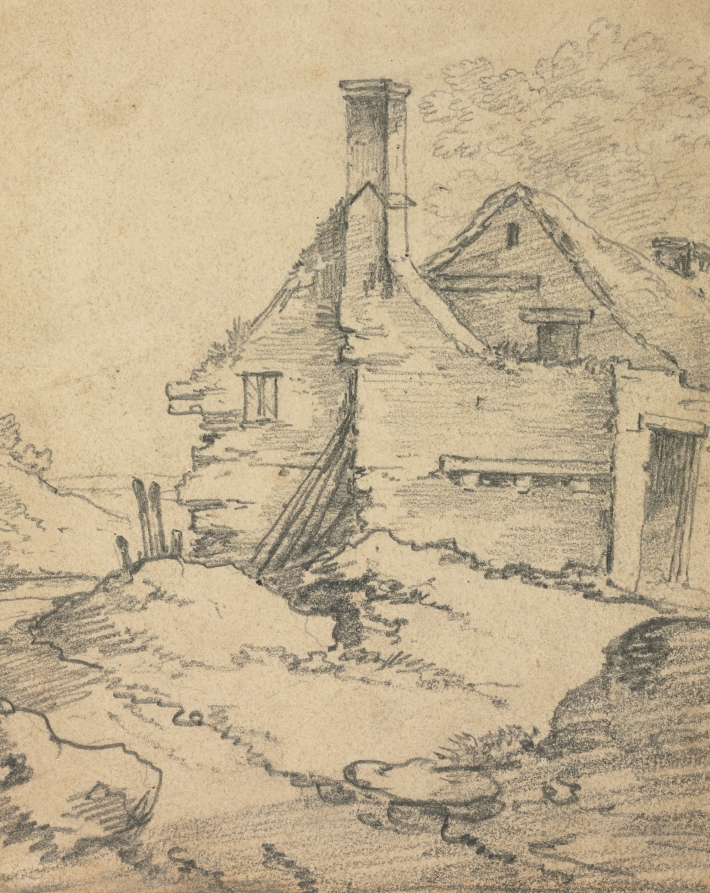
Landscape with Farm Animals by Benjamin Barker, created between approximately 1796 and 1838, combines two of the most beloved subjects in British art: pastoral landscape and animal painting. Barker, part of the notable Barker family of artists based in Bath, was known for his pastoral scenes that captured the English countryside at its most picturesque and harmonious. The inclusion of farm animals—cattle, sheep, or horses—within a landscape setting connects this work to a tradition stretching back to the Dutch golden age landscapists and continuing through the British pastoral tradition of Gainsborough, Constable, and the many country painters who found ready markets for scenes of rural contentment. Farm animals in British painting served multiple functions: they provided scale and focal points within compositions, they reinforced the agricultural identity that many British patrons valued, and they embodied the perceived harmony between human cultivation and natural beauty. Barker's active period spanned the turn of the nineteenth century, a time when the English countryside was being transformed by enclosure acts and agricultural revolution, making his seemingly tranquil pastoral scenes documents of a vanishing or transforming world. The bucolic simplicity these paintings projected was increasingly at odds with the realities of rural labor and land use change, giving them an unintentional poignancy.
Cultural Impact
Barker's pastoral scenes codified an idealized vision of English rural life that shaped national identity and influenced how urban audiences perceived the countryside during a period of profound agricultural transformation.
Why It Matters
This work preserves a romanticized vision of English agricultural life during a period of transformation, embodying the pastoral tradition that became central to British cultural identity.