Provenance
Richard Johnson, Manchester, England; Kate Field, Washington, D.C.; Mrs. R. Henry Norweb [1895-1984], Cleveland, OH, given to The Cleveland Museum of Art, Cleveland, OH (?-1960); The Cleveland Museum of Art, Cleveland, OH (September 20, 1960-)
Accession Number
1954.663
Medium
pen and brown and blue ink with ink washes
Dimensions
Sheet: 16 x 31.2 cm (6 5/16 x 12 5/16 in.)
Classification
Drawing
Credit Line
The Norweb Collection
Tags
Drawing Neoclassical & Romantic (1751–1850) Ink British Color: White
Background & Context
Background Story
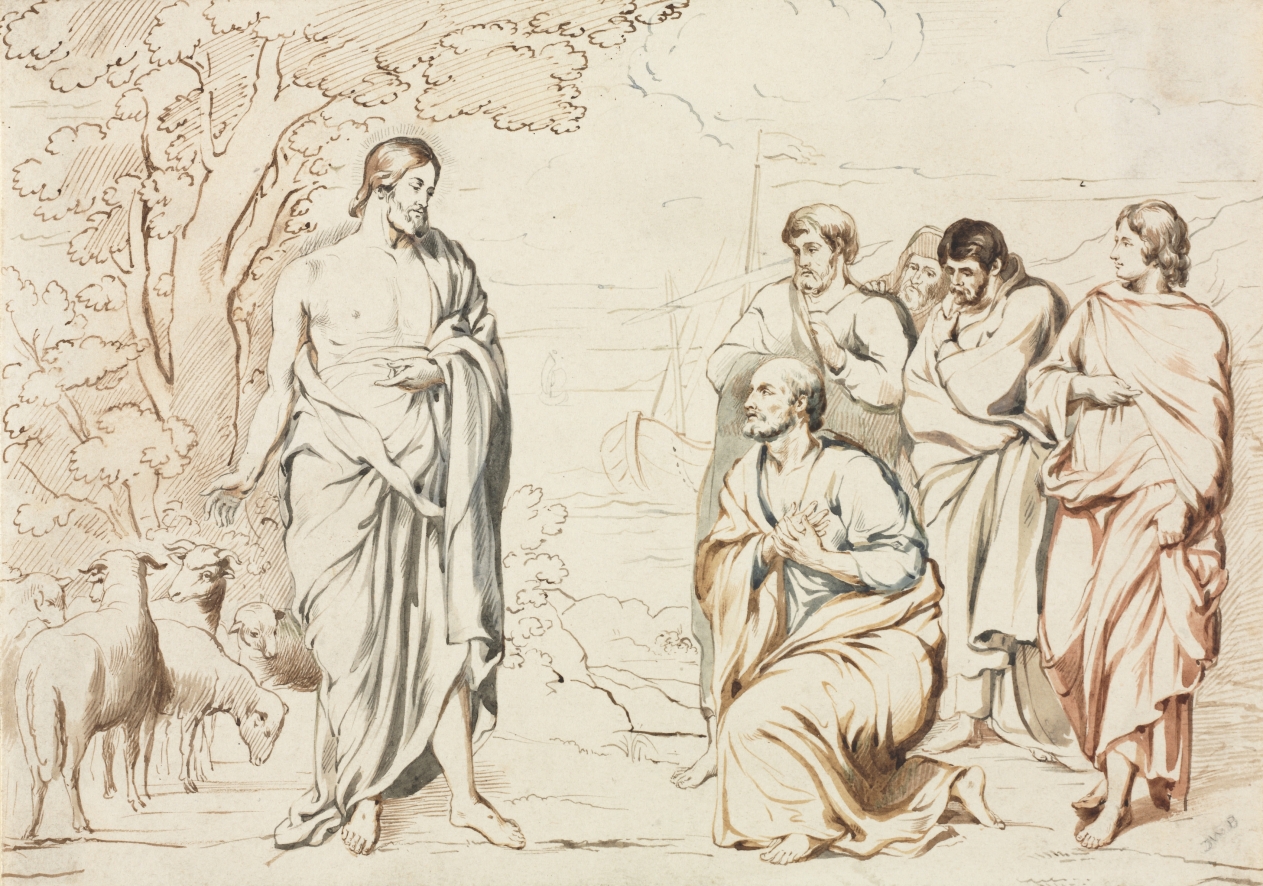
Mercury and Argos by Joseph Brett, created between approximately 1836 and 1848, depicts one of the most compelling narratives from classical mythology. The story, drawn from Ovid's Metamorphoses, tells of Mercury (the Greek Hermes) sent by Jupiter to slay the hundred-eyed giant Argos, who had been set to guard the nymph Io. Mercury famously lulled Argos to sleep with his reed pipes and then decapitated him, after which Argos's many eyes were transferred to the tail of the peacock, Juno's sacred bird. This mythological episode offered artists a rich opportunity to explore themes of deception, vigilance, transformation, and the relationship between music and sleep. Brett's treatment likely emphasizes the dramatic contrast between Mercury's graceful, youthful form and Argos's monstrous appearance, creating a visual tension between divine cunning and physical power. The period of creation, spanning the 1830s and 1840s, places this work in the later Romantic era, when mythological subjects were being reinterpreted with new emotional intensity and painterly freedom. The story of Mercury and Argos had particular resonance for artists because it directly addressed the power of art—Mercury's music was literally the instrument of his victory, suggesting that artistic skill could triumph over brute force and relentless surveillance.
Cultural Impact
The myth of Mercury and Argos has been a touchstone for artists exploring the power of art over surveillance and force, making it a particularly meaningful subject for painters navigating the relationship between creative freedom and institutional authority.
Why It Matters
Brett's depiction of this myth addresses the fundamental artistic proposition that creative skill can overcome brute force, connecting classical narrative to Romantic-era convictions about art's transformative power.