Accession Number
1954.667
Medium
graphite, charcoal and white chalk
Dimensions
N/A
Classification
Drawing
Credit Line
The Norweb Collection
Tags
Drawing Neoclassical & Romantic (1751–1850) Graphite & Pencil Charcoal British Color: Orange
Background & Context
Background Story
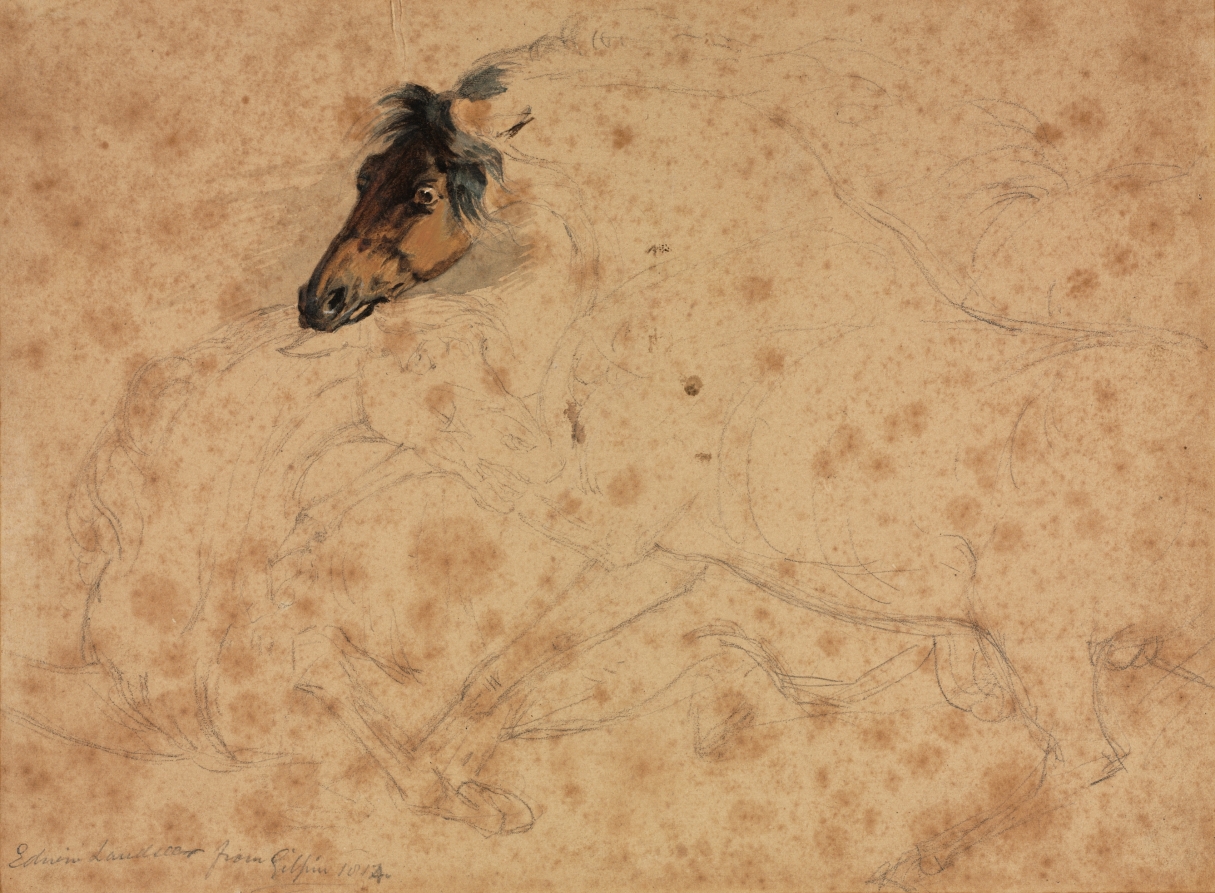
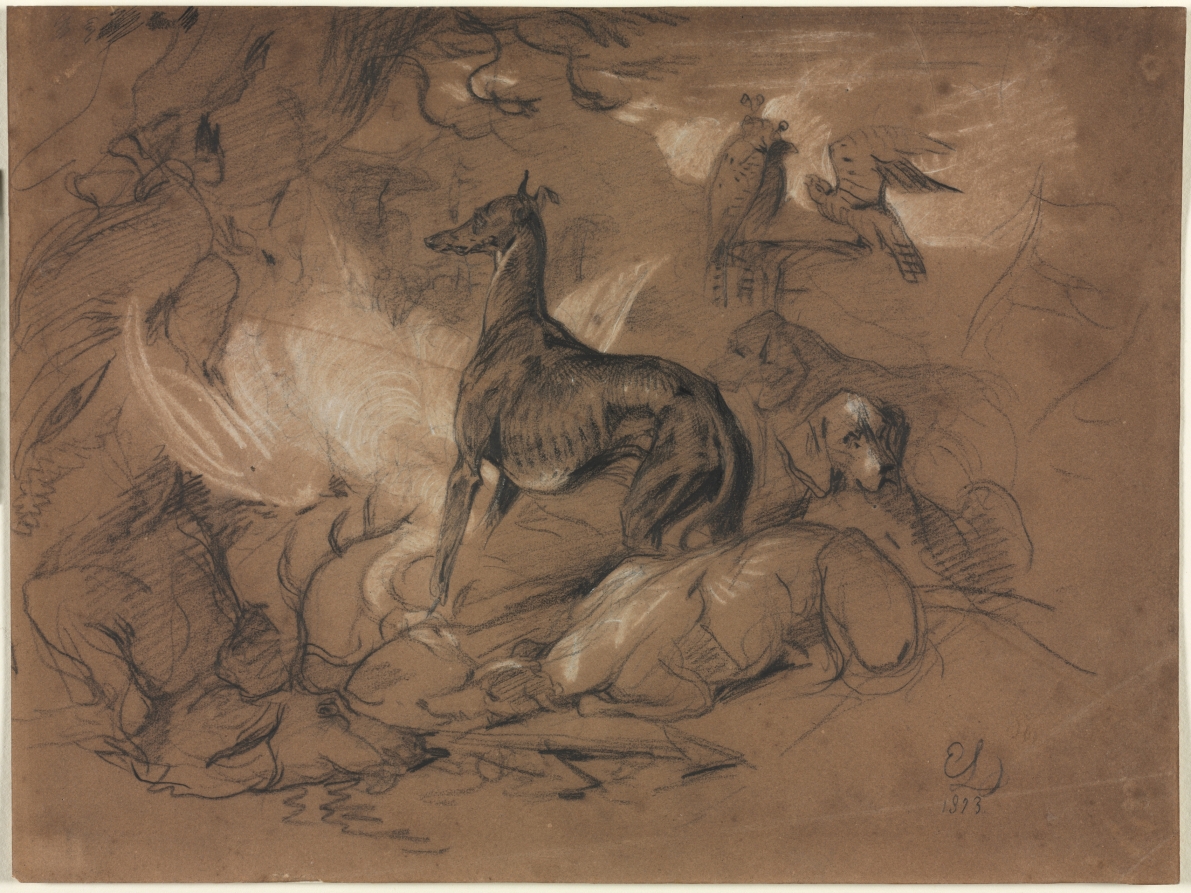
Highland Lassie by Edwin Henry Landseer, created between approximately 1824 and 1873, is a work by one of the most celebrated and popular British artists of the Victorian era. Landseer, best known for his remarkable paintings of animals—particularly dogs and stags—was also a skilled painter of Scottish Highland subjects, a region he first visited in 1824 and that captivated him for the rest of his life. The title Highland Lassie evokes the romantic Highlander tradition that Landseer helped to popularize, depicting a young Scottish girl in traditional dress against the backdrop of the rugged Highland landscape. Landseer's association with Scotland was deeply intertwined with his royal patronage—Queen Victoria and Prince Albert purchased Balmoral Castle in 1852, and Landseer became a frequent guest, producing numerous works depicting Highland life, landscapes, and the royal family's Scottish interests. The Highland Lassie subject participates in the broader Victorian romanticization of Scotland, which transformed the Highlands from a region associated with poverty and violent displacement into an idealized landscape of natural beauty, martial valor, and picturesque tradition. Landseer's depictions of Scottish subjects contributed powerfully to this cultural transformation, shaping perceptions that endure to this day.
Cultural Impact
Landseer's Highland subjects were instrumental in constructing the romantic image of Scotland that became central to Victorian British identity and continues to shape perceptions of the Highlands today.
Why It Matters
This work by one of Victorian Britain's most influential artists demonstrates how painting actively constructed the romantic image of the Scottish Highlands that became embedded in British national identity.