Provenance
Benjamin Barker, Bath, United Kingdom; Kate Field, Washington, D.C.; Mrs. R. Henry Norweb [1895-1984], Cleveland, OH (??-1954); The Cleveland Museum of Art, Cleveland, OH (December 4, 1954-)
Accession Number
1954.671
Medium
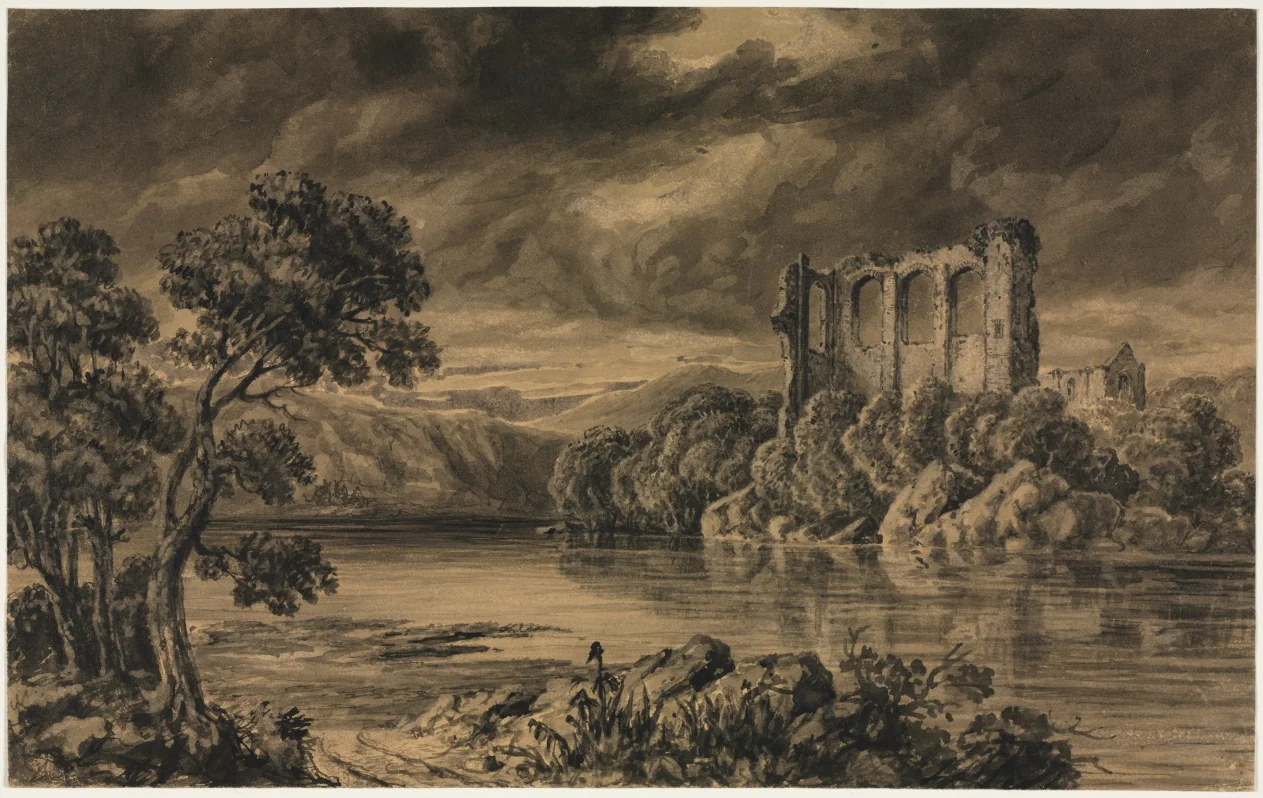
ink and wash
Dimensions
Sheet: 21.9 x 34.9 cm (8 5/8 x 13 3/4 in.)
Classification
Drawing
Credit Line
The Norweb Collection
Tags
Drawing Neoclassical & Romantic (1751–1850) Ink Color: Brown
Background & Context
Background Story
Egremont Castle, Cumberland, dating from the 1800s and attributed to an unknown artist, depicts one of the most historically significant castles in northwest England. Egremont Castle, originally built in the twelfth century by William de Meschines, stands on a defensive mound overlooking the River Ehen in what is now Cumbria. The castle played a notable role in the turbulent medieval history of the Anglo-Scottish borderlands, changing hands repeatedly during periods of conflict and serving as a stronghold for the powerful Greystoke family. By the 1800s, the castle had long been a picturesque ruin, its broken towers and crumbling walls providing exactly the kind of romantic subject that appealed to the Romantic era's fascination with the passage of time and the impermanence of human ambition. Castle ruins were among the most popular subjects for both professional and amateur painters during this period, embodying as they did the era's preoccupation with history, nostalgia, and the sublime beauty of decay. The unknown artist's depiction likely emphasizes the dramatic contrast between the castle's ruined masonry and the Cumbrian landscape, perhaps incorporating the picturesque conventions of framing views through archways or foreground details of wild vegetation. The growing market for such views was fueled by the rise of domestic tourism and the cult of the picturesque that had been codified by writers like William Gilpin.
Cultural Impact
Paintings of ruined castles like Egremont fueled the Picturesque movement and domestic tourism, shaping how the British public engaged with their architectural heritage and the concept of romantic decay.
Why It Matters
This anonymous work preserves a visual record of a significant Cumbrian castle during the period when ruins became central to British cultural identity, participating in the Picturesque tradition that transformed architectural decay into artistic subject.