Accession Number
1954.688
Medium
pen and brown ink and brush and brown wash over black chalk, heightened with white gouache; incised, framing lines in brown ink over traces of black chalk
Dimensions
Sheet: 26.3 x 43.5 cm (10 3/8 x 17 1/8 in.)
Classification
Drawing
Credit Line
The Norweb Collection
Tags
Drawing Baroque (1600–1750) Ink Gouache Italian Color: Orange Color: Brown
Background & Context
Background Story
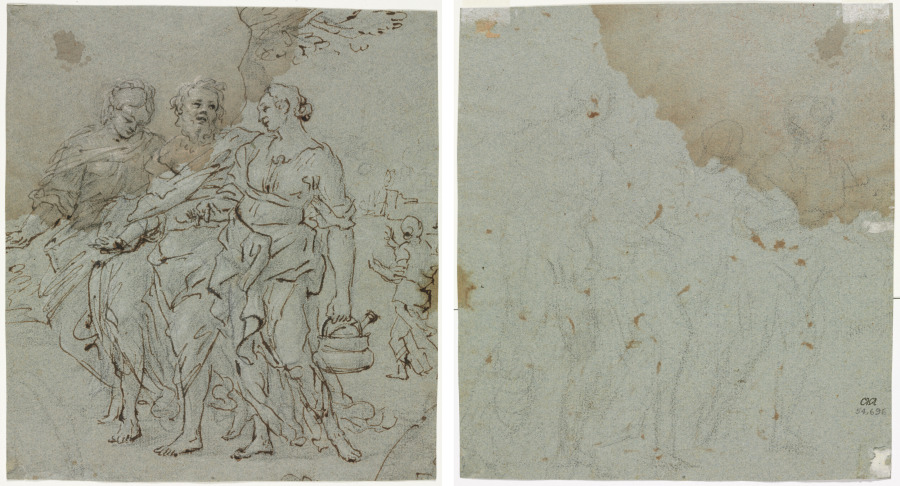
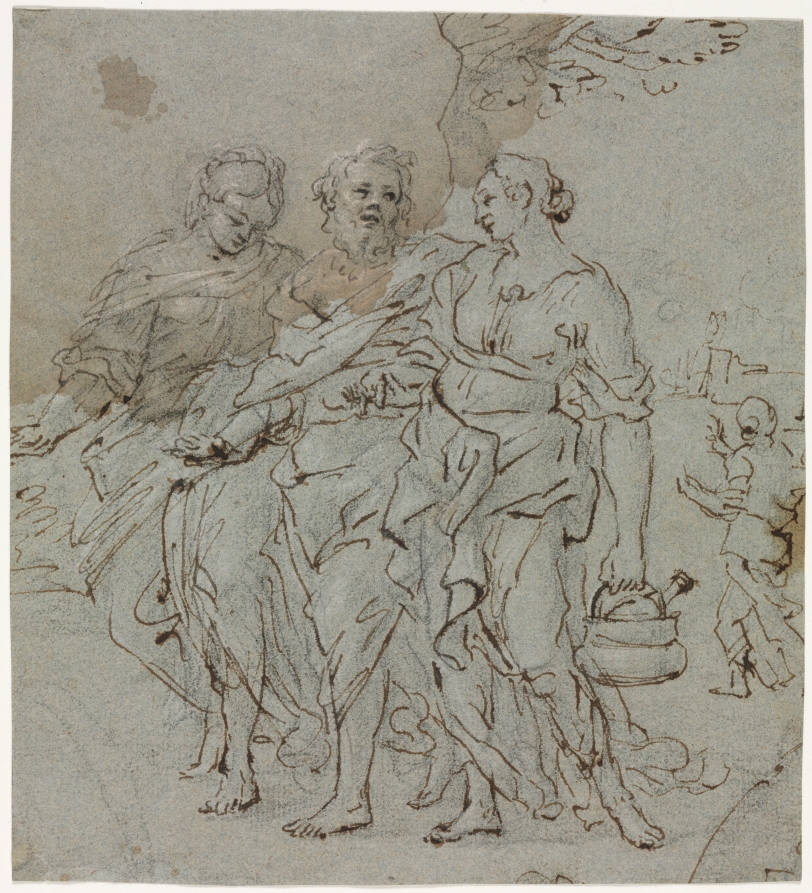
Pietro da Cortona (1596-1669) was an Italian painter and architect known as one of the leading painters of the High Baroque, whose dynamic, colorful manner defines the Baroque style at its most exuberant. Bacchanal from the 1600s depicts a mythological scene of Bacchic revelry in the dynamic, colorful manner that distinguishes Pietro da Cortona's best work from the more classical Baroque of his contemporaries. The Bacchanal subject—the celebration of Bacchus, the god of wine—allowed Pietro da Cortona to exercise his talent for dynamic composition and colorful figure painting in a mythological subject that was designed to be exuberant and celebratory.
Cultural Impact
Bacchanal is important in the history of Baroque painting because it demonstrates the dynamic, exuberant manner that Pietro da Cortona developed as one of the leading painters of the High Baroque. Pietro da Cortona's dynamic compositions and colorful figure painting—in the exuberant manner that he developed from his study of Correggio and Titian—define the Baroque style at its most energetic, and the Bacchanal subject shows this manner at its most celebratory.
Why It Matters
Bacchanal is Pietro da Cortona's High Baroque at its most exuberant: a mythological scene of Bacchic revelry rendered in the dynamic, colorful manner that defines the Baroque style at its most energetic. The 1600s painting shows the leading painter of the High Baroque exercising his talent for dynamic composition and colorful figure painting.