Accession Number
1954.691
Medium
pen and brown ink, graphite and brush and brown wash; framing lines in black ink
Dimensions
Sheet: 27.9 x 16.7 cm (11 x 6 9/16 in.)
Classification
Drawing
Credit Line
The Norweb Collection
Tags
Drawing Baroque (1600–1750) Ink Graphite & Pencil Czech Color: White Color: Gray
Background & Context
Background Story
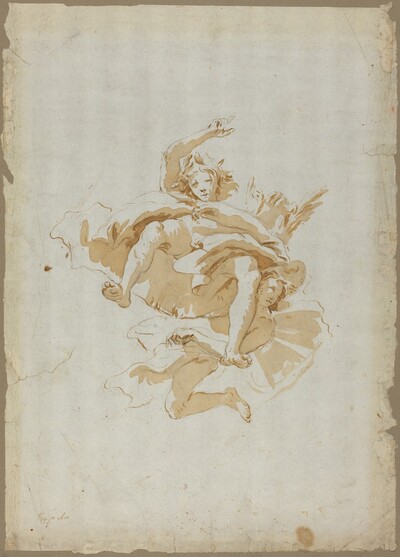
Karel Skreta (1610-1674) was a Bohemian painter known as the most important painter of the Czech Baroque, whose portraits and religious paintings combine the Bohemian tradition with Italian Baroque influence. Ascension of Saint Jerome from the 1600s depicts the ascension of Saint Jerome in the dramatic, Baroque manner that distinguishes Skreta's best religious paintings. The painting combines the Czech Baroque tradition with Italian Baroque influence in the dramatic, expressive manner that makes Skreta the most important painter of the Czech Baroque, and the subject of Saint Jerome's ascension allows him to exercise his talent for dramatic religious composition.
Cultural Impact
Ascension of Saint Jerome is important in the history of Czech painting because it demonstrates the dramatic, Baroque manner that Skreta brought to religious subjects as the most important painter of the Czech Baroque. Skreta's combination of the Czech tradition with Italian Baroque influence created a distinctive type of Czech Baroque painting that is simultaneously local in tradition and Italian in manner, and the Ascension shows this combination at its most dramatic.
Why It Matters
Ascension of Saint Jerome is Skreta's Czech Baroque: the saint's ascension rendered in the dramatic manner that combines the Czech tradition with Italian Baroque influence. The painting shows the most important painter of the Czech Baroque exercising his talent for dramatic religious composition at its most accomplished.