Description
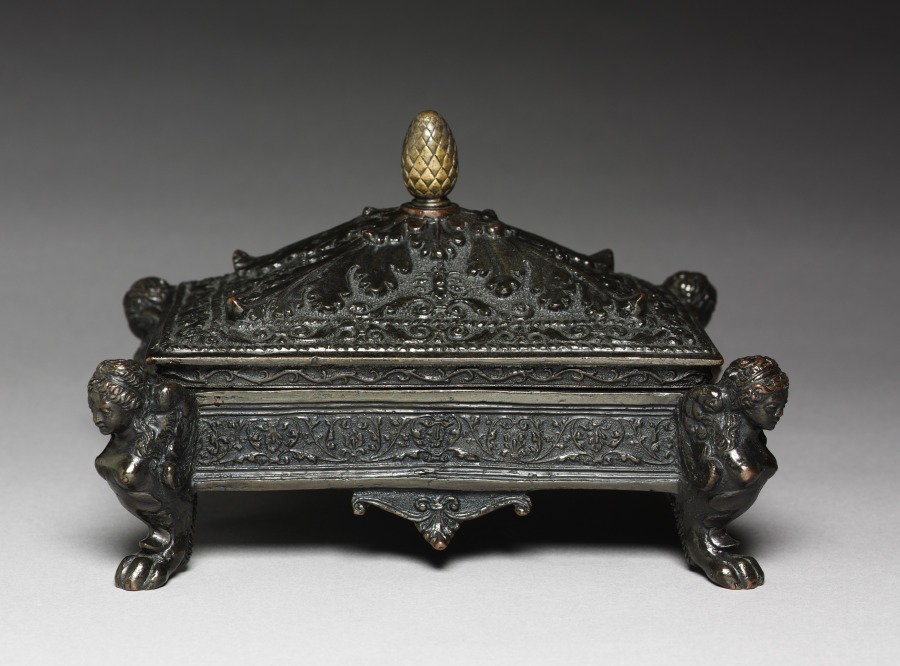
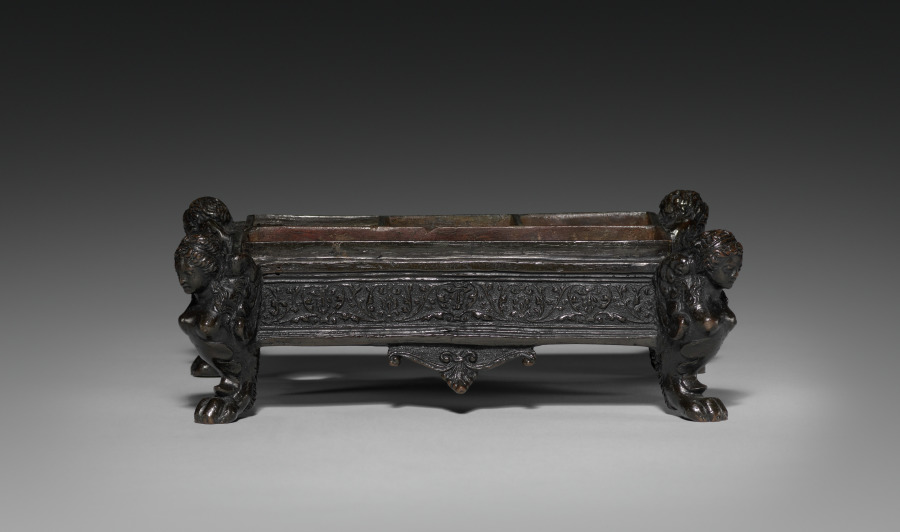
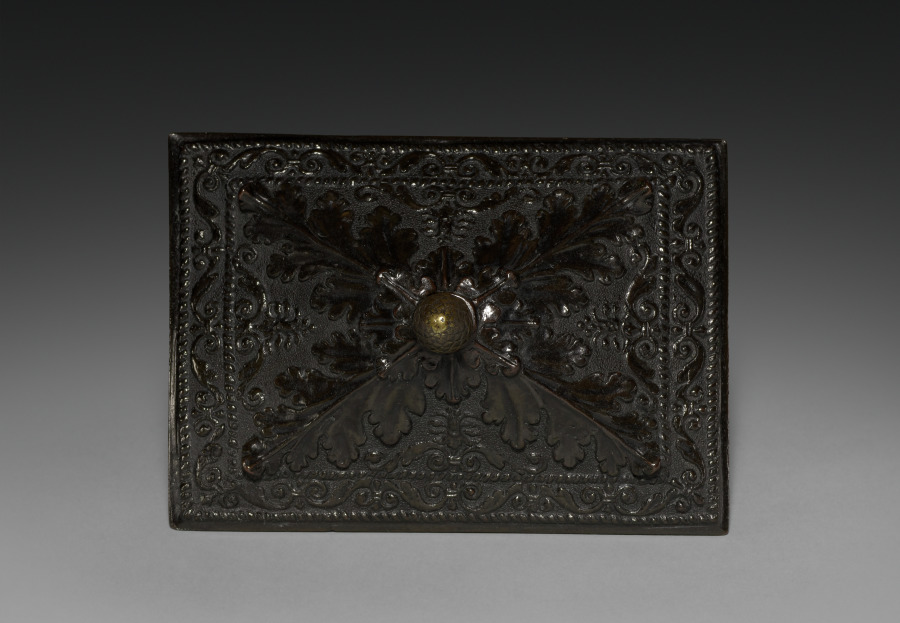
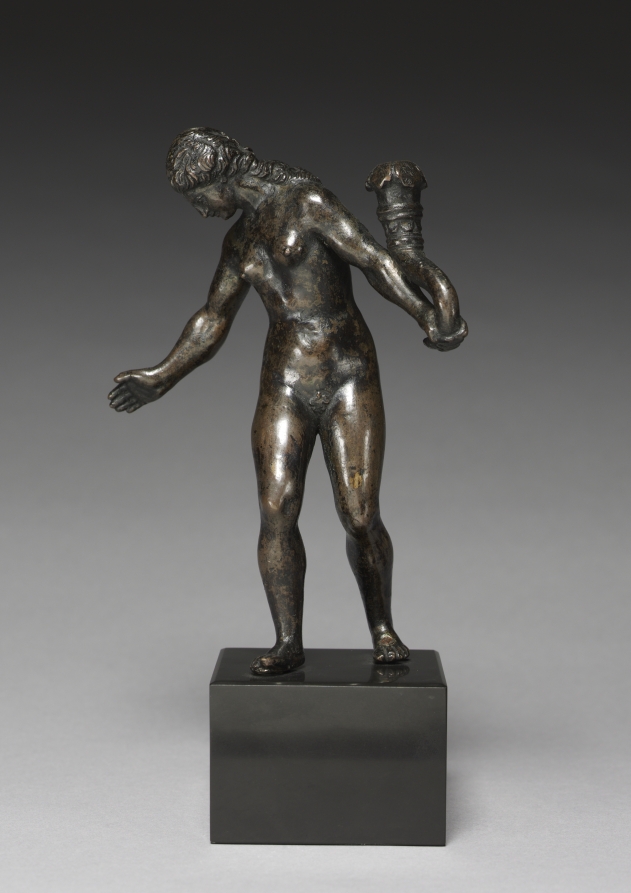
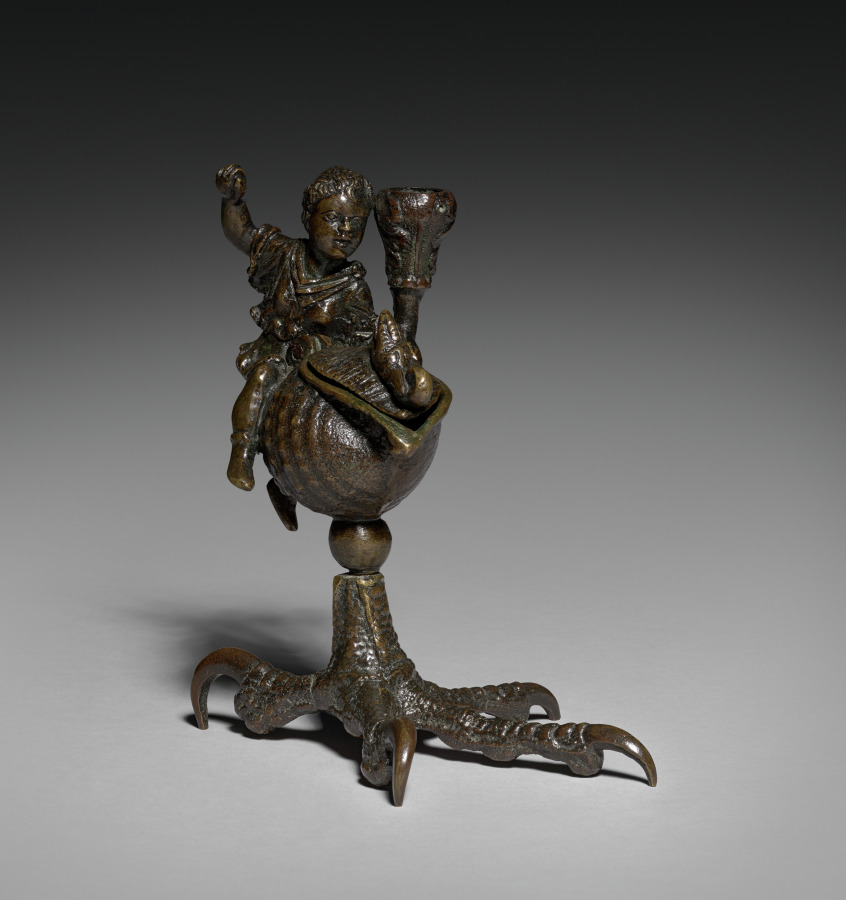
In the early 1500s, Padua, a center of strong humanist traditions, encouraged the revival of classicism, and artists took their cues from descriptions in the works of classical authors. Classical small-scale bronzes grew in demand, and in response, the city's bourgeoning foundries produced a varied and extensive supply of small statues. Like many early Paduan bronzes, this work's utilitarian function—used to hold ink and to supply light—is complimented by its ornamental value. The base consists of an eagle claw, cast from life, supporting an equally realistic nautilus shell. Though medieval artists had occasionally used seashells to hold paints, the shell inkwell, whose small size makes it rather impractical to use, was a motif particular to Padua. Perched upon the shell is most likely Hercules, the son of Zeus. Perhaps aided by a staff (now missing) he is poised to strike a serpent, which according to myth was sent by Hera, the jealous wife of Zeus, to kill him. The dramatic opposition of hero and monster enhances the connection to the classical past, further meeting the desires of the educated patrons of Padua.
Provenance
Pfungst;; John Pierpont Morgan, 1837-1915 (New York, New York); Ernö Wittmann (Budapest, Hungary), died 1963, sold through R. Stora & Co. (New York, New York) to the Cleveland Museum of Art, 1954.
Accession Number
1954.798
Medium
bronze
Dimensions
Overall: 21 x 11 x 13 cm (8 1/4 x 4 5/16 x 5 1/8 in.)
Classification
Sculpture
Credit Line
John L. Severance Fund