Provenance
Ma Yueguan 馬曰琯 [1688–1755]; Ding Huikang 丁惠康 [1868/1869–about 1918] and Gu Anmi 顧安宓; (C. T. Loo & Co., New York, NY, sold to the Cleveland Museum of Art) (?-1955); The Cleveland Museum of Art, Cleveland, OH (1955-)
Accession Number
1955.37.1
Medium
Album leaf, ink on paper
Dimensions
Overall: 29.9 x 39.4 cm (11 3/4 x 15 1/2 in.)
Classification
Painting
Credit Line
Gift of Mr. and Mrs. Severance A. Millikin
Tags
Painting Baroque (1600–1750) Ink Paper Chinese Color: White Color: Gray
Background & Context
Background Story
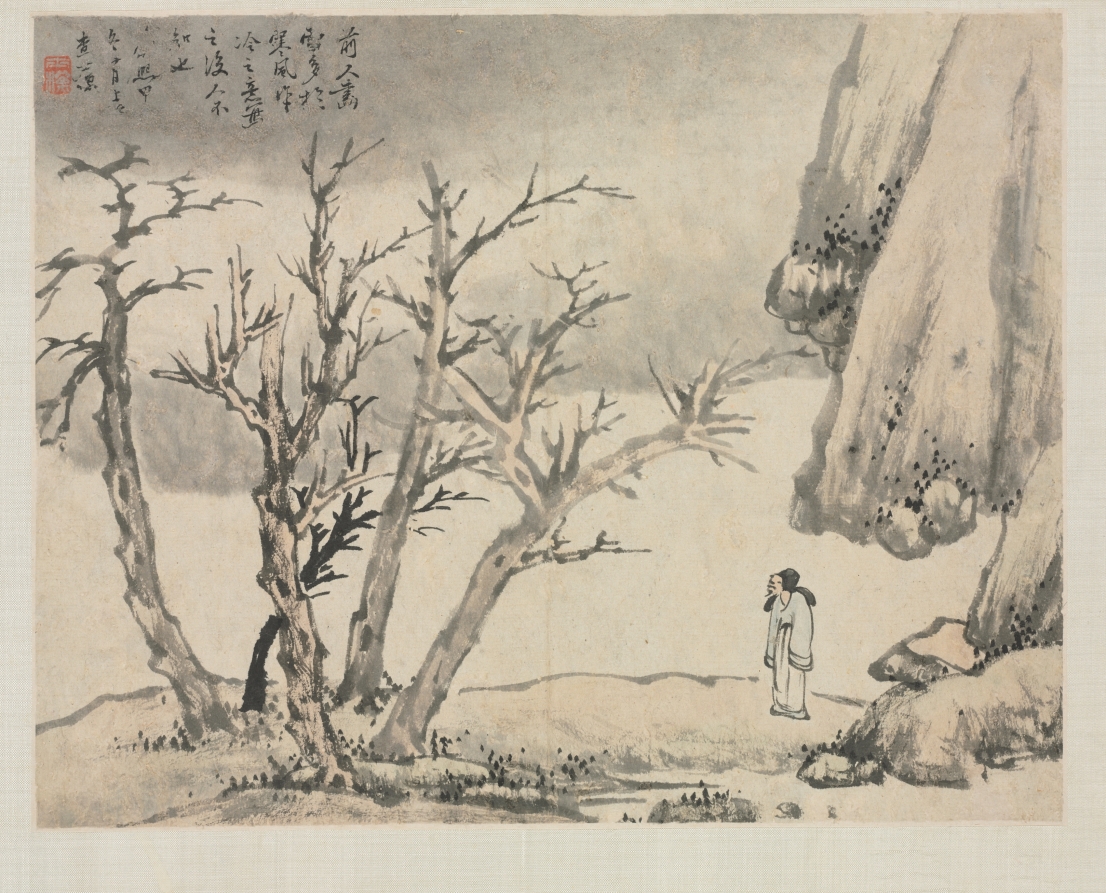
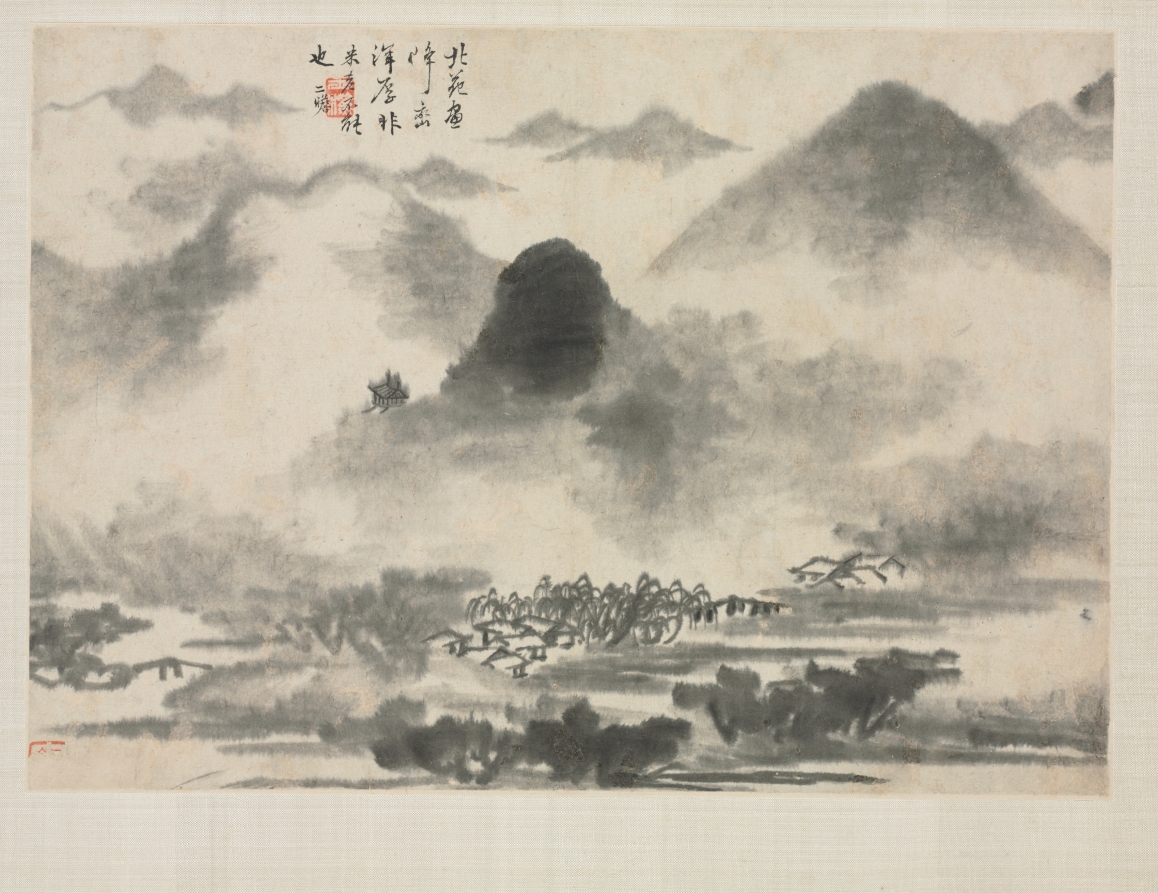
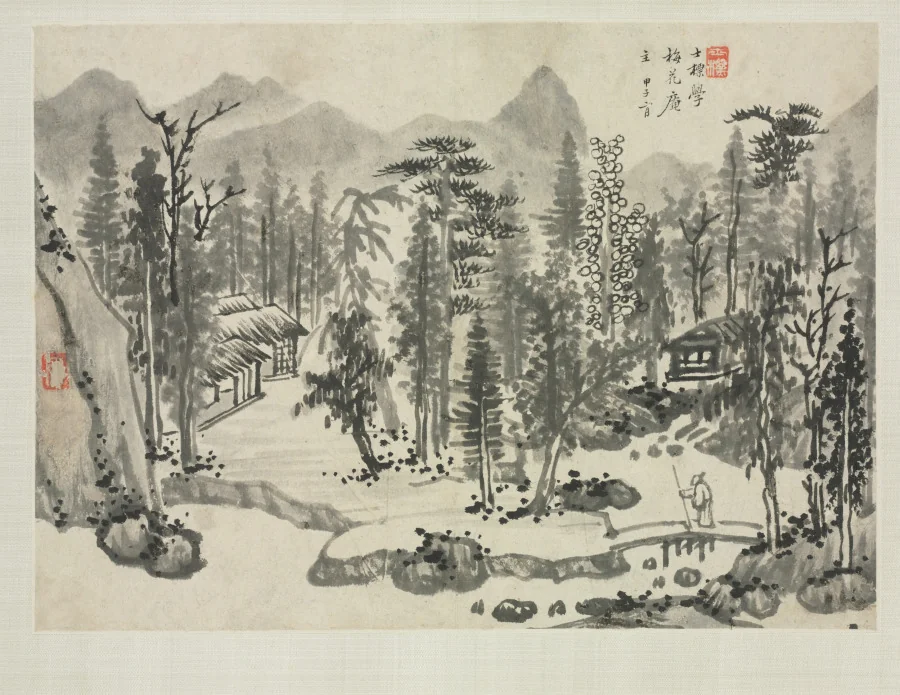
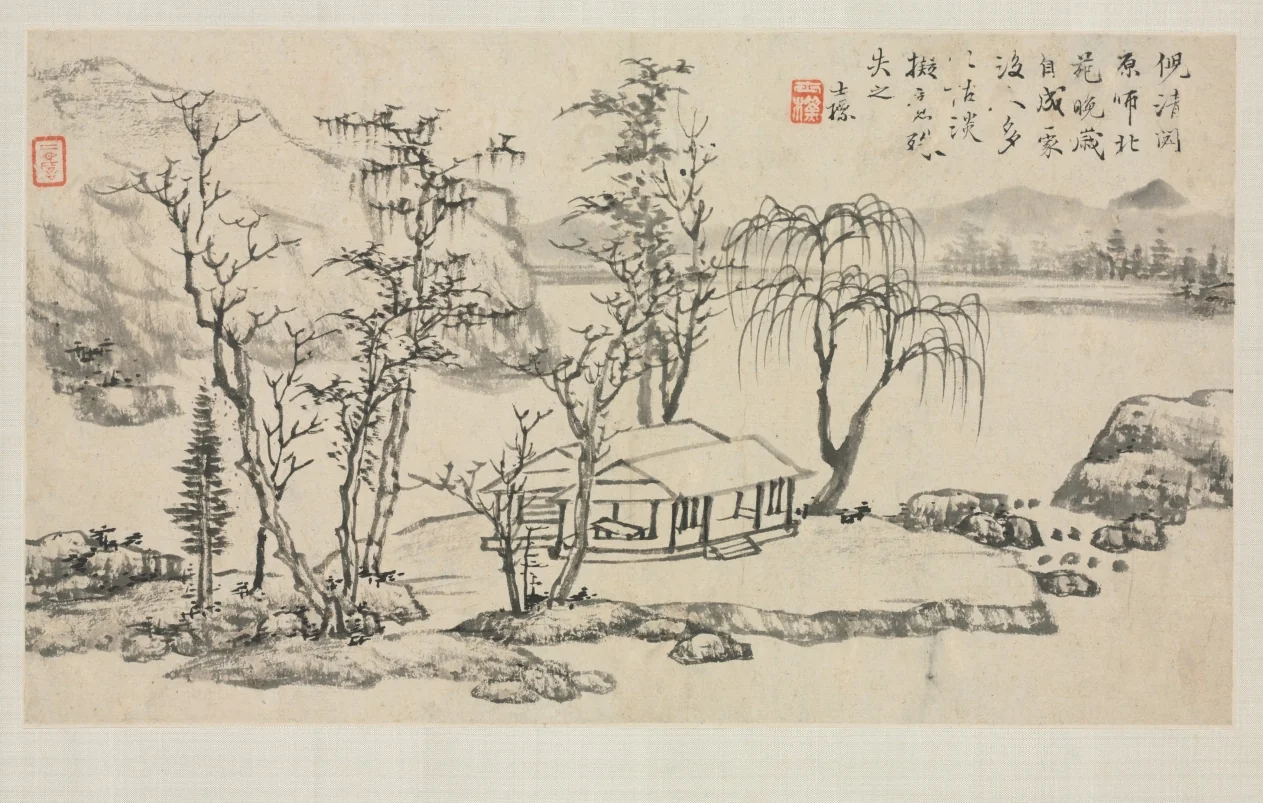
Zha Shibiao (1615-1698) was one of the leading painters of the Xin'an School, active during the traumatic transition from Ming to Qing dynasty. This album leaf, painted in 1684 when Zha was sixty-nine, imitates the style of Ni Zan (1301-1374), the Yuan dynasty master known for his sparse, minimalist landscapes. Ni Zan's signature motifs — empty pavilions, sparse trees, and vast expanses of negative space — are rendered here with Zha's distinctive brushwork, creating a dialogue across three centuries of landscape painting tradition.
Cultural Impact
The practice of painting in the style of earlier masters (linmo) was not mere imitation in Chinese painting culture — it was a form of scholarly dialogue. By working in Ni Zan's style, Zha Shibiao was making a statement about his own artistic lineage and values. Ni Zan's refusal to serve the Mongol court had made him a symbol of principled withdrawal, and Zha — who had survived the Ming-Qing transition — found in Ni's example a model for living through historical catastrophe with integrity.
Why It Matters
This album leaf is a conversation across centuries: a Ming loyalist painting in the style of a Yuan recluse, both artists choosing withdrawal over compromise. The style of Ni Zan becomes a political and moral statement in Zha Shibiao's hands.