Provenance
Ma Yueguan 馬曰琯 [1688–1755]; Ding Huikang 丁惠康 [1868/1869–about 1918] and Gu Anmi 顧安宓; (C. T. Loo & Co., New York, NY, sold to the Cleveland Museum of Art) (?-1955); The Cleveland Museum of Art, Cleveland, OH (1955-)
Accession Number
1955.37.10
Medium
album leaf, ink and light color on paper
Dimensions
Overall: 29.9 x 39.4 cm (11 3/4 x 15 1/2 in.)
Classification
Painting
Credit Line
Gift of Mr. and Mrs. Severance A. Millikin
Tags
Painting Baroque (1600–1750) Ink Paper Chinese Color: Gray
Background & Context
Background Story
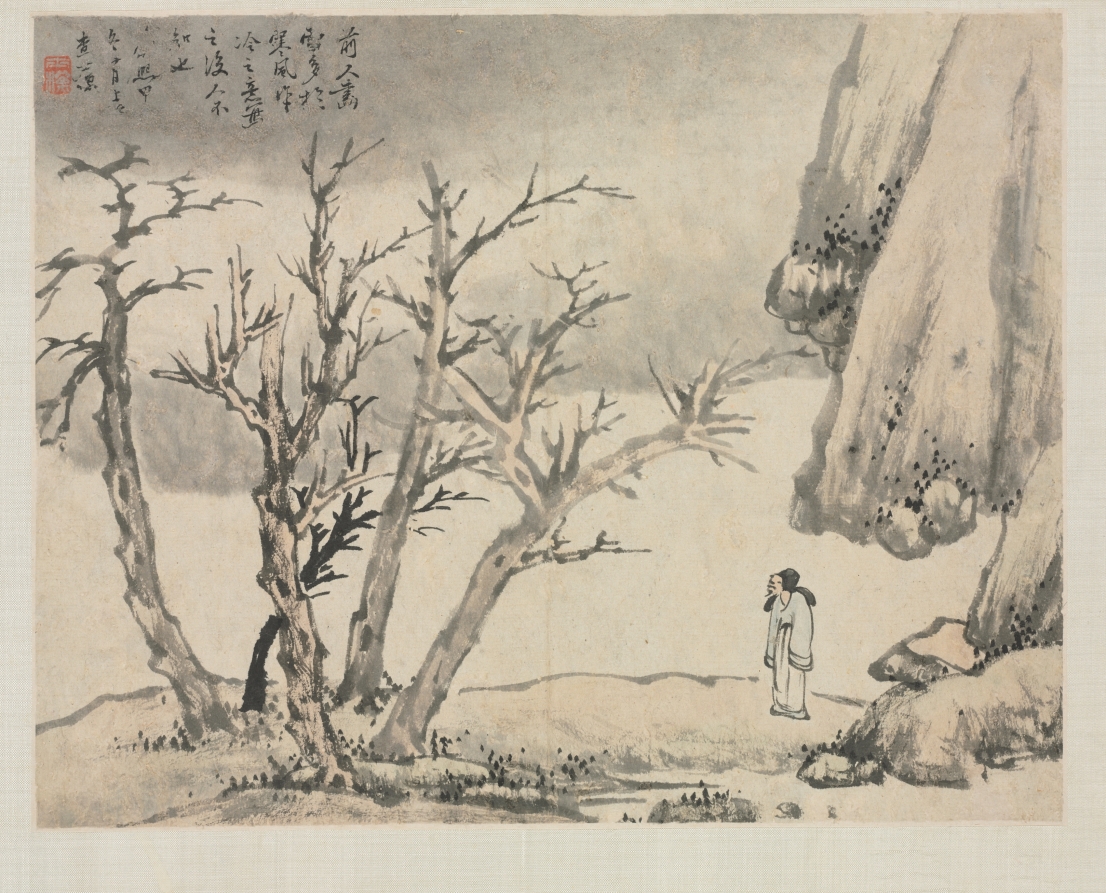
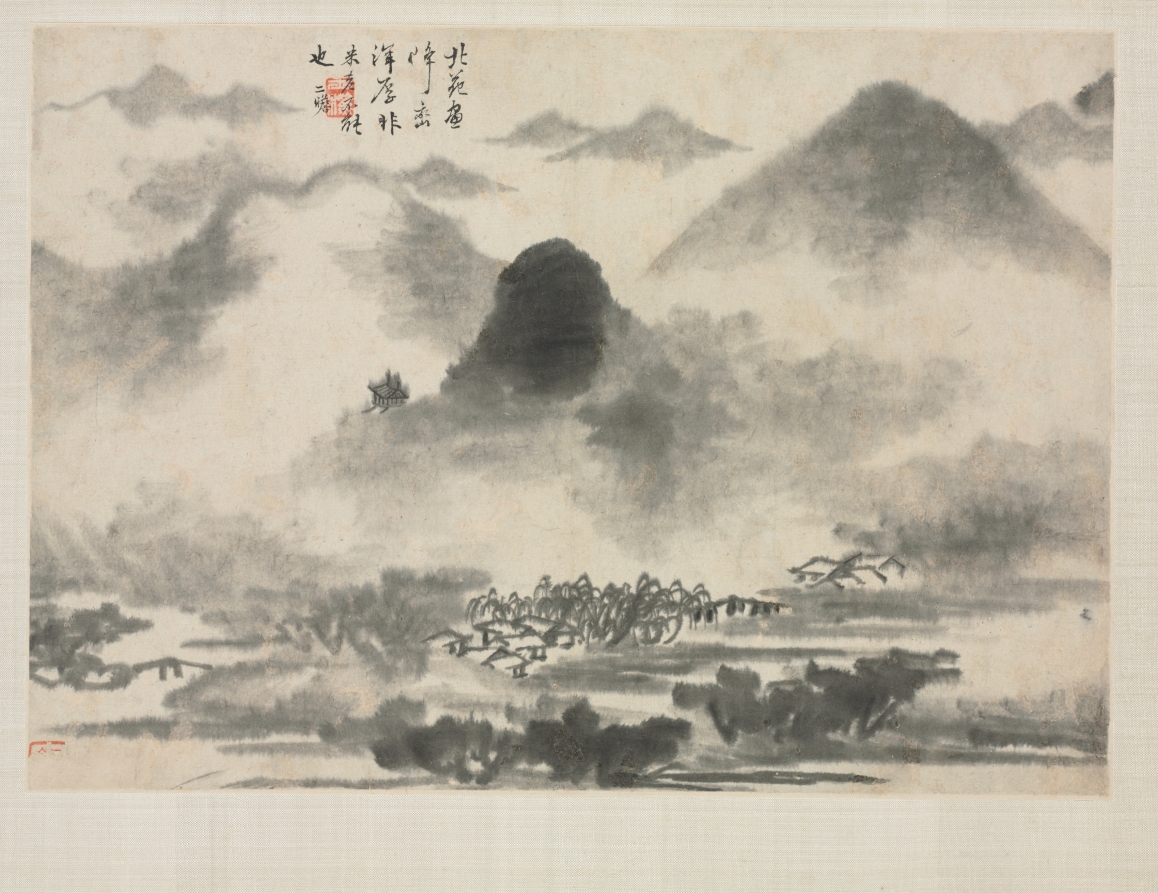
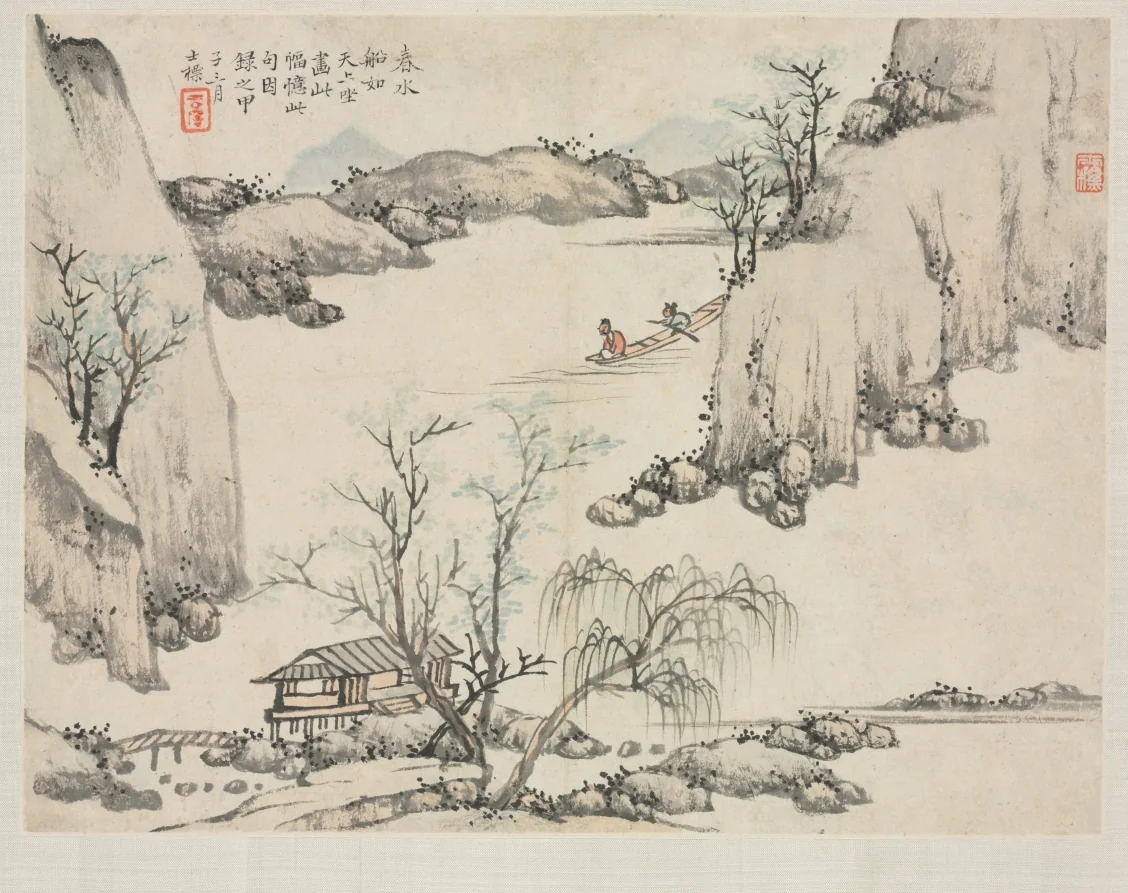
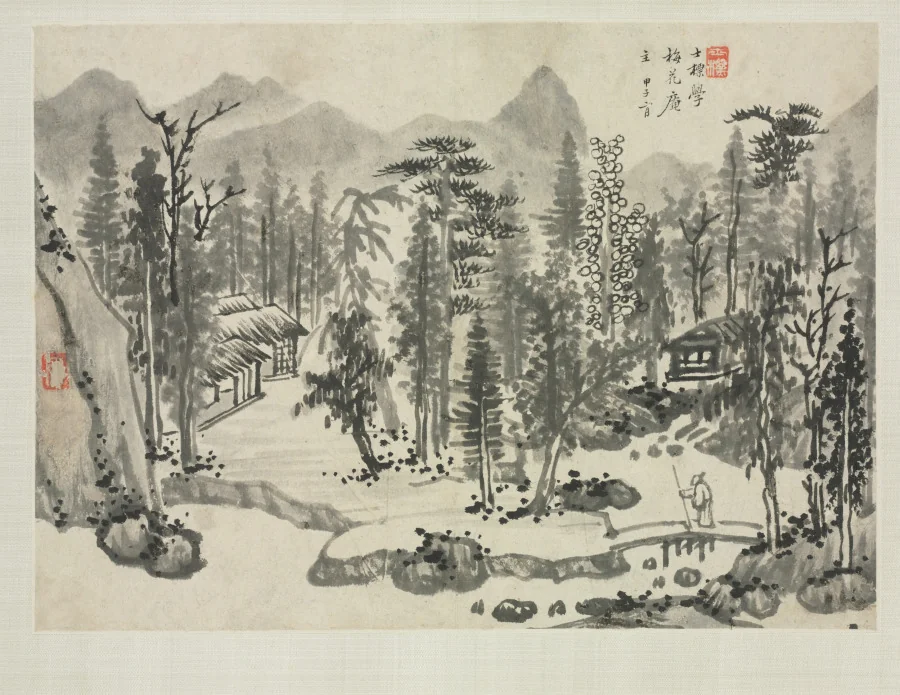
Working in the style of Wu Zhen (1280-1354), Zha Shibiao adopts the Yuan master's characteristic wet brush technique and generous use of ink wash. Where the Ni Zan leaf was sparse and dry, this leaf is luxuriant and wet — mountains rising from misty valleys, trees heavy with foliage, water flowing through the composition with the fluidity that Wu Zhen made his hallmark. The light color (danqing) adds warmth to the ink without displacing it, following the principle that color should serve ink rather than compete with it.
Cultural Impact
Wu Zhen represented a different model of Yuan dynasty withdrawal: where Ni Zan was austere, Wu Zhen was generous, painting landscapes of abundance and ease that suggested the rewards of living simply. Zha Shibiao's choice to include both Ni Zan and Wu Zhen in the same album demonstrates his range and his understanding that the literati tradition encompassed multiple modes of being.
Why It Matters
The Wu Zhen leaf demonstrates Zha's technical range: the same artist who could paint Ni Zan's sparse emptiness can also paint Wu Zhen's full abundance. The album format allows Zha to be multiple painters simultaneously, each style representing a different aspect of the literati ideal.