Provenance
Ma Yueguan 馬曰琯 [1688–1755]; Ding Huikang 丁惠康 [1868/1869–about 1918] and Gu Anmi 顧安宓; (C. T. Loo & Co., New York, NY, sold to the Cleveland Museum of Art) (?-1955); The Cleveland Museum of Art, Cleveland, OH (1955-)
Accession Number
1955.37.12
Medium
album leaf, ink and light color on paper
Dimensions
Overall: 29.9 x 39.4 cm (11 3/4 x 15 1/2 in.)
Classification
Painting
Credit Line
Gift of Mr. and Mrs. Severance A. Millikin
Tags
Painting Baroque (1600–1750) Ink Paper Chinese Color: Gray
Background & Context
Background Story
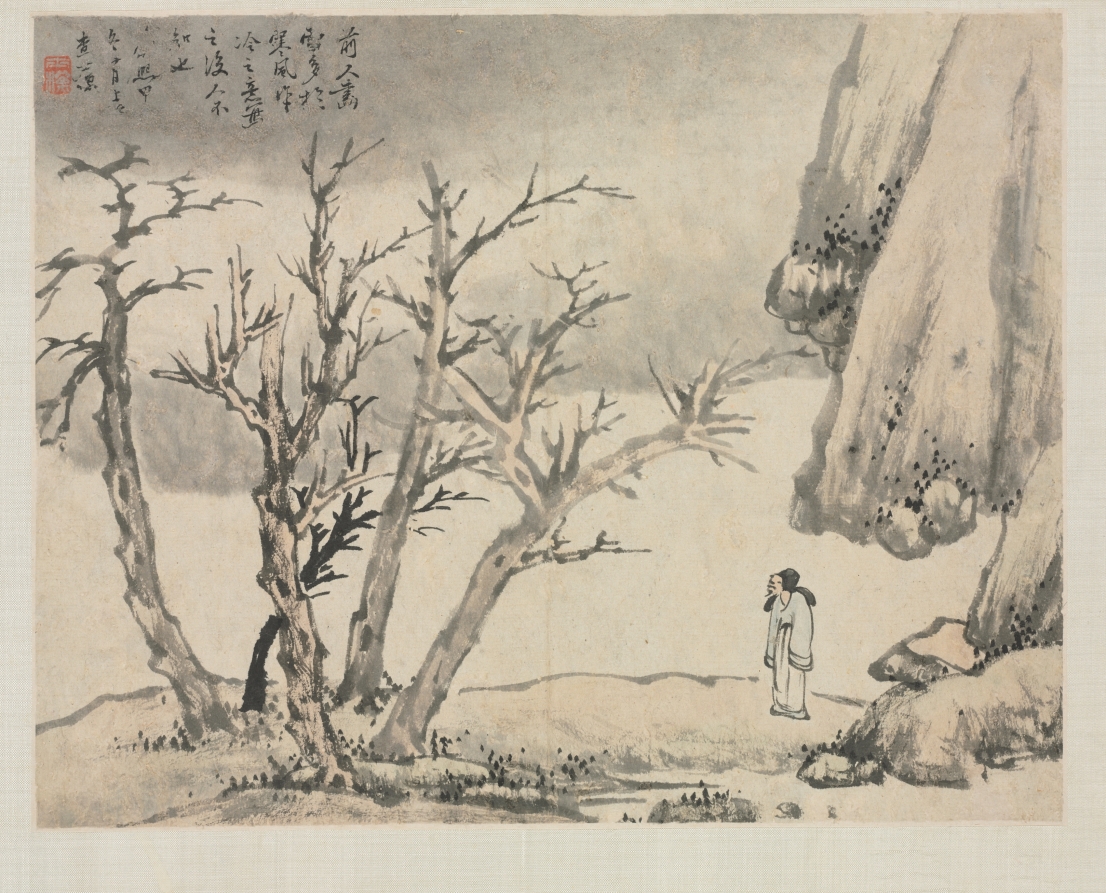
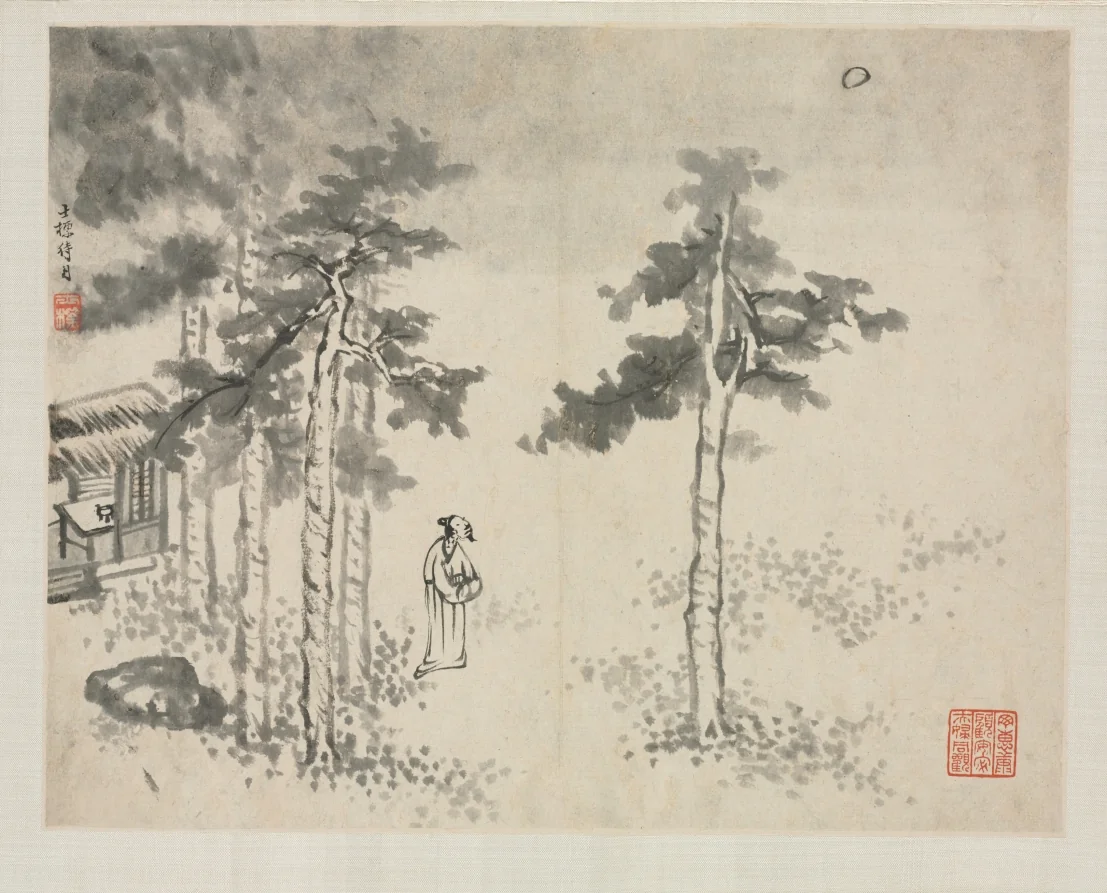
This is the most personal leaf in Zha Shibiao's album: a landscape showing the artist himself (Shibiao) waiting for the moon. The title identifies the seated figure as the painter, making this a self-portrait within a landscape — a format with deep roots in Chinese painting tradition. The composition shows a figure seated in a pavilion or on a rocky outcrop, gazing upward at the moon that has not yet risen or is partially obscured. The landscape is spare, with the emphasis on the solitary figure and the anticipated lunar presence.
Cultural Impact
The motif of a literatus waiting for the moon was a well-established theme in Chinese painting and poetry, signifying the contemplative life and the search for enlightenment. By including himself in the composition, Zha Shibiao connects the album to the tradition of selfportrait-in-landscape that includes such masters as Shen Zhou and Wen Zhengming. But the title also carries a subtle political meaning: 'waiting for the moon' could signify waiting for the return of the Ming dynasty — a meaning that Zhou Shibiao's contemporaries would have understood.
Why It Matters
Shibiao Waiting for the Moon is the most autobiographical leaf in the album. The artist places himself in the landscape, waiting — for the moon, for enlightenment, for the restoration of the dynasty. The ambiguity is deliberate and deeply meaningful.