Description
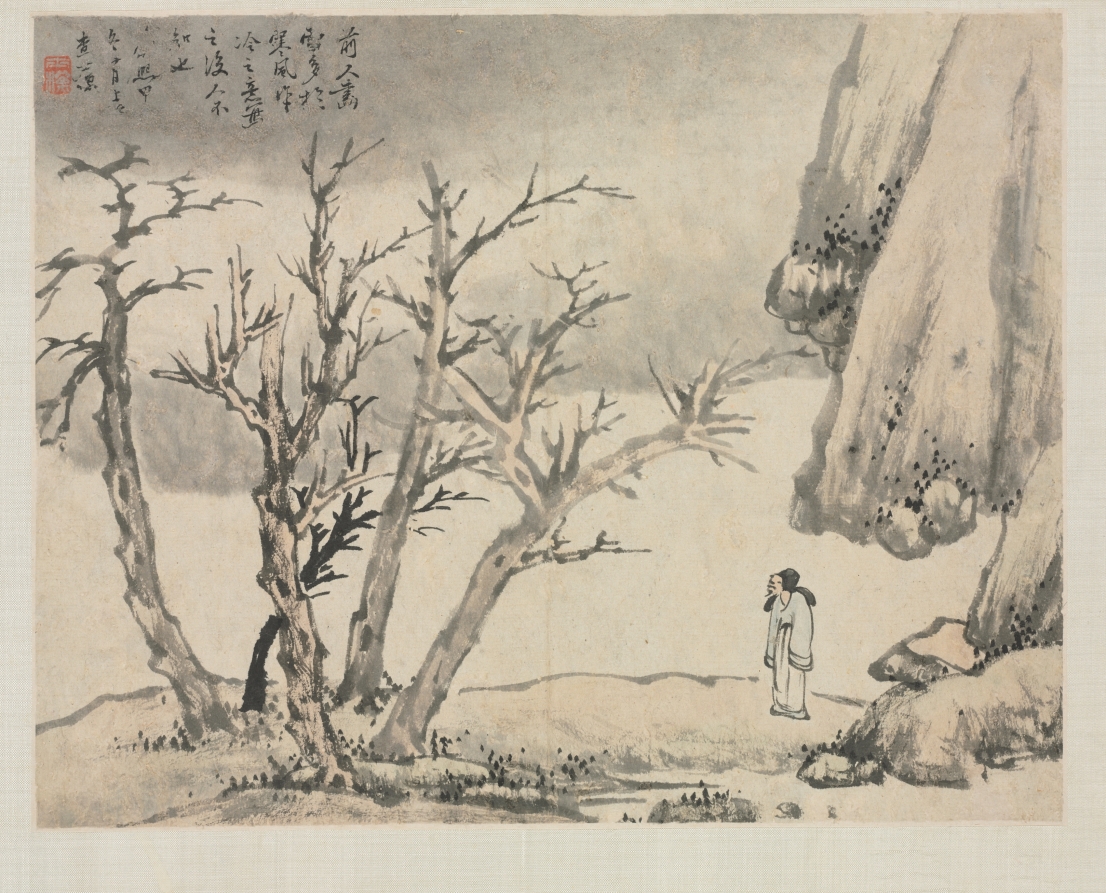
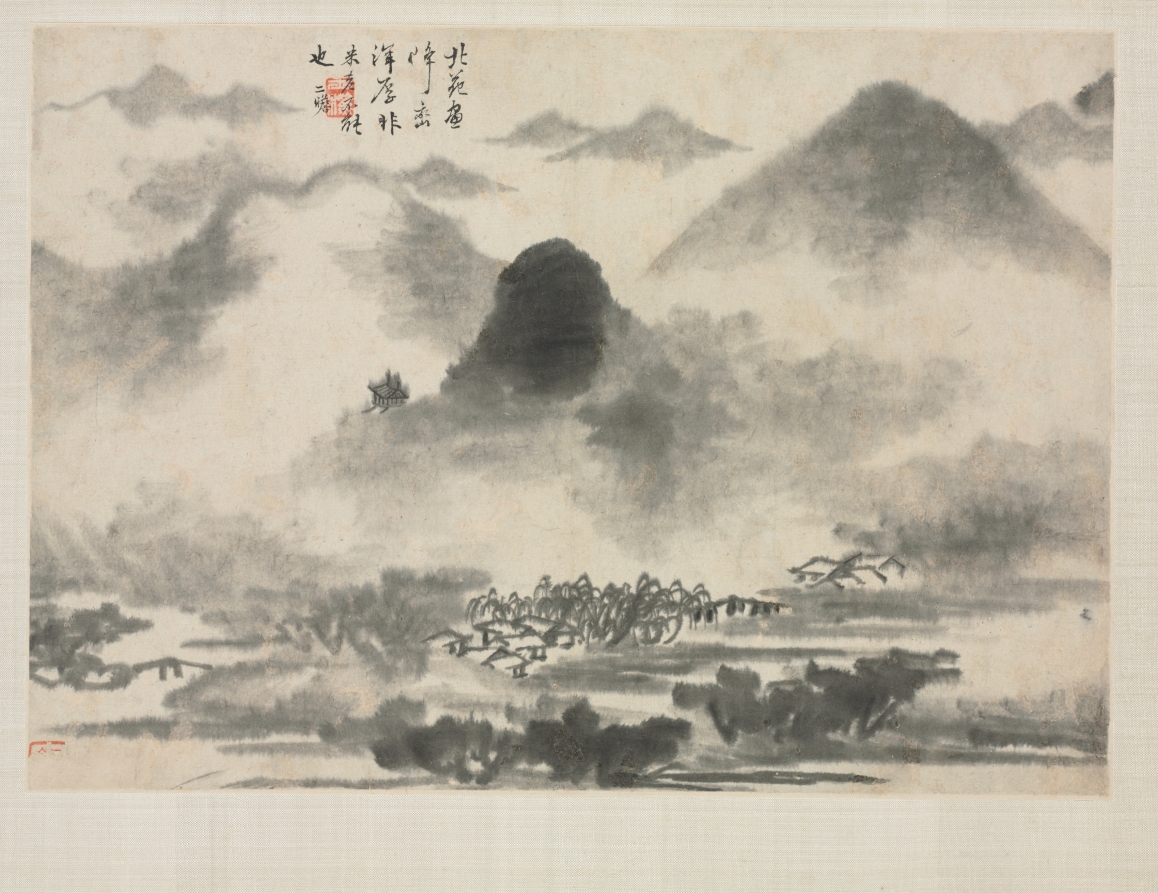
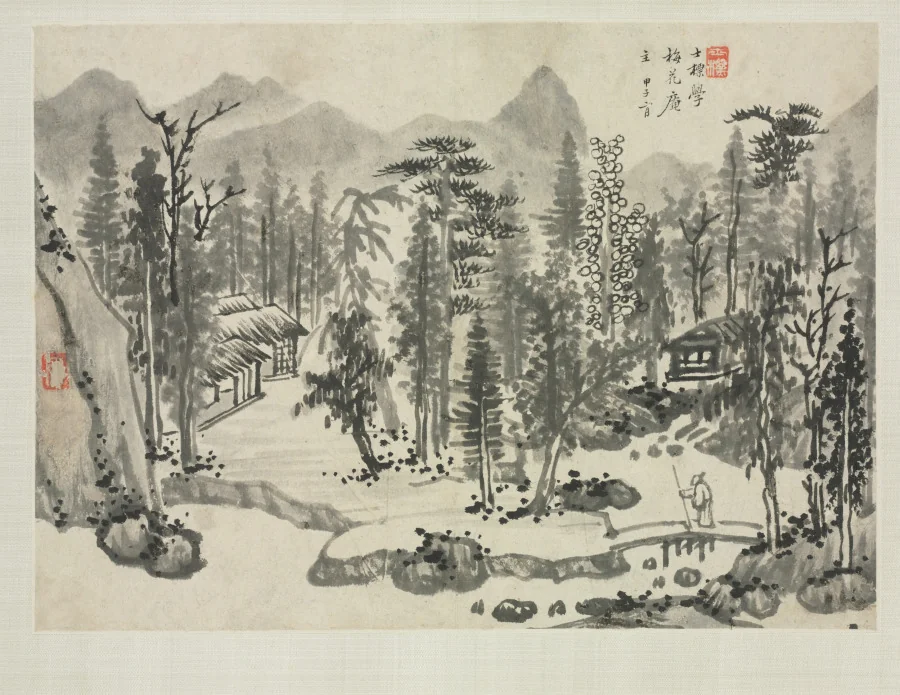
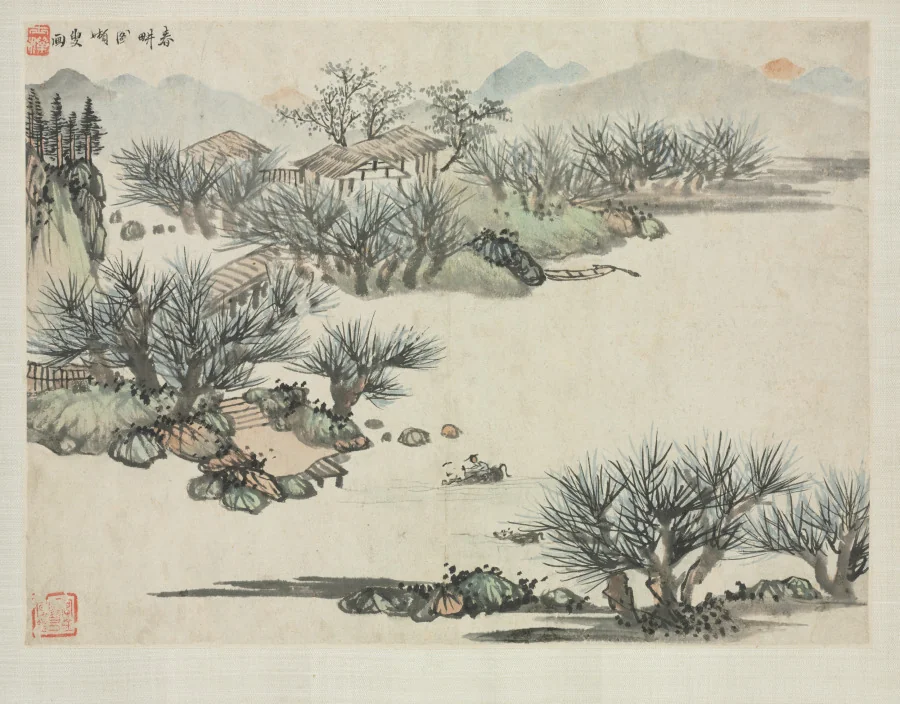
Zha Shibiao, a native of Anhui province, moved to Yangzhou later in his career, like so many of his fellow countrymen. At age 68, he painted this album with seasonal landscapes in various styles. Painted in fresh colors and wet strokes, all depict typical scenes of Jiangnan, the Yangzi delta: a herdboy on a buffalo wading through water, boating on the stream to the Peach Blossom Spring at Wulin, a waterfront town shrouded in mist, a scholar on his donkey enjoying the red autumn leaves, and drinking tea on a boat while watching migrating birds.
Provenance
Ma Yueguan 馬曰琯 [1688–1755]; Ding Huikang 丁惠康 [1868/1869–about 1918] and Gu Anmi 顧安宓; (C. T. Loo & Co., New York, NY, sold to the Cleveland Museum of Art) (?-1955); The Cleveland Museum of Art, Cleveland, OH (1955-)
Accession Number
1955.37.2
Medium
Album leaf; ink and light color on paper
Dimensions
Overall: 29.9 x 39.4 cm (11 3/4 x 15 1/2 in.)
Classification
Painting
Credit Line
Gift of Mr. and Mrs. Severance A. Millikin
Tags
Painting Baroque (1600–1750) Ink Paper Chinese Color: Gray
Background & Context
Background Story
Spring Plowing depicts the annual renewal of agricultural work after winter, one of the most traditional subjects in Chinese landscape painting. A farmer guides his ox through a field that is just beginning to green, while the surrounding landscape — hills, trees, and a distant village — emerges from winter into spring. Zha Shibiao's treatment is consistent with his broader approach: the subject is handled with the restraint and dry-brush elegance of the Xin'an School, avoiding the sentimental over-identification with peasant life that sometimes marks court painters' depictions of agriculture.
Cultural Impact
Spring plowing subjects carried complex political meaning in the early Qing period. For Ming loyalists, the annual cycle of agricultural renewal could symbolize the hope of dynastic restoration — spring will come again, the land will be revived. Zha's treatment avoids overt political symbolism, but the context of 1684 — when the Qing consolidation of power was still in living memory — gives the subject an unavoidable resonance.
Why It Matters
Spring Plowing is at once a seasonal landscape and a subtle statement of hope: the land endures, the cycle continues, and even in occupied territory, spring returns. The restraint of Zha's handling makes the hope more, not less, powerful.