Provenance
Ma Yueguan 馬曰琯 [1688–1755]; Ding Huikang 丁惠康 [1868/1869–about 1918] and Gu Anmi 顧安宓; (C. T. Loo & Co., New York, NY, sold to the Cleveland Museum of Art) (?-1955); The Cleveland Museum of Art, Cleveland, OH (1955-)
Accession Number
1955.37.3
Medium
album leaf, ink and light color on paper
Dimensions
Overall: 29.9 x 39.4 cm (11 3/4 x 15 1/2 in.)
Classification
Painting
Credit Line
Gift of Mr. and Mrs. Severance A. Millikin
Tags
Painting Baroque (1600–1750) Ink Paper Chinese Color: Gray
Background & Context
Background Story
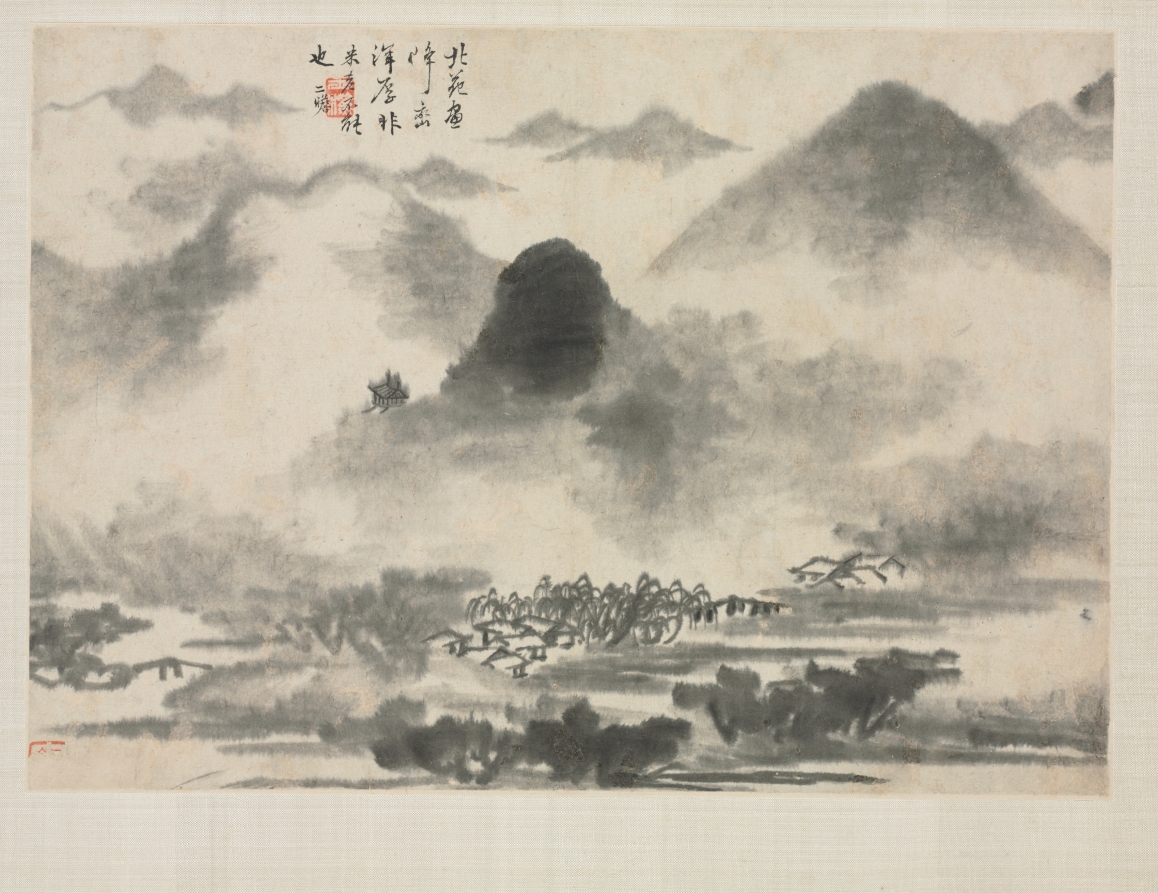
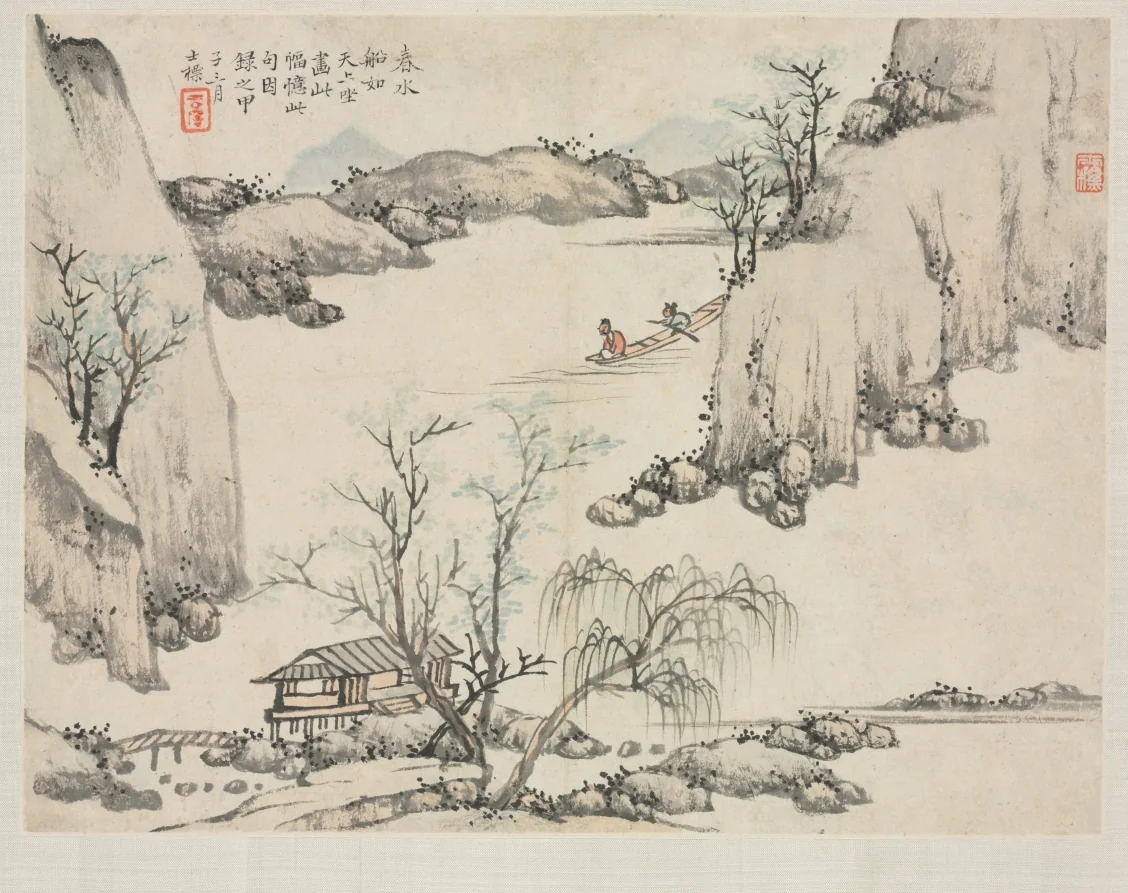
Boating in Spring Water shows a solitary figure in a small boat on calm water — one of the most frequently depicted subjects in Chinese landscape painting and one of the most richly symbolic. The fisherman or scholar in a boat represented the Daoist ideal of withdrawal from worldly affairs, the Confucian ideal of waiting for the right moment to serve, or the Buddhist ideal of non-attachment, depending on the viewer's interpretive framework. Zha Shibiao's version follows the minimalist aesthetic of the Xin'an School: the boat is small, the water is suggested by a few strokes of wash, and the surrounding landscape is described with dry-brush economy.
Cultural Impact
The boat motif was particularly meaningful for Ming loyalists. The figure adrift on water suggested someone without a fixed position — neither serving the new dynasty nor actively resisting, but simply existing outside the political structure. Zha's boat paintings are among his most contemplative works, and their simplicity belies the complexity of the situation they describe.
Why It Matters
Boating in Spring Water is the archetypal image of the Ming loyalist: adrift, self-sufficient, and unattached. The simplicity of the composition reflects the simplicity of the ideal, even if the reality of living through dynastic collapse was anything but simple.