Provenance
Ma Yueguan 馬曰琯 [1688–1755]; Ding Huikang 丁惠康 [1868/1869–about 1918] and Gu Anmi 顧安宓; (C. T. Loo & Co., New York, NY, sold to the Cleveland Museum of Art) (?-1955); The Cleveland Museum of Art, Cleveland, OH (1955-)
Accession Number
1955.37.7
Medium
album leaf, ink and light color on paper
Dimensions
Overall: 29.9 x 39.4 cm (11 3/4 x 15 1/2 in.)
Classification
Painting
Credit Line
Gift of Mr. and Mrs. Severance A. Millikin
Tags
Painting Baroque (1600–1750) Ink Paper Chinese Color: Gray
Background & Context
Background Story
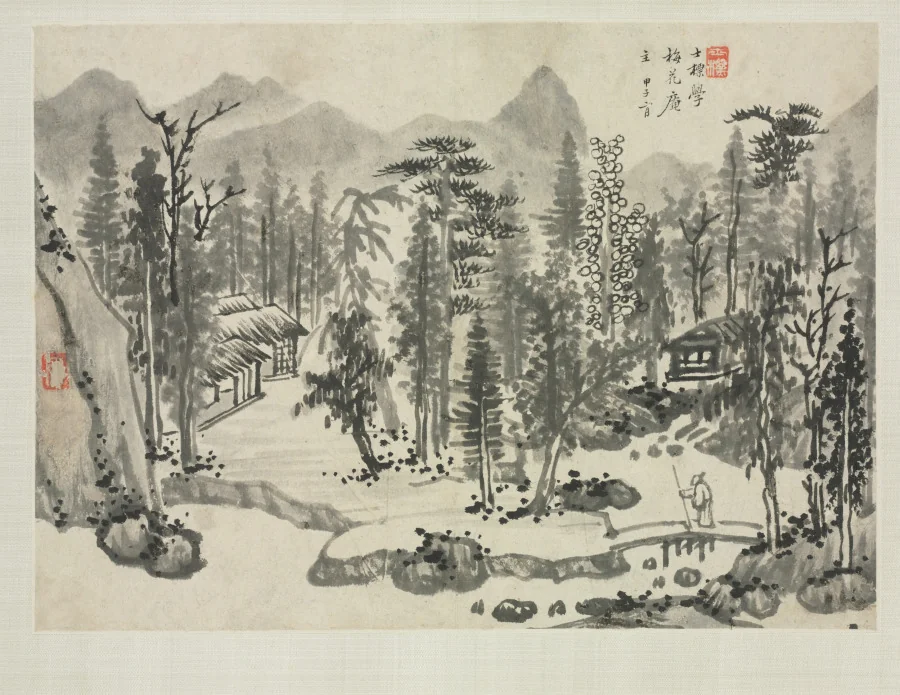
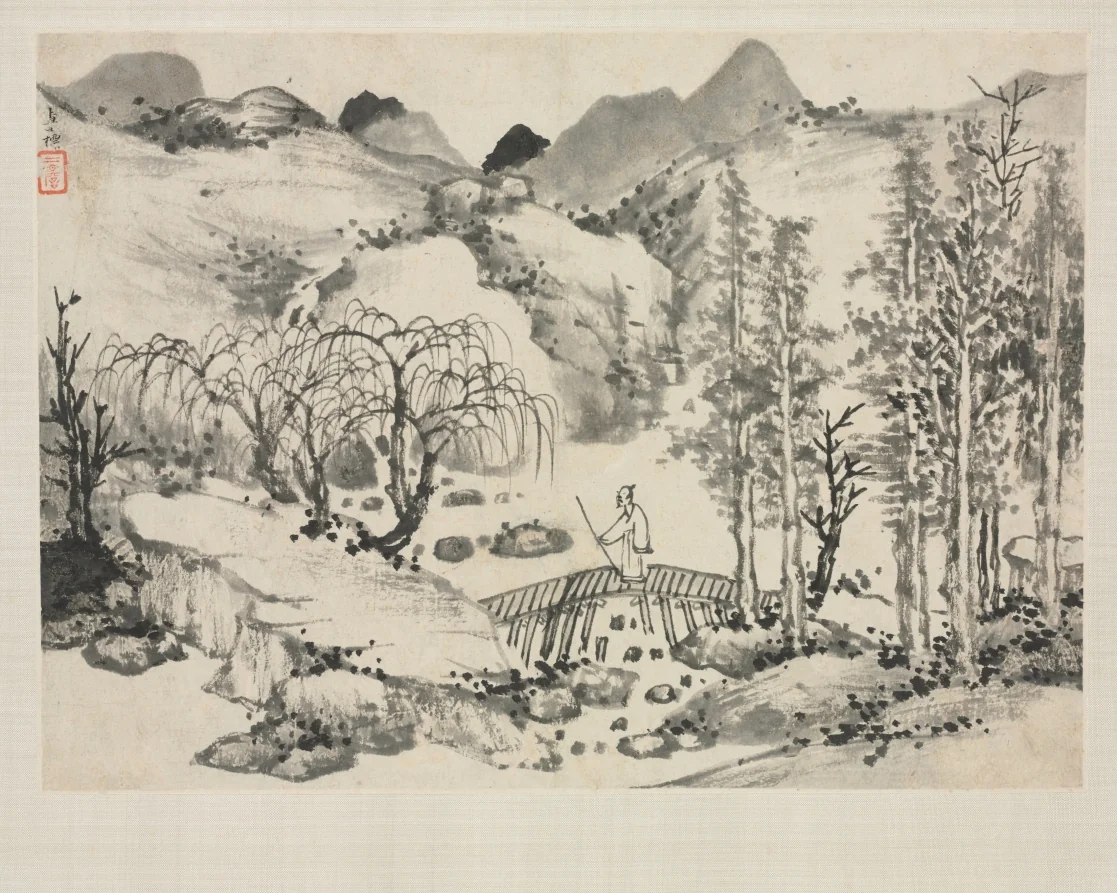
The figure of the artist on a bridge is a self-referential motif in Chinese painting: the bridge connects two worlds (this shore and that, the mundane and the spiritual), and the artist positioned on it is caught between them. Zha Shibiao's composition places the figure at the center of a bridge spanning a stream, with mountains rising on both sides. The painting is simultaneously a landscape, a self-portrait, and a meditation on the artist's position — literally and metaphorically — between nature and culture, withdrawal and engagement, the Ming past and the Qing present.
Cultural Impact
The bridge was a potent symbol in Chinese painting, representing the connection between realms. In the context of a Ming loyalist painting in 1684, the bridge between past and present is both the artistic tradition (which connects Zha to the Yuan masters whose styles he imitates in this album) and the cultural continuity that loyalists were trying to maintain under Qing rule.
Why It Matters
Landscape with Artist on a Bridge is Zha Shibiao's statement about the artist's position: on a bridge between worlds, between eras, between competing obligations. The bridge is the tradition itself — the lineage that connects the Ming loyalist painter to the Yuan masters he admires.