Accession Number
1955.482
Medium
pencil and watercolor
Dimensions
N/A
Classification
Drawing
Credit Line
Gift of The Print Club of Cleveland in honor of Mrs. William G. Mather
Tags
Drawing Neoclassical & Romantic (1751–1850) Watercolor Graphite & Pencil French Color: Yellow
Background & Context
Background Story
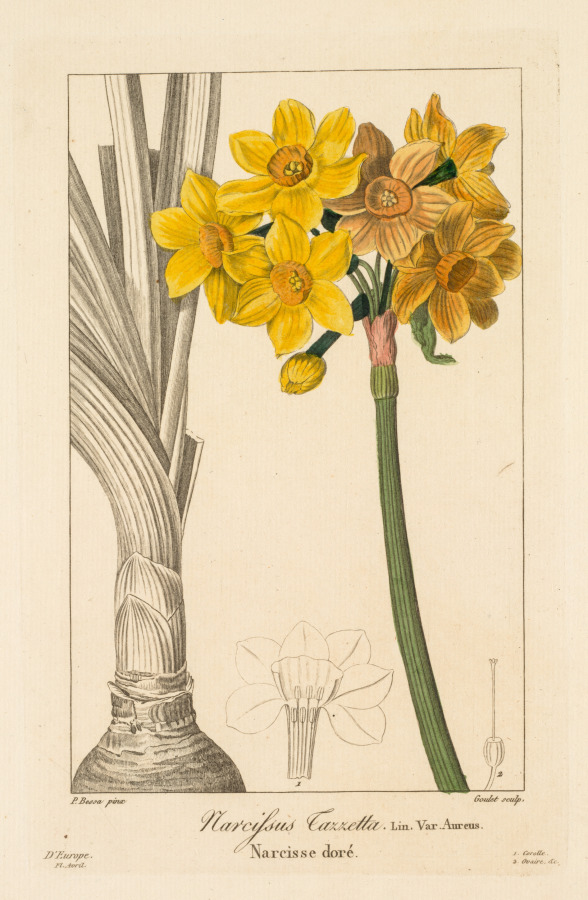
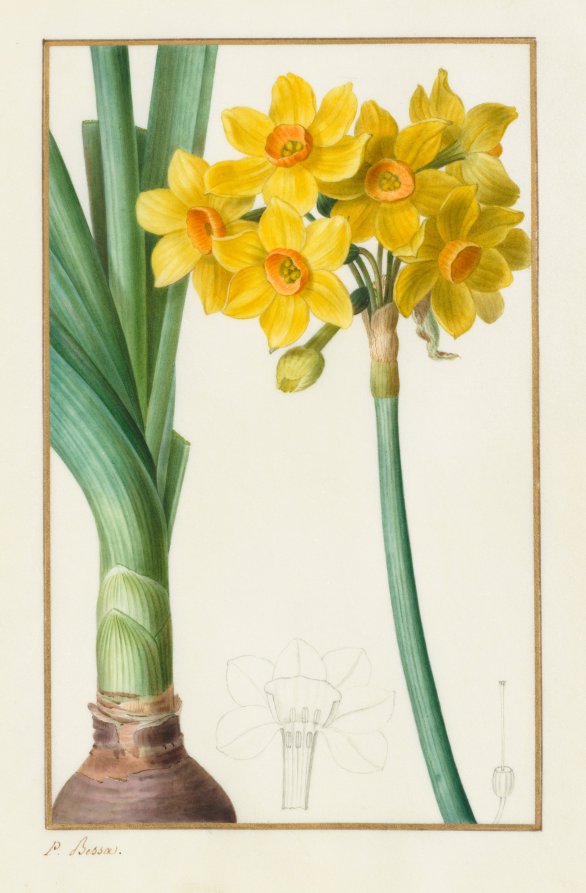
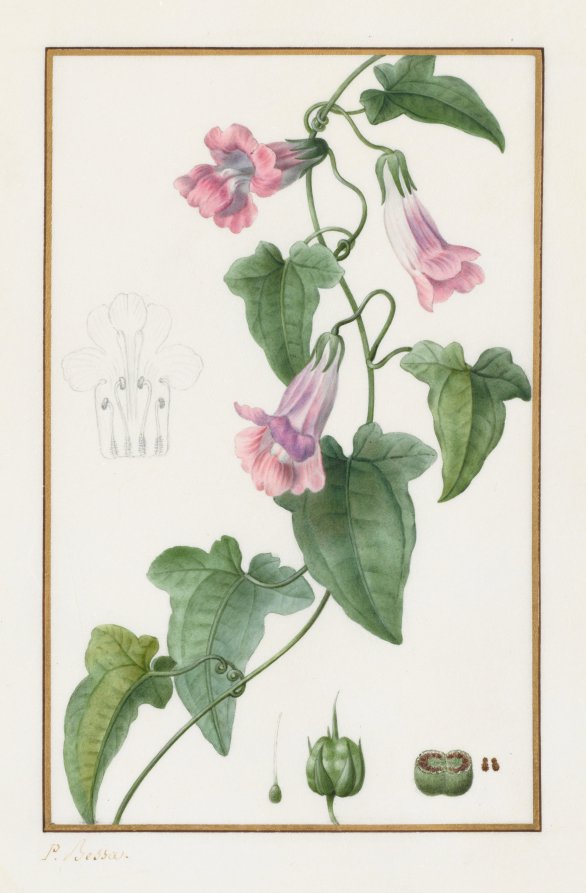
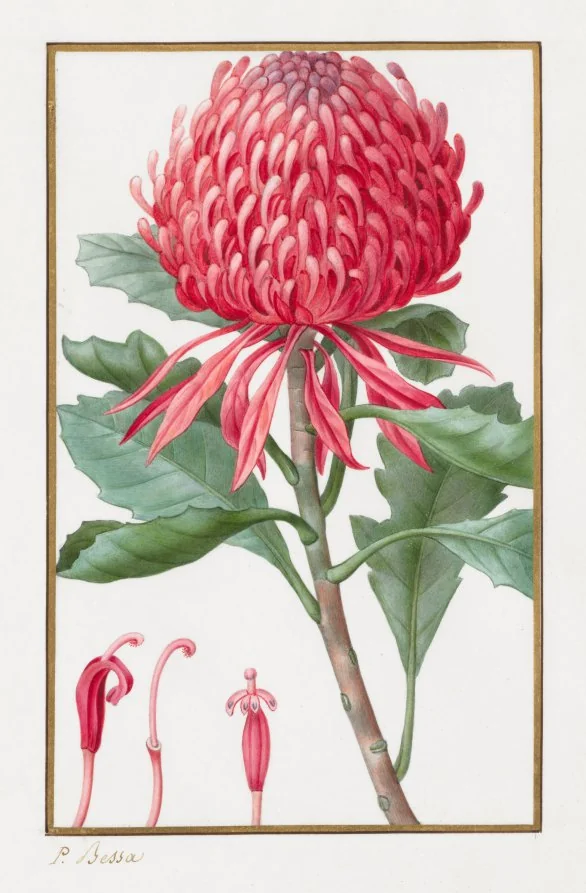
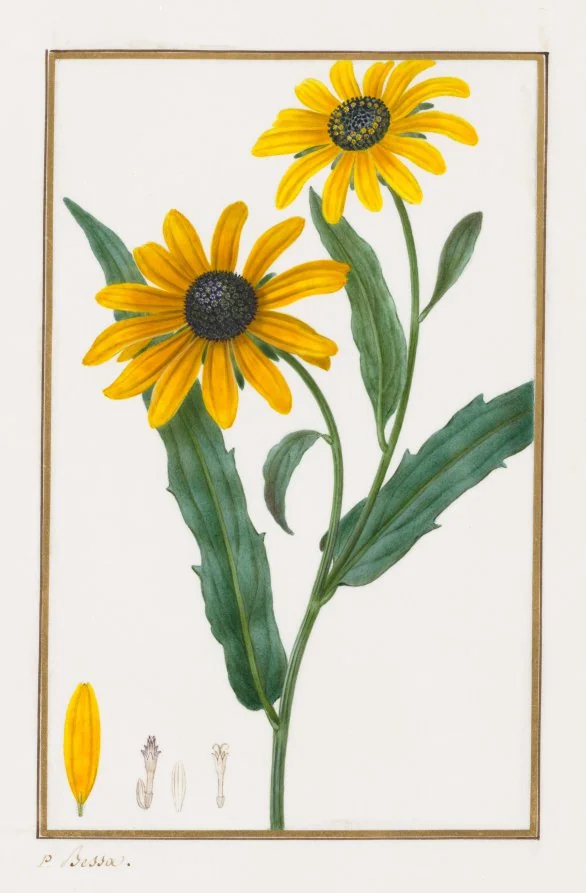
Pancrace Bessa (1772-1847) was a French flower and botanical painter who served as peintre du roi (painter to the king) and produced some of the most exquisite botanical illustrations of the early 19th century. Black-eyed Susan from 1828-35 is a watercolor and pencil drawing of the flower Rudbeckia hirta (commonly known as black-eyed Susan), executed with the precision and botanical accuracy that distinguish Bessa's work as both scientific illustration and decorative art. The combination of pencil for the structural drawing and watercolor for the color allows Bessa to render the flower with both linear precision and chromatic subtlety.
Cultural Impact
Bessa's botanical watercolors are among the most accomplished works in the French tradition of botanical illustration that stretches from Redouté to the present day. Black-eyed Susan demonstrates the combination of scientific accuracy and decorative beauty that defines the best botanical illustration: the flower is rendered with enough precision to serve as a scientific record, but the watercolor technique and the compositional elegance make it a work of art as well as a work of science.
Why It Matters
Black-eyed Susan is Bessa's botanical illustration at its most accomplished: scientific precision and decorative beauty combined in a pencil and watercolor rendering that serves as both a botanical record and a work of art. The 1828-35 date places this in Bessa's maturity, when he had succeeded Redouté as the leading botanical illustrator in France.