Accession Number
1955.658
Medium
black crayon and watercolor
Dimensions
Sheet: 30 x 45.9 cm (11 13/16 x 18 1/16 in.)
Classification
Drawing
Credit Line
Mr. and Mrs. Lewis B. Williams Collection
Tags
Drawing Early Modern (1901–1950) Watercolor French Color: White
Background & Context
Background Story
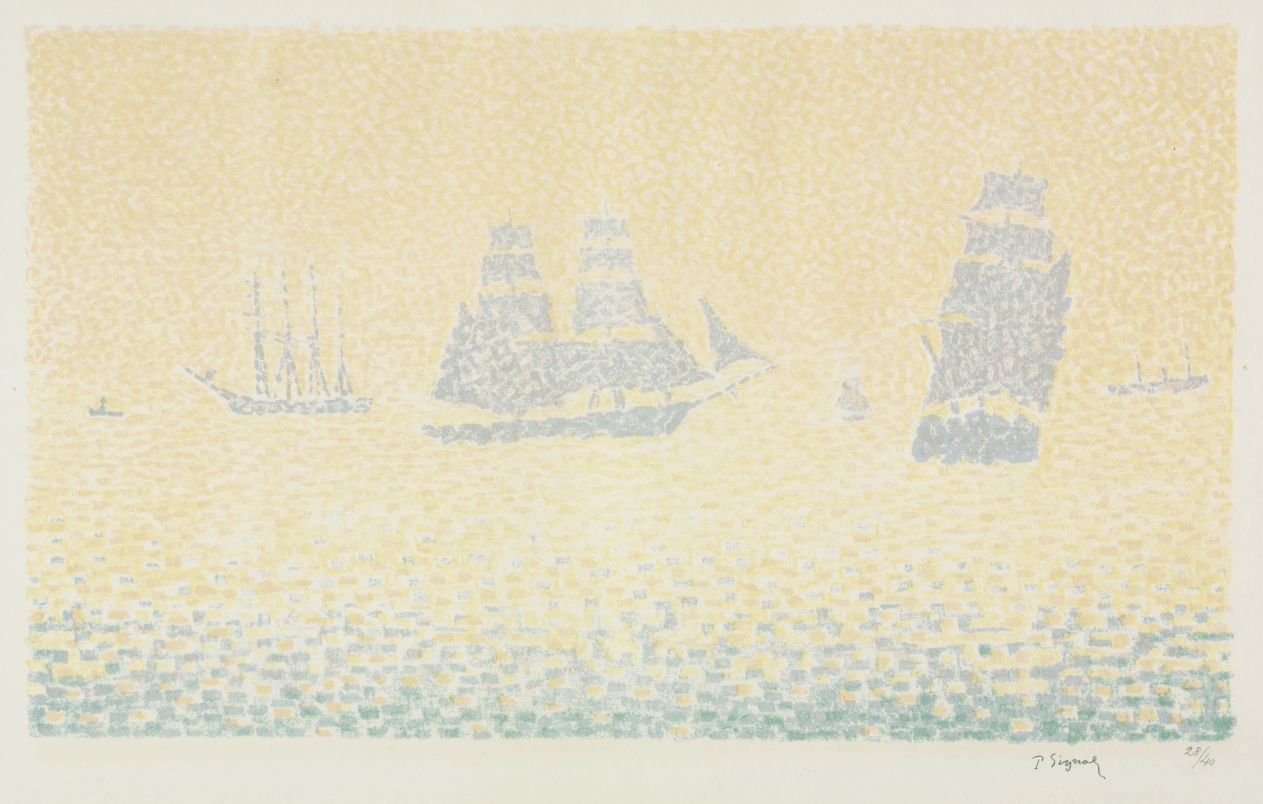
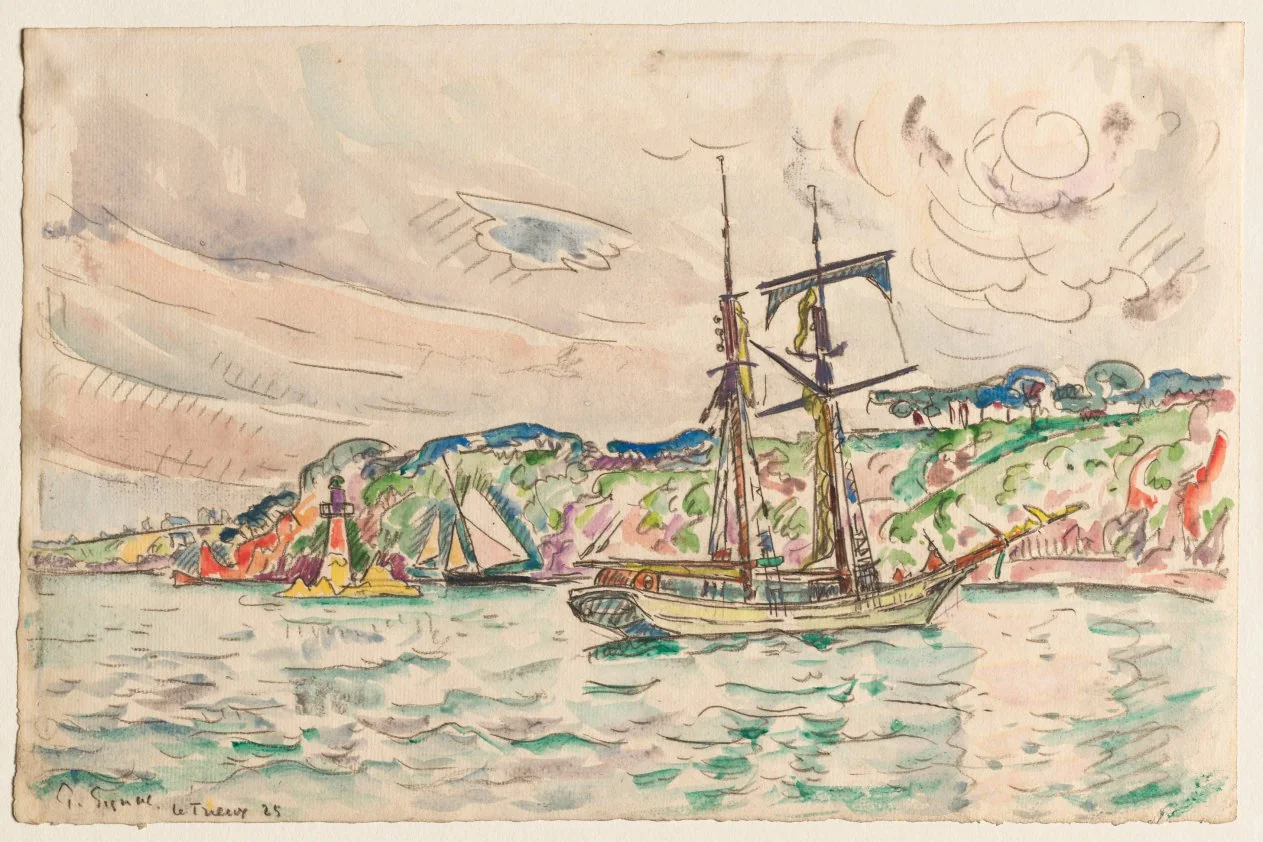
Paul Signac (1863-1935) was a French painter known as one of the leading painters of Neo-Impressionism, whose pointillist technique of placing small dots of pure color side by side made him the most accomplished practitioner of the Divisionist method after Seurat's death. Ships near the Trieux River from 1925 depicts boats near the Trieux River in Brittany in the colorful, pointillist manner that Signac developed from Seurat's original Divisionist technique. The 1925 date places this in Signac's mature period, when his dots had become larger and more colorful than in his earlier work, creating a more vibrant, decorative effect.
Cultural Impact
Ships near the Trieux River is important in the history of Neo-Impressionism because it demonstrates the mature, colorful manner that Signac developed from Seurat's original Divisionist technique. Signac's evolution from Seurat's small dots to larger, more colorful dots represents the development of Neo-Impressionism from a scientific technique to a more decorative, expressive method, and the 1925 painting shows this development at its most vibrant and accomplished.
Why It Matters
Ships near the Trieux River is Signac's mature Neo-Impressionism: boats near the Trieux River rendered in the larger, more colorful dots of his mature period. The 1925 painting shows Signac's development from Seurat's scientific Divisionism to a more vibrant, decorative method—Neo-Impressionism evolving from technique to expression.