Accession Number
1956.733
Medium
black, brown, and white chalk
Dimensions
Sheet: 58.7 x 47 cm (23 1/8 x 18 1/2 in.); Secondary Support: 60 x 48.5 cm (23 5/8 x 19 1/8 in.)
Classification
Drawing
Credit Line
The Fanny Tewksbury King Collection
Tags
Drawing Impressionist & Modern (1851–1900) French Color: Gray
Background & Context
Background Story
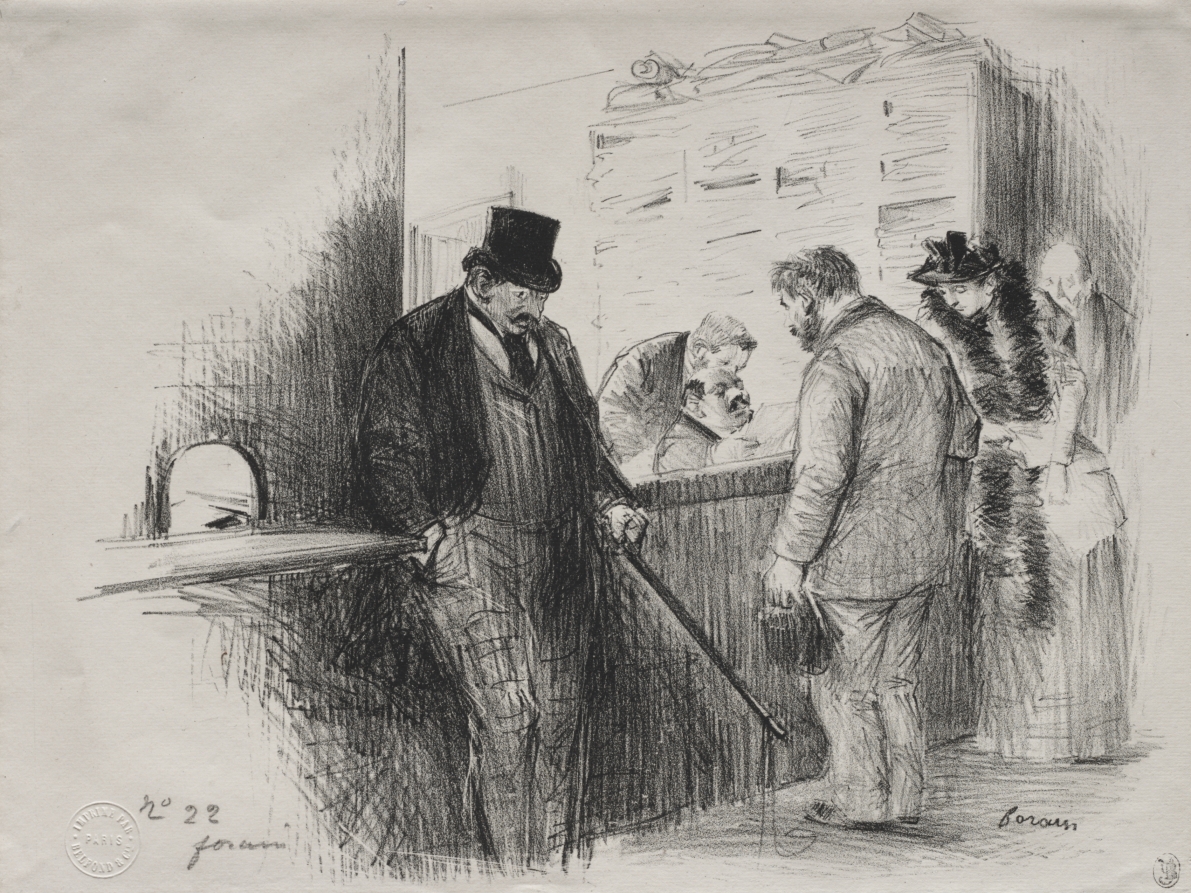
The Client (c. 1880-1900) is one of Forain's most incisive depictions of the legal and commercial transactions that governed Parisian bourgeois society. The client—likely a patron of one of the professional services that Forain's satirical work consistently exposed—is shown in a context that reveals the economic mechanisms behind bourgeois life. Forain's legal subjects—courtrooms, lawyers' offices, and the consulting rooms where professional advice was dispensed—represented his most sustained engagement with the institutional structures that governed Third Republic society. The legal system, the medical profession, and the commercial relationships that produced bourgeois wealth were all subject to Forain's satirical scrutiny, and The Client likely exposes the transactional reality that professional relationships concealed behind a facade of disinterested service. The 1880-1900 date places this during the Third Republic's most confident period, when the bourgeois institutions that Forain satirized were at the height of their authority. His treatment of the client—the figure who pays for professional services that are presented as disinterested advice—reveals the economic foundation that these institutions preferred to conceal. The painting thus continues Forain's characteristic method: exposing the social mechanisms that bourgeois society's self-image preferred to hide.
Cultural Impact
Forain's legal and commercial paintings influenced how the Third Republic's institutional structures were represented in art, exposing the economic transactions that professional self-image concealed. The paintings influenced later satirical artists who similarly found subjects in the gap between institutional self-image and social reality. The Client influenced how the relationship between professional authority and economic transaction was represented in French visual culture.
Why It Matters
This painting matters because it exposes the economic transaction behind professional authority—the client who pays for the advice that institutions present as disinterested service. Forain's satirical method, applied to the legal and commercial institutions of the Third Republic, reveals the economic mechanisms that bourgeois society's self-image preferred to conceal.