Accession Number
1957.475
Medium
ink and graphite
Dimensions
Sheet: 22.3 x 29.1 cm (8 3/4 x 11 7/16 in.)
Classification
Drawing
Credit Line
Gift of J. Byers Hays
Tags
Drawing Early Modern (1901–1950) Ink Graphite & Pencil British Color: White Color: Gray
Background & Context
Background Story
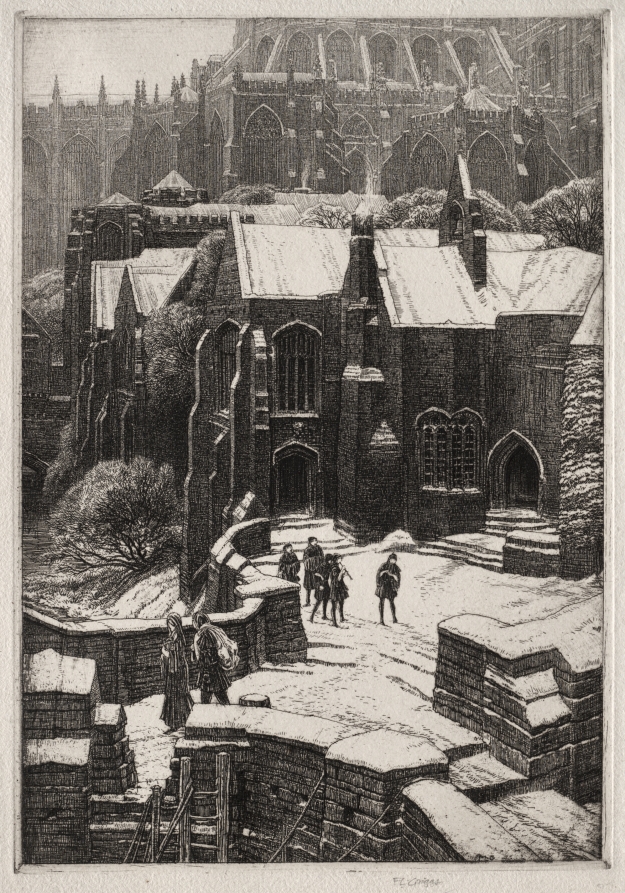
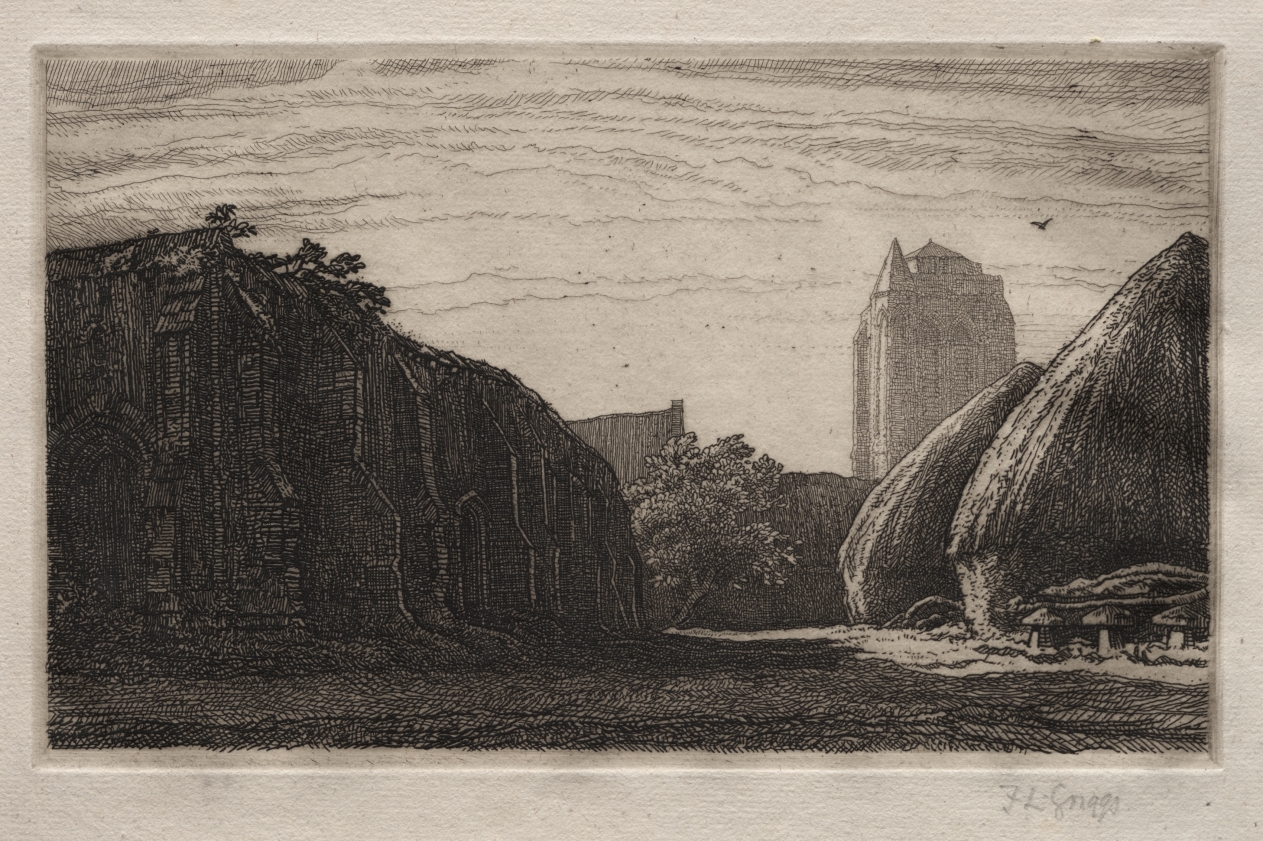
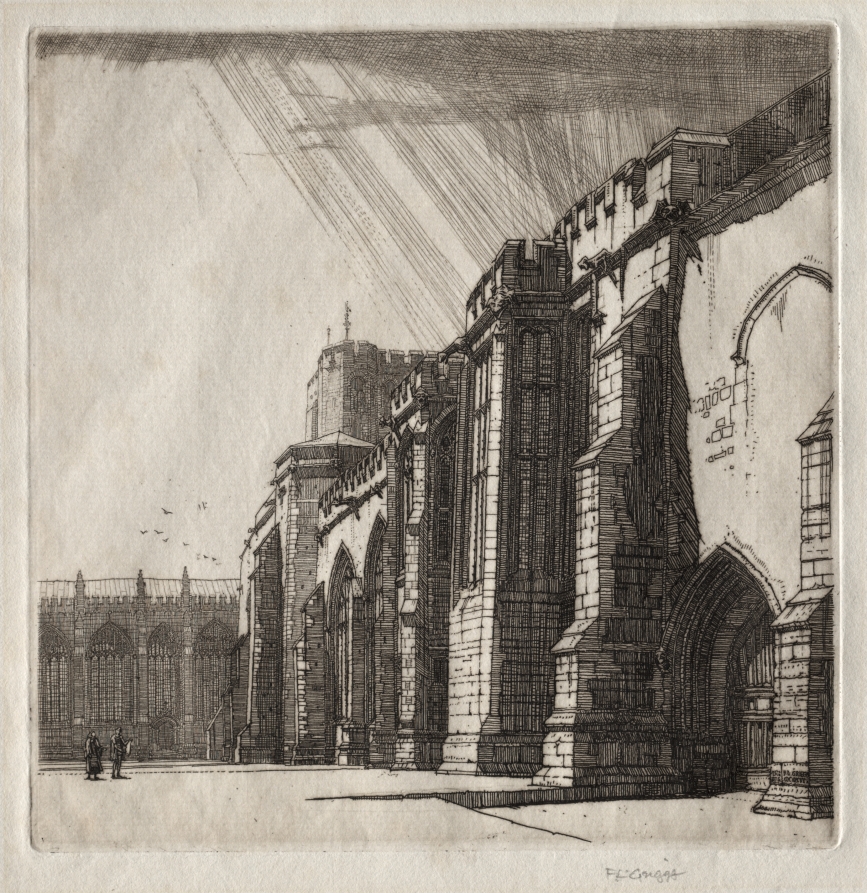
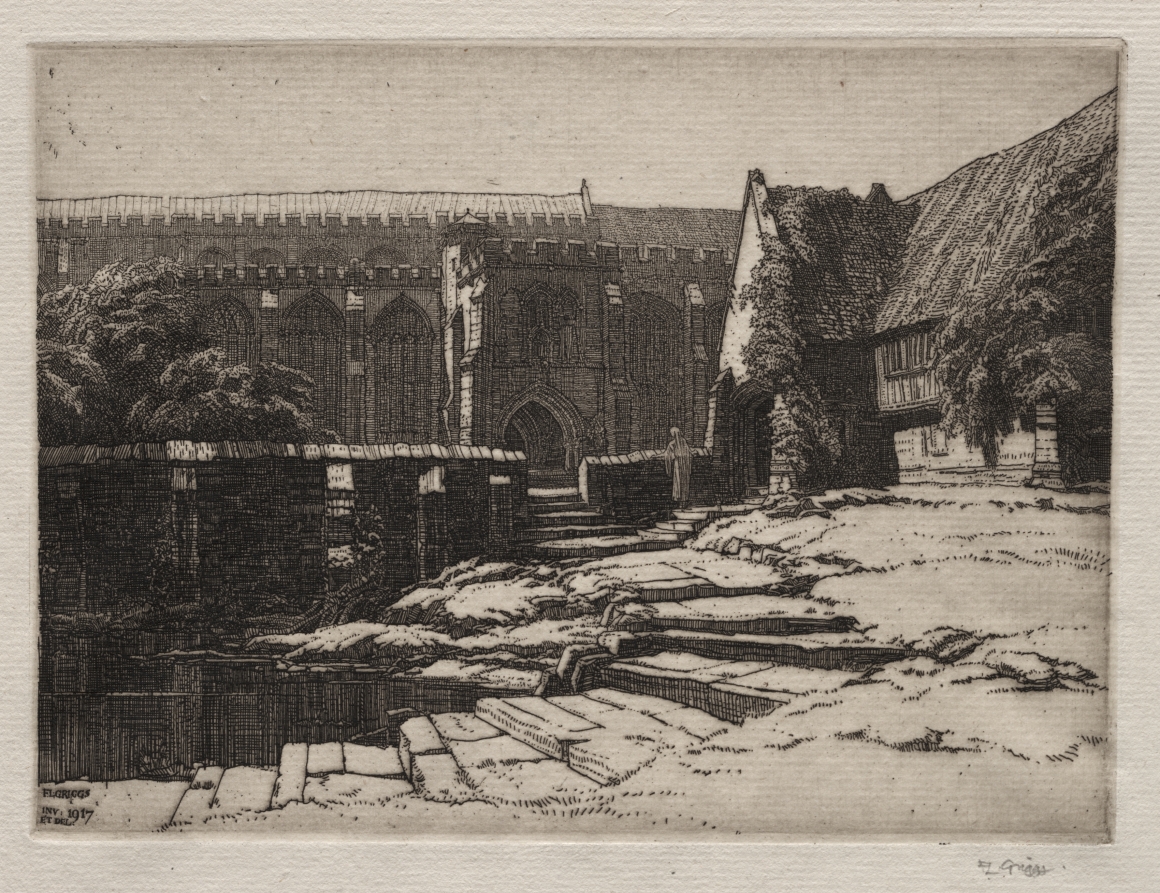
Frederick Landseer Maur Griggs (1876-1938) was a British printmaker known for the precisely observed, architectural etchings that make him one of the most important etchers of the British etching revival. The Temple, Paris from 1904 depicts the Temple in Paris in the precisely observed, architectural manner that distinguishes Griggs's best work from the more general etching of his contemporaries. The 1904 date places this early in Griggs's career, when he was producing the precisely observed, architectural etchings that are his most accomplished works, and the Temple subject connects him to the long tradition of British artists depicting Parisian subjects.
Cultural Impact
The Temple, Paris is important in the history of British printmaking because it demonstrates the precisely observed, architectural manner that Griggs brought to etching as one of the most important etchers of the British etching revival. Griggs's precisely observed, architectural etchings—combining the precise observation of architecture with the accomplished etching technique that is his most distinctive contribution—represent one of the most accomplished traditions in British printmaking, and the 1904 etching shows this tradition in its earliest phase.
Why It Matters
The Temple, Paris is Griggs's precise architectural etching: the Temple in Paris rendered in the precisely observed manner of one of the most important etchers of the British etching revival. The 1904 etching shows the combination of precise architectural observation with accomplished etching technique that makes Griggs one of the most important printmakers of the British etching revival.