Provenance
Félix Fénéon [1861-1944], Paris, sold to M. Joseph Bernheim, Paris (After 1896-before 1948); M. Joseph Bernheim, Paris (?-?); (Galerie Bernheim-Jeune, Paris, sold to M. Knoedler and Co., New York) (?-1952); (M. Knoedler and Co., New York, sold to Leonard C. Hanna, Jr., Cleveland, OH) (1952-1953); Leonard C. Hanna, Jr. [1889-1957], Cleveland, OH, by bequest to the Cleveland Museum of Art, Cleveland, OH (1953-1958); The Cleveland Museum of Art, Cleveland, OH (1958-)
Accession Number
1958.13
Medium
charcoal
Dimensions
N/A
Classification
Drawing
Credit Line
Bequest of Leonard C. Hanna Jr.
Tags
Drawing Impressionist & Modern (1851–1900) Charcoal French Color: Brown Color: Gray
Background & Context
Background Story
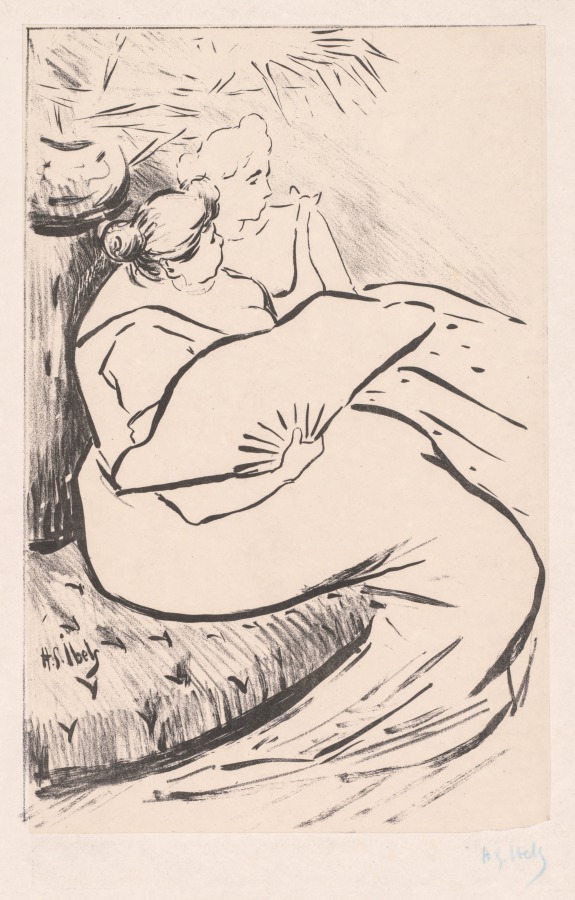
Henri Gabriel Ibels (1867-1936) was a French painter, printmaker, and illustrator known as a founding member of the Nabis, whose bold, simplified graphic style made him one of the most important printmakers of the 1890s. The Circus from 1896 depicts a circus scene in the bold, simplified graphic manner that Ibels developed as a member of the Nabis, influenced by the flat, bold manner of Gauguin and Japanese prints. The 1896 date places this in the most productive period of the Nabis, when Ibels was producing the bold, simplified prints and posters that are his most accomplished works.
Cultural Impact
The Circus is important in the history of the Nabis because it demonstrates the bold, simplified graphic manner that Ibels developed as a founding member of the group. Ibels's bold, simplified prints and posters—using the flat, graphic manner of Gauguin and Japanese prints for popular subjects—represent the Nabis at their most accessible, and The Circus shows the bold graphic manner applied to one of the most popular subjects of the 1890s.
Why It Matters
The Circus is Ibels's Nabi graphic style: a circus scene rendered in the bold, simplified manner that a founding member of the Nabis developed from Gauguin and Japanese prints. The 1896 lithograph shows the Nabis at their most accessible—bold, graphic, and popular in subject.