Description
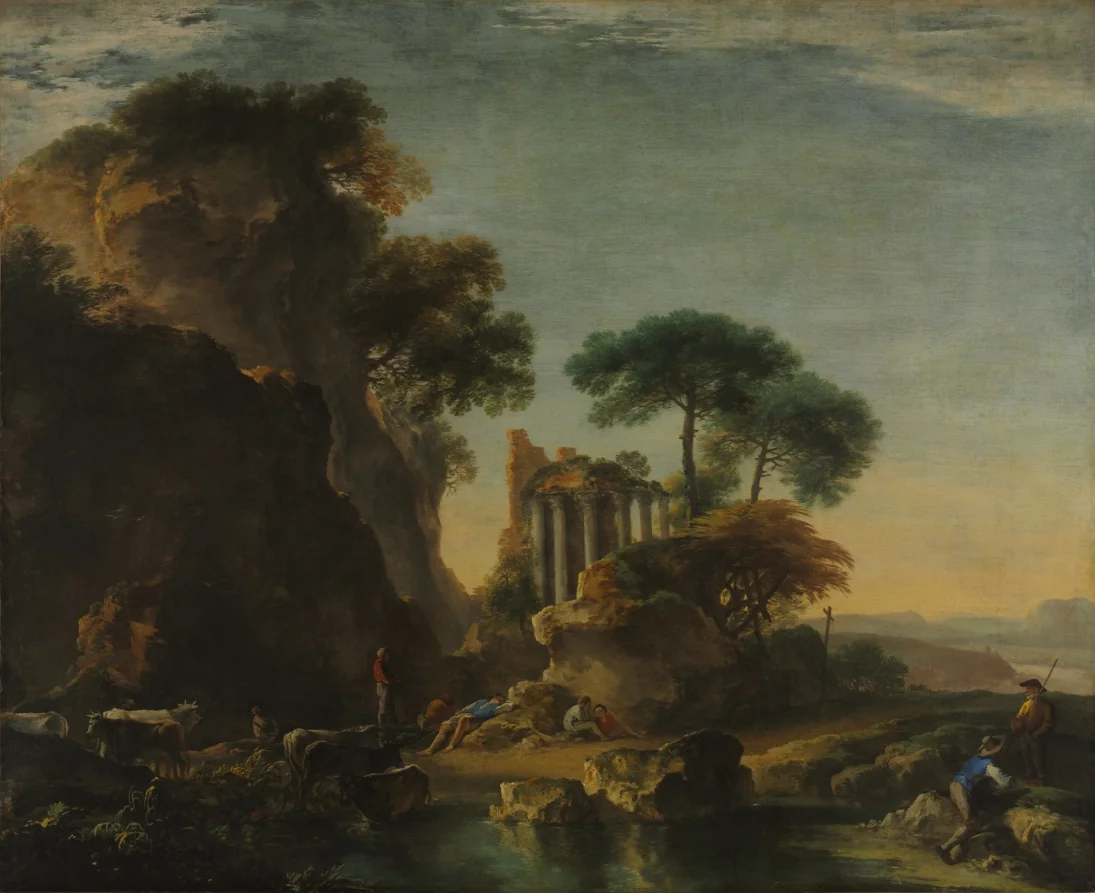
In 1635, Rosa left his native Naples for Rome, the undisputed art center of the 17th century, where a new type of landscape painting was emerging, distinguished by the effects of light and atmosphere. Rosa’s fame grew quickly as a painter of landscapes that conjured the beauty and fertility of the Bay of Naples. Ruins in a Rocky Landscape incorporates classical ruins, iridescent reflections of light, and a pastoral tone evoked by the idling shepherds, exemplifying the work that earned Rosa his early fame. The dark, dramatic rocks that rise along the left foreshadow the wildness that Rosa would cultivate in his later sublime landscapes.
Provenance
Duke Francesco I d’Este, Modena; Duke Francesco V d’Este, Modena and Vienna:; Duke Francis Ferdinand, Vienna;; Maximillian, Duke of Hohenberg, Palace of the Prince of Liechtenstein, Vienna;; Rosenberg & Stiebel (New York, New York), by gift to the Cleveland Museum of Art, 1958.
Accession Number
1958.472
Medium
oil on canvas
Dimensions
Framed: 157.5 x 189.2 x 7 cm (62 x 74 1/2 x 2 3/4 in.); Unframed: 144 x 176.7 cm (56 11/16 x 69 9/16 in.)
Classification
Painting
Credit Line
Gift of Rosenberg & Stiebel, Inc.
Tags
Painting Baroque (1600–1750) Oil Painting Canvas Italian Color: Gold
Background & Context
Background Story
Salvator Rosa (1615-1673) was an Italian painter, poet, and satirist known for his wild landscapes, turbulent seascapes, and macabre subjects that offered a darker alternative to the idealized landscapes of his contemporaries. Ruins in a Rocky Landscape from c. 1640 depicts crumbling architecture in a wild, rocky setting—the kind of composition that made Rosa famous throughout Europe as a painter of the Sublime, the terrible beauty that Edmund Burke would later define as the aesthetic of awe-inspiring vastness and danger. The ruins are not the picturesque classical remains that Claude Lorrain painted but crumbling, overgrown fragments that suggest the transience of human achievement.
Cultural Impact
Rosa's ruin landscapes were among the most influential paintings in the development of the Picturesque and Sublime aesthetics that would dominate 18th-century taste. The ruins in Rosa's landscapes are not the elegant classical fragments of Claude but crumbling, overgrown remains that suggest the transience of human achievement and the power of nature to reclaim what humans have built. Ruins in a Rocky Landscape from c. 1640 is an early example of the Sublime landscape that would influence Romantic painters from Friedrich to Turner.
Why It Matters
Ruins in a Rocky Landscape is Rosa's Sublime in paint: crumbling architecture in a wild, rocky setting that suggests the transience of human achievement and the power of nature. The c. 1640 date makes this an early example of the landscape of the Sublime—an aesthetic of awe-inspiring vastness and danger that would influence Romantic painters from Friedrich to Turner.