Provenance
C. W. Kraushaar, NY; Edward B. Greene, Cleveland; C. W. Kraushaar, NY; Edward B. Greene, Cleveland
Accession Number
1960.164
Medium
watercolor
Dimensions
N/A
Classification
Drawing
Credit Line
Gift of Mrs. A. Dean Perry in memory of Mr. and Mrs. Edward Belden Greene
Tags
Drawing Impressionist & Modern (1851–1900) Watercolor American Color: Gray
Background & Context
Background Story
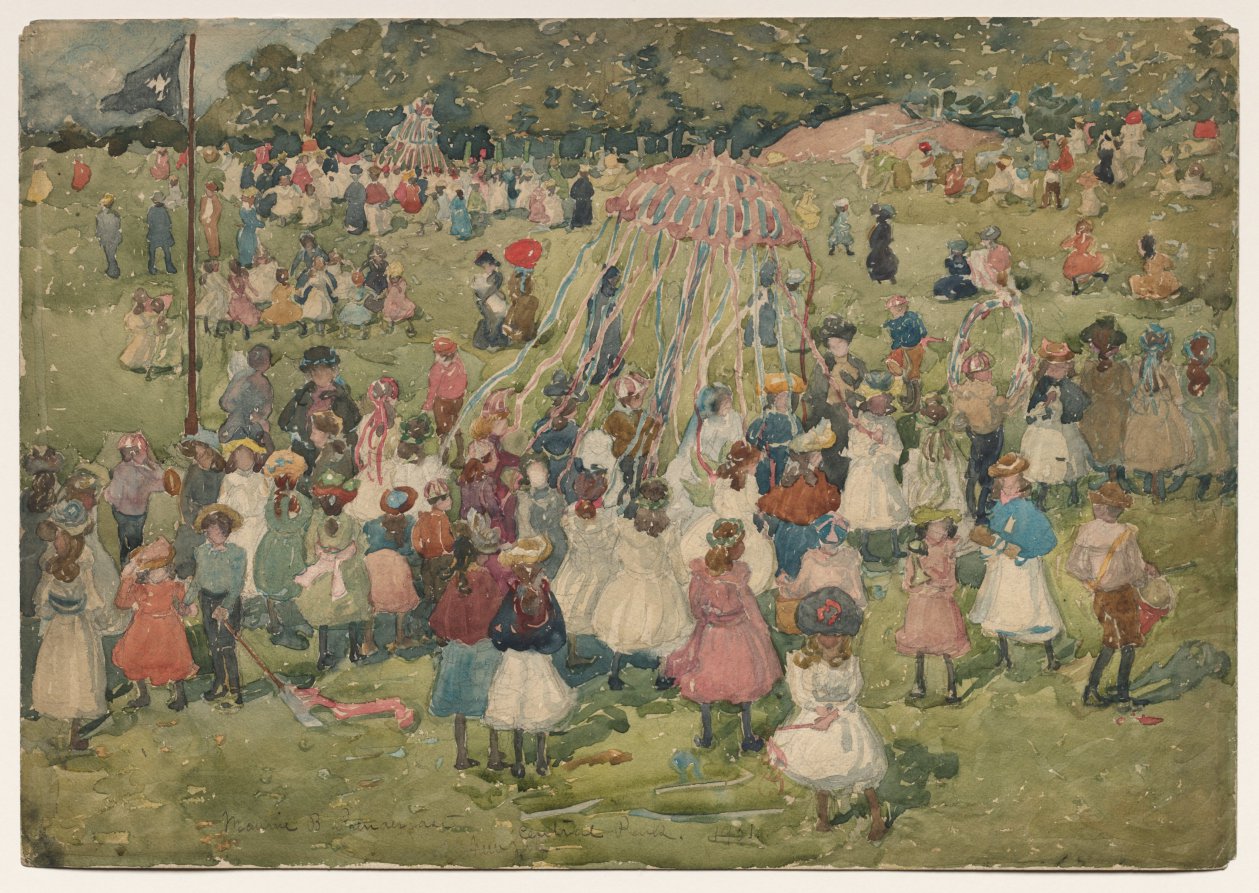
A Bridge in Venice (c. 1898-1899) belongs to Prendergast's Italian period—the year he spent in Italy that transformed his art and established the decorative approach that would define his mature work. Venice, with its network of bridges, canals, and the particular quality of light reflecting off water, provided Prendergast with subjects that combined his interest in urban leisure with the decorative possibilities of the Italian cityscape. The bridge, spanning one of Venice's canals, provided a compositional structure that organized the painting's spatial depth: the bridge's arc created a foreground and background, while the figures crossing it provided the human element that Prendergast's art consistently required. The 1898-99 date places this during the most formative period of Prendergast's career—his exposure to Italian art, particularly the mosaics of Ravenna and the frescoes that decorated Italian churches, was influencing his approach to color and pattern. His treatment of the Venetian scene combines the observational precision of an artist documenting a specific place with the decorative intensity of a painter who saw pattern wherever he looked. The figures on the bridge, rendered as abstract shapes within the composition's decorative pattern rather than as individual portraits, demonstrate the approach that would distinguish Prendergast's mature work.
Cultural Impact
Prendergast's Venetian paintings influenced how American artists engaged with the Italian tradition, establishing approaches that the Ashcan School and later American modernists would develop. The paintings influenced how urban leisure was represented in American art, connecting the Venetian promenade to the American seaside scenes that would become Prendergast's signature. The bridge-in-Venice subject influenced how decorative painting was practiced in America, connecting European pattern to American modernism.
Why It Matters
This painting matters because it captures the Italian experience that transformed Prendergast's art—the Venetian cityscape, with its bridges and canals and the particular quality of Mediterranean light, provided the decorative possibilities that his American subjects had suggested but not fully realized.