Accession Number
1964.159
Medium
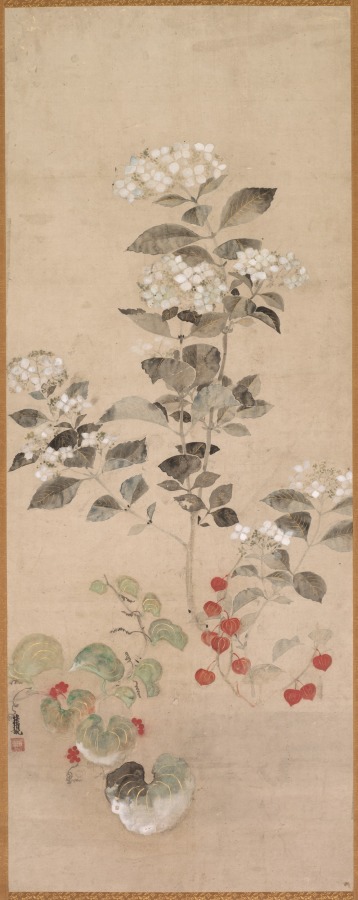
hanging scroll; ink and color on paper
Dimensions
Image: 127 x 57.2 cm (50 x 22 1/2 in.); Overall: 190 x 65 cm (74 13/16 x 25 9/16 in.)
Classification
Painting
Credit Line
Gift of Mrs. A. Dean Perry
Tags
Painting Baroque (1600–1750) Ink Paper Japanese Color: Gray
Background & Context
Background Story
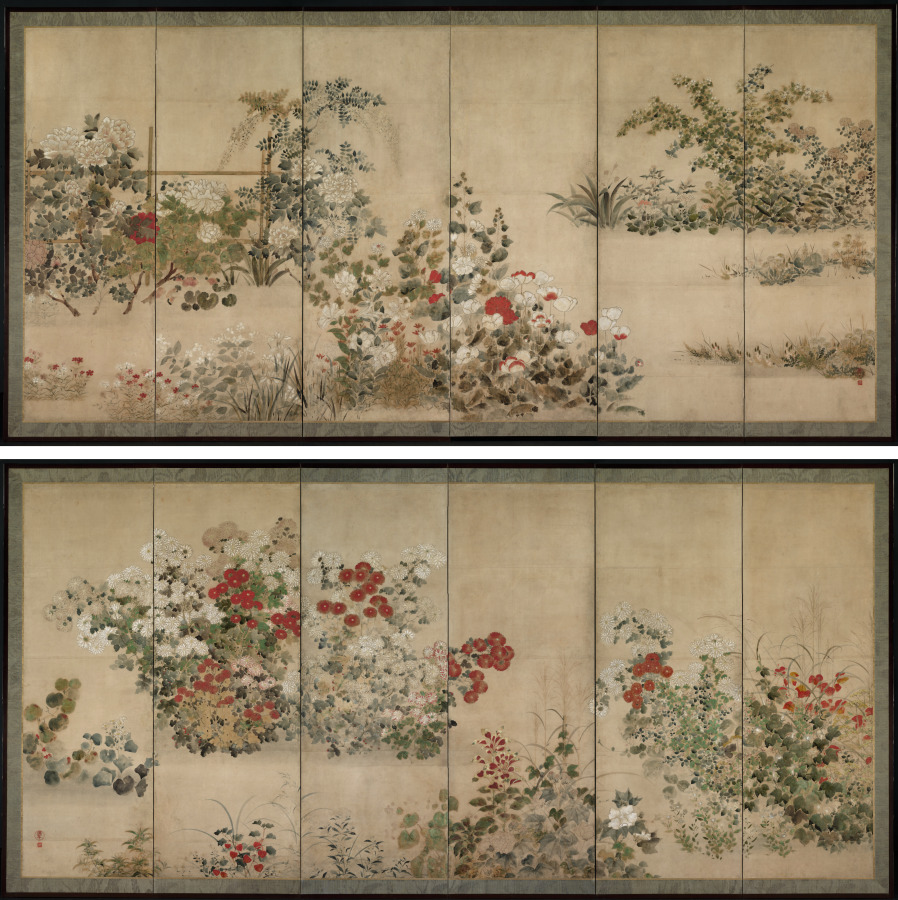
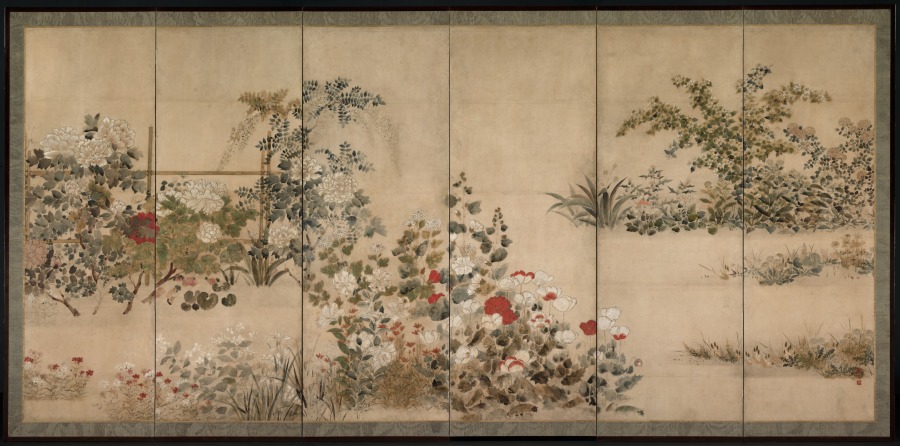
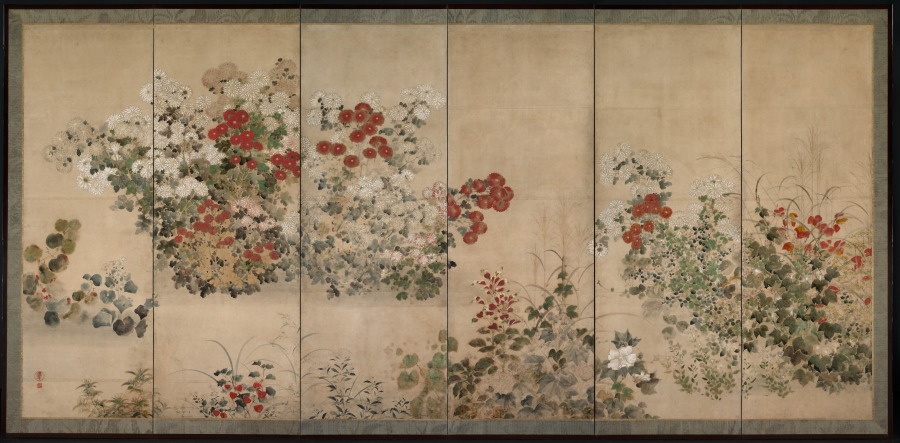
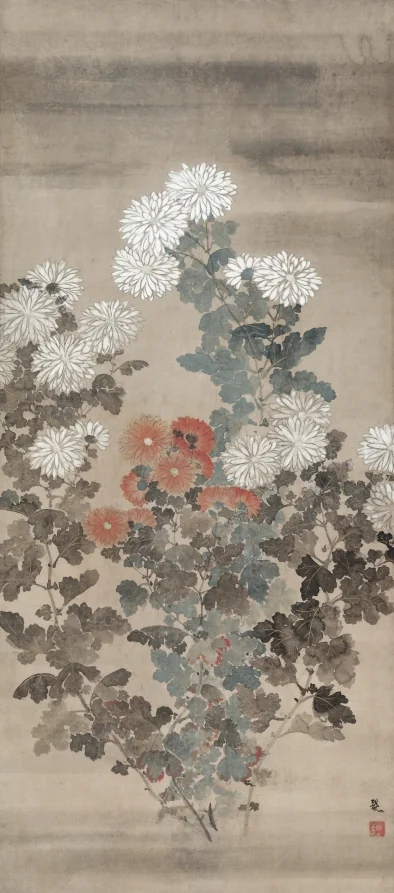
Kitagawa Sosetsu (active mid-1600s) was a Japanese painter known for the precisely observed, elegantly composed paintings of flowers that make him one of the accomplished painters of the early Edo period. Chrysanthemums from the mid-1600s depicts chrysanthemums in the precisely observed, elegantly composed manner of the Rinpa school that distinguishes Sosetsu's best work from the more general flower painting of his contemporaries. The chrysanthemum is one of the most important flowers in Japanese culture, symbolizing longevity and the imperial family, and Sosetsu's elegantly composed treatment shows the Rinpa school's talent for combining botanical precision with elegant composition.
Cultural Impact
Chrysanthemums is important in the history of Japanese painting because it demonstrates the precisely observed, elegantly composed manner of the Rinpa school as applied to one of the most important flowers in Japanese culture. The Rinpa school's elegantly composed flower paintings—combining botanical precision with the elegant composition that is its most distinctive contribution—are one of the most accomplished traditions in Japanese painting, and the mid-1600s painting shows this tradition at its most elegantly composed.
Why It Matters
Chrysanthemums is Sosetsu's elegantly composed Rinpa flower painting: chrysanthemums rendered in the precisely observed manner of the early Edo period. The mid-1600s painting shows the combination of botanical precision with elegant composition that makes the Rinpa school's flower paintings one of the most accomplished traditions in Japanese painting.