Provenance
Irene [1868-1954] and Solomon R. Guggenheim [1861-1949], London (Until 1962); (Guggenheim sale, Sotheby's, London, November 7, 1962 (lot 92), probably sold to the Couper Gallery) (1962); (Couper Gallery, London) (1962-1963); (Galerie Claude Aubry, sold to Severance A. and Greta Millikin) (Until 1963); Severance A. [1895-1985] and Greta Millikin [1903-1989], Cleveland, OH, given to the Cleveland Museum of Art (1963-1964); The Cleveland Museum of Art, Cleveland, OH (1964-)
Accession Number
1964.289
Medium
oil on wood panel
Dimensions
Framed: 56.2 x 85.1 x 9 cm (22 1/8 x 33 1/2 x 3 9/16 in.); Unframed: 40.1 x 69.1 cm (15 13/16 x 27 3/16 in.)
Classification
Painting
Credit Line
Severance and Greta Millikin Collection
Tags
Painting Impressionist & Modern (1851–1900) Oil Painting Panel Painting French Color: Orange Color: Brown
Background & Context
Background Story
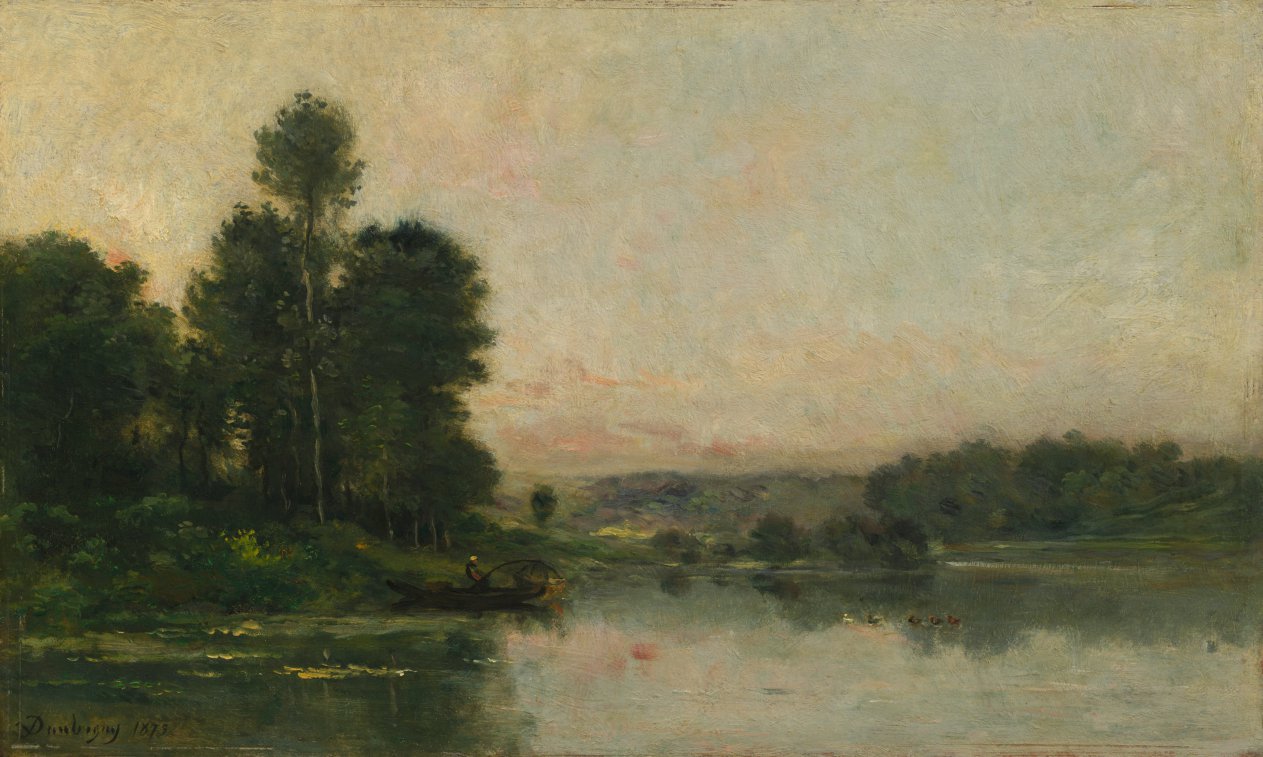
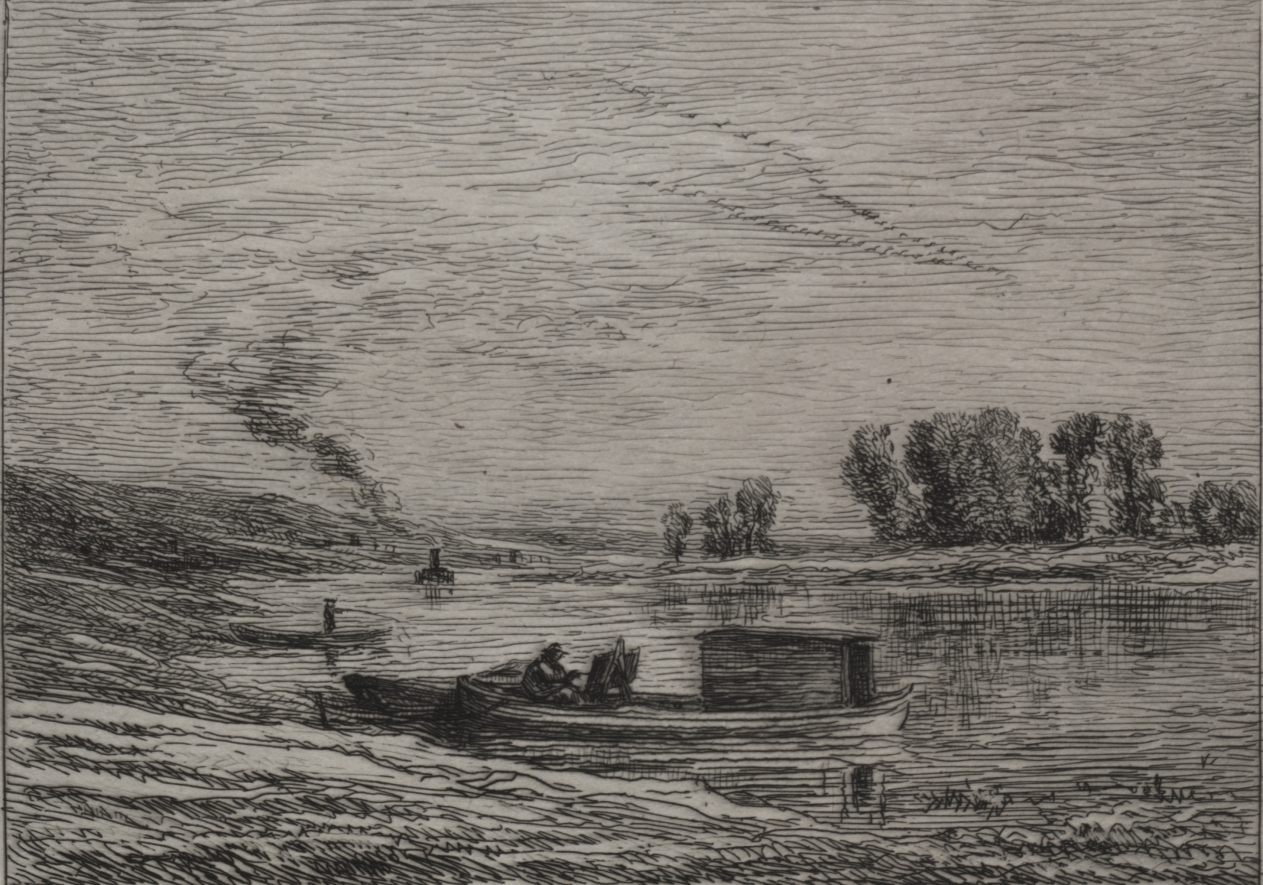
The River Oise was Daubigny's constant companion and his greatest subject. He painted it in every season, every weather, and every hour of the day, often from his studio boat Le Botin. This sunset view captures the Oise at its most golden — the low sun casting long reflections across the water, the trees silhouetted against a sky that grades from orange to blue, the river carrying the last light of day. Painting on wood panel allowed Daubigny to work with the precision and warmth that the subject demanded, the smooth surface giving the sunset colors extraordinary luminosity.
Cultural Impact
Daubigny's sunsets on the Oise are among the most influential landscapes of the 1860s. Monet and Pissarro, who were developing their own approach to river light during the same decade, studied Daubigny's treatment of reflected color closely. The technique of painting water as a mirror of the sky — now a staple of Impressionist painting — was pioneered in precisely these Oise scenes.
Why It Matters
Sunset on the River Oise is Daubigny's greatest subject in its most glorious moment. The painting proves that the Barbizon tradition could produce color as ravishing as anything the Impressionists would achieve, while remaining grounded in the topographic truth of a specific river at a specific hour.